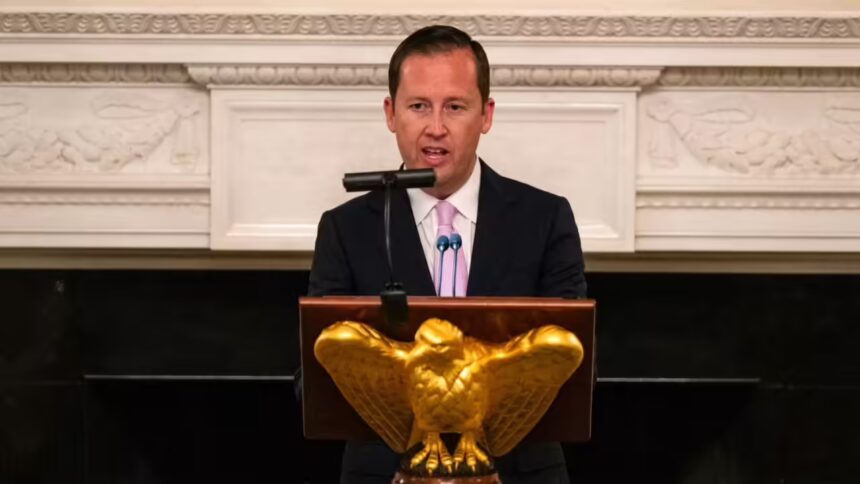
The relationship between the United States and India is poised for a significant phase of engagement as President Donald Trump extends an invitation to India’s commerce and trade ministers for discussions in Washington next week. These high-level talks, intended to finalize a “hopeful deal,” mark a critical moment in US-India trade relations and signal a strategic effort to strengthen bilateral economic and political ties. US ambassador-designate to India, Sergio Gor, during his Senate confirmation hearing, emphasized that the nations are “not that far apart” on reaching an agreement and are actively negotiating the finer details. He described the forthcoming engagement as an opportunity to advance fair, reciprocal, and mutually beneficial trade that supports American workers and businesses while simultaneously addressing broader strategic priorities, including reducing China’s economic influence. Sergio Gor also highlighted the strong personal rapport between President Donald Trump and Prime Minister Narendra Modi, framing it as an essential component in navigating complex trade negotiations and reinforcing the overall partnership between the two countries.
Upcoming Washington Talks and Trade Negotiation Dynamics
Sergio Gor, if confirmed as the youngest US ambassador to India at age 38, outlined that the invitation extended by President Donald Trump to India’s commerce and trade ministers is a strategic step in finalizing a trade deal that has been under negotiation for months. The discussions, scheduled for the coming week in Washington, will involve a direct meeting with US Trade Representative Ambassador Jamieson Greer. According to Sergio Gor, these talks are part of ongoing efforts to bridge differences on key tariff and trade issues. He emphasized that both countries are “not that far apart” on reaching an agreement, indicating optimism that a resolution may be achieved over the coming weeks. The negotiations, he noted, have entered the stage of addressing the “nitty-gritty” details of the deal, reflecting the complexity and specificity required to finalize terms that satisfy both sides.
Sergio Gor highlighted that the resolution of trade disputes is not only essential for economic cooperation but also for broader geopolitical considerations. The US administration’s approach aims to strengthen bilateral ties while addressing strategic concerns related to India’s engagement with other global actors, particularly in the energy sector. A key priority identified by the administration is encouraging India to reduce or halt its purchase of Russian oil, an issue that previously triggered tariffs of up to 50 percent on Indian imports. These tariffs were imposed due to India’s continued support for Moscow through energy purchases amidst the ongoing conflict in Ukraine. By resolving these trade disputes, the Donald Trump administration hopes to foster a cooperative framework that benefits both nations economically and strategically.
Sergio Gor also stressed the importance of ensuring that trade agreements are fair, reciprocal, and supportive of American competitiveness. He noted that improving US-India trade relations would not only create opportunities for American businesses but also help limit China’s economic leverage over other nations. By negotiating a deal that ensures a balanced exchange of goods and services, Sergio Gor envisions a partnership that strengthens the US position globally while enhancing the economic interdependence and strategic alignment between Washington and New Delhi.
Strategic Ties, Personal Rapport, and Policy Priorities
Beyond the economic negotiations, Sergio Gor underscored the strong personal relationship between President Donald Donald Trump and Prime Minister Narendra Modi as a cornerstone of successful diplomacy and trade engagement. He described their rapport as “incredible” and pivotal to navigating bilateral challenges. Sergio Gor highlighted that despite criticism of other nations by President Donald Trump, he has consistently complimented Prime Minister Modi, indicating a unique level of mutual respect and trust that underpins the strategic partnership. This personal rapport, according to Sergio Gor, facilitates smoother communication channels, enables more pragmatic negotiation approaches, and allows both countries to align on critical policy priorities more effectively.
In addition to the personal relationship, Sergio Gor emphasized the administration’s broader objectives in fostering strategic alignment with India. The US seeks to advance a trade agenda that is closely tied to national security considerations, ensuring that India’s economic choices do not inadvertently enhance the influence of strategic competitors. Reducing India’s dependency on Russian oil is framed as a top priority, given the geopolitical implications of energy procurement in the context of global security and sanctions related to the Ukraine conflict. By leveraging trade incentives, diplomatic engagement, and strategic dialogue, the US aims to guide India toward policy decisions that align with shared security interests while maintaining mutually beneficial economic relations.
Sergio Gor further noted that the ongoing tariff negotiations, particularly the discussions around the 50 percent levies previously imposed on Indian imports, remain a key focus of the upcoming talks. These tariffs had strained relations temporarily but also served as a catalyst for deeper engagement on trade rules, market access, and reciprocal agreements. The upcoming Washington meetings are therefore designed to address lingering concerns, close gaps in understanding, and identify actionable solutions that satisfy both parties. Sergio Gor’s testimony reinforced the idea that effective diplomacy requires attention to technical trade details, strategic considerations, and the cultivation of trust through consistent engagement at both the political and bureaucratic levels.
The ambassador-designate also stressed that the United States expects more from India in trade negotiations than from some other nations, reflecting the importance of the US-India partnership in the broader global economic landscape. By achieving a deal that addresses key trade issues, the administration seeks to set a precedent for future negotiations and demonstrate that collaborative approaches can yield practical and mutually beneficial outcomes. The emphasis on fairness and reciprocity reflects a nuanced understanding that sustainable trade relations are critical for long-term economic stability, political trust, and strategic alignment.
Furthermore, Sergio Gor highlighted that resolving these trade issues is intrinsically linked to wider strategic objectives, including strengthening US-India collaboration to counterbalance China’s economic and geopolitical influence. By integrating trade, diplomacy, and strategic priorities, the US administration envisions a comprehensive approach where economic policy supports national security goals while fostering regional stability. The ambassador-designate’s focus on reducing Chinese leverage, encouraging energy diversification, and maintaining strong bilateral relations reflects a multidimensional strategy that combines commercial, diplomatic, and security considerations in pursuit of a robust Indo-Pacific partnership.
Sergio Gor’s testimony and planned engagement also reflect the symbolic and practical importance of high-level US-India interactions. By inviting India’s ministers to Washington, the Donald Trump administration signals commitment to active dialogue, cooperative problem-solving, and the importance of maintaining open communication channels between top leaders and bureaucrats. This approach emphasizes that diplomacy is a continuous process requiring engagement at multiple levels, from technical trade discussions to strategic consultations, and that building trust through sustained interaction is central to achieving durable agreements.