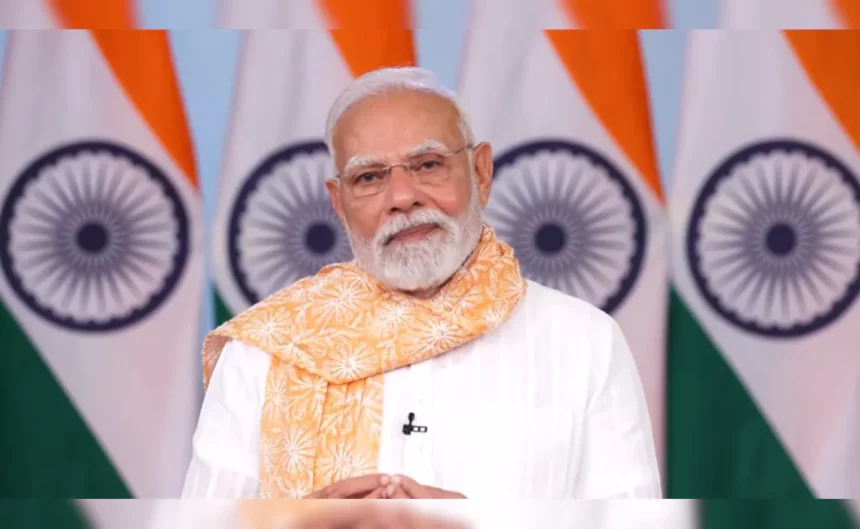
After nearly two years of unrest and prolonged ethnic tensions in Manipur, the state is preparing for a landmark visit by Prime Minister Narendra Modi on September 13. The visit, coming after almost 865 days since violence first erupted on May 3, 2023, has generated widespread anticipation among the local population, particularly the Meitei and Kuki communities. Both groups, whose fractured relations have been central to the prolonged crisis, are looking toward the Prime Minister’s visit with hopes of reconciliation and the announcement of tangible development initiatives. The Prime Minister is scheduled to inaugurate projects worth over Rs 1,200 crore and lay foundation stones for projects totaling Rs 7,300 crore, underscoring a commitment to economic revival alongside efforts to restore social harmony. Preparations in Manipur’s key cities, Imphal and Churachandpur, have intensified, with authorities ensuring stringent security measures and elaborate logistical arrangements to accommodate large gatherings.
Security Arrangements and Operational Preparations
Ahead of the visit, Lieutenant General Abhijit S. Pendharkar, General Officer Commanding of the Spear Corps, conducted a thorough review of security deployments across Manipur. The focus was on sensitive locations such as the Maphitel Ridge and the Maphou Dam area in Kangpokpi District, which remain critical due to the state’s recent history of unrest. Lt Gen Pendharkar assessed operational readiness, inspected army formations, and held discussions with commanders, troops, ex-servicemen, and paramilitary forces including the BSF and CRPF. He commended the personnel for maintaining composure under challenging conditions and emphasized the importance of vigilance, instructing units to remain mission-ready to swiftly respond to potential security challenges in conflict-prone areas.
At Kangla Fort in Imphal, the venue for the Prime Minister’s address, authorities have implemented multi-layered security protocols. Access to sensitive sections of the fort has been restricted for tourists, and sniffer dogs have been deployed to conduct thorough sweeps. Large screens are being set up across multiple locations to broadcast the event to wider audiences, ensuring that public participation is maximized without compromising safety. A similar security and logistical framework has been established at the Peace Ground in Churachandpur, which holds special significance for the Kuki community. The deployment of additional forces, advanced surveillance measures, and meticulous planning reflect the administration’s intent to guarantee a safe and orderly environment for the Prime Minister’s engagements.
The operational arrangements also demonstrate the government’s broader commitment to establishing confidence among the local populace. Security preparedness not only aims to prevent incidents during the visit but also sends a signal of proactive governance and state readiness to manage sensitive political and social contexts. The involvement of multiple agencies, careful coordination, and detailed operational planning indicate that authorities view this visit as both a symbolic and strategic intervention in the state’s ongoing crisis.
Symbolic Outreach and Community Expectations
By choosing to address gatherings in both Imphal and Churachandpur, the Prime Minister is signaling a balanced approach toward the Meitei and Kuki communities, reflecting the centrality of ethnic reconciliation in Manipur’s broader recovery process. The visit holds symbolic importance, as it provides an opportunity for displaced populations and residents affected by past violence to directly communicate their grievances and expectations. Internally displaced persons, many of whom have spent over two years in relief camps, see the visit as a potential avenue to draw attention to their hardships and seek government support for rehabilitation and long-term resettlement.
Retired Lieutenant General LN Singh from Imphal described the visit as a crucial turning point. He highlighted that while the wounds inflicted by the violence cannot be healed overnight, the Prime Minister’s presence can lay the foundation for rebuilding trust and initiating long-term solutions. Singh emphasized that residents are anticipating announcements and measures that could address infrastructure gaps, economic development, and social cohesion. Similarly, community leaders in Churachandpur expressed optimism, noting that such high-level engagement from Delhi has not occurred in nearly four decades. Local stakeholders are hopeful that the visit will translate into meaningful interventions, including political solutions to address historical grievances and ensure equitable development across communities.
The outreach also has a political dimension. While Congress leaders have dismissed the visit as largely symbolic, stating that it may not yield concrete results, the BJP and other pro-government actors view it as an opportunity to advance both political dialogue and developmental priorities. National spokesperson Sambit Patra and former Manipur Chief Minister N. Biren Singh have voiced optimism that the visit could catalyze a political solution to the state’s enduring ethnic conflicts. The dual emphasis on reconciliation and development reflects an understanding that long-term stability in Manipur requires both social trust-building and economic empowerment.
The Prime Minister’s engagements are expected to send a message of inclusivity, as addressing both Meitei-majority Imphal and Kuki-majority Churachandpur underscores the government’s intent to treat all communities equitably. This symbolic gesture carries substantial weight, given the historical marginalization and mistrust between groups that has fueled the conflict. By physically engaging with both populations and inaugurating development projects, the visit combines symbolic reconciliation with material interventions, aligning immediate peace-building measures with long-term development objectives.
Furthermore, the visit is being closely watched by analysts, political commentators, and local citizens, as it offers a rare opportunity to assess the central government’s commitment to resolving complex ethnic tensions. The selection of project sites, the balance of community engagement, and the content of the Prime Minister’s speeches are likely to shape public perceptions of Delhi’s responsiveness and sincerity in addressing Manipur’s crisis. In a region where political and social fractures have persisted for years, even small gestures of inclusion and attention can have significant impacts on confidence-building and conflict mitigation.
Economic development forms a key component of the visit’s anticipated agenda. The projects slated for inauguration and foundation-laying—amounting to nearly Rs 8,500 crore in total—span infrastructure, healthcare, education, and connectivity initiatives. These projects are expected to generate employment, improve access to essential services, and strengthen local economies, particularly in areas that have been affected by prolonged unrest. The emphasis on development underscores the government’s recognition that sustainable peace is closely linked to socio-economic stability and the creation of opportunities for all communities.
Amid security, symbolism, and development, the human dimension of the visit cannot be overlooked. Displaced families, local residents, and community leaders are all seeking reassurance that the government is committed not just to ceremonial events, but to substantive measures that address grievances and prevent future conflict. By engaging directly with citizens across diverse ethnic and geographic contexts, the Prime Minister’s visit has the potential to establish a precedent for inclusive governance, participatory problem-solving, and the use of high-level leadership to catalyze community-level reconciliation.
The political reactions to the visit reflect the complexities of Manipur’s landscape. While skepticism exists among opposition leaders, there is cautious optimism among those who perceive the visit as a genuine step toward addressing historical injustices and laying the groundwork for enduring peace. Analysts suggest that the government’s ability to combine symbolic gestures with concrete interventions—particularly in infrastructure, development, and resettlement—will be critical to determining whether this visit marks a turning point in the state’s post-conflict trajectory.
For ordinary citizens, whether residing in relief camps or urban centers preparing for the Prime Minister’s arrival, the overarching expectation is clear: a lasting solution to Manipur’s ethnic divisions, accompanied by meaningful opportunities for economic growth and social stability. The Prime Minister’s visit thus represents a convergence of multiple objectives—symbolic reconciliation, security assurances, political dialogue, and development interventions—each of which contributes to the broader goal of stabilizing a state that has endured prolonged uncertainty and hardship.
As Manipur prepares to welcome the Prime Minister, the emphasis on balanced engagement, strategic security measures, and large-scale development projects reflects the government’s awareness of both the symbolic and practical importance of this visit. By addressing communities across the state, reinforcing security, and laying the foundation for economic revitalization, the Prime Minister aims to create conditions conducive to long-term peace, social cohesion, and equitable growth. The visit offers a rare opportunity to bridge divides, restore trust, and signal the central government’s commitment to Manipur’s recovery and future stability.
Through his September 13 visit, Prime Minister Modi seeks to combine political symbolism, strategic outreach, and development initiatives in a manner that could shape the trajectory of Manipur’s post-conflict recovery for years to come. For citizens, leaders, and analysts alike, the visit is being viewed as a potential turning point—a moment that could redefine governance, reconciliation, and development priorities in a state that has endured nearly two years of ethnic unrest.