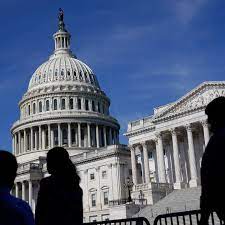
The United States Senate is set to cast votes on Thursday on competing healthcare proposals from Republican and Democratic lawmakers as the nation confronts a looming surge in health insurance premiums affecting up to 24 million Americans. Senate Majority Leader John Thune confirmed the upcoming vote, highlighting the growing urgency for Congress to address the expiration of COVID-era subsidies under the Affordable Care Act (ACA), also commonly known as Obamacare. Democrats are advocating for a three-year extension of these subsidies to protect millions of Americans from soaring premiums, while Republican leaders are promoting a new approach that would replace subsidies with direct payments to individuals. The debate underscores the deep partisan divisions over how best to manage the healthcare system, ensure coverage for Americans, and balance costs in a post-pandemic economic environment. Both parties have proposed measures that are unlikely to secure enough support for passage without compromise, reflecting the complexity of reforming a system that touches millions of lives and billions of dollars in public spending.
Democrats Push Subsidy Extension While Republicans Advocate Direct Payments to Individuals
Democrats in the Senate have intensified efforts to secure a three-year extension of the ACA subsidies, emphasizing the importance of maintaining affordability for those relying on health insurance coverage under Obamacare. The subsidies, originally introduced during the COVID-19 pandemic to offset rising premiums, are set to expire at the end of the year, potentially leaving millions vulnerable to dramatic increases in healthcare costs. Democratic leaders argue that extending the subsidies is essential not only to prevent financial hardship for American families but also to ensure continuity in the health insurance markets, particularly for lower- and middle-income individuals.
Senate Majority Leader John Thune outlined the Republican alternative, proposing legislation that would replace the existing subsidies with direct payments to individuals, bypassing insurers. The intent behind the Republican plan is to simplify the process, giving Americans more control over their healthcare spending. Thune acknowledged, however, that members within the 53-seat Republican conference have differing opinions on the most effective strategy. Some Republicans support extending the existing program with modifications, while others favor the direct payment model to promote individual choice and reduce government intervention in the insurance market.
Despite Republican support from leadership, the direct payment approach has faced criticism from Democrats, who label the measure insufficient to cover the actual cost of premiums and out-of-pocket expenses. The ACA subsidies currently provide substantial financial relief for policyholders, whereas the proposed direct payments would be capped at $1,500 for eligible individuals earning below 700% of the federal poverty level. While these payments are designed to assist with deductible costs, many patients could still face out-of-pocket expenses totaling up to $7,500 before insurance coverage begins, highlighting a significant gap between the proposed assistance and real-world healthcare expenses. Emergency room visits alone can cost between $1,000 and $3,000 per visit, creating potential financial strain for individuals relying on the direct payment system.
President Donald Trump publicly endorsed the Cassidy-Crapo proposal, supporting the idea of federal funds being paid directly to individuals rather than insurers. The administration’s support underscores a broader Republican emphasis on decentralizing healthcare funding and enhancing personal responsibility, but it also raises questions about whether such an approach adequately addresses the needs of Americans facing rising premiums and medical costs.
Republican and Democratic Proposals Clash Over Coverage, Costs, and Policy Priorities
The Republican plan, unveiled by Senators Bill Cassidy of Louisiana and Mike Crapo of Idaho, who chair key committees overseeing healthcare, offers an alternative structure designed to lower insurance premiums and provide targeted assistance. The legislation authorizes up to $1,500 in health savings account contributions for individuals earning below 700% of the federal poverty level, while explicitly restricting funds from being used for abortion or gender transition services. The bill also aims to reduce insurance premiums by 11% in 2027 and proposes cuts to federal Medicaid funding for states that provide coverage to undocumented immigrants. These provisions reflect a prioritization of cost containment and fiscal oversight, but critics argue that they could limit access to comprehensive care for vulnerable populations.
Democrats, on the other hand, have consistently criticized the Republican proposal as “junk insurance,” arguing that the payments are inadequate and fail to address the underlying cost structure of healthcare premiums. By contrast, extending ACA subsidies, as Democrats propose, directly offsets the rising premiums for millions of Americans, ensuring more predictable coverage and financial stability. The debate has illuminated deep partisan disagreements over fundamental healthcare policy priorities: Republicans emphasize individual control, fiscal restraint, and limited government involvement, while Democrats focus on maintaining affordability, universal access, and protections for vulnerable populations.
The looming expiration of ACA subsidies has created a pressing timeline for the Senate to act, with millions potentially facing sudden increases in their health insurance premiums. Up to 24 million Americans rely on these subsidies, which were expanded during the COVID-19 pandemic to mitigate the economic and health impacts of the crisis. Both parties recognize the political stakes of the vote, as constituents across the country will be directly affected by the outcome. Lawmakers have expressed uncertainty about whether either approach will garner sufficient support, and there has been no clear indication of ongoing negotiations for a compromise measure.
The implications of the vote extend beyond immediate premium relief, touching on broader issues such as access to healthcare, affordability, and the structure of the U.S. health insurance system. Republicans argue that their plan incentivizes personal responsibility and provides flexibility for consumers, but it may leave gaps in coverage for lower-income individuals. Democrats maintain that maintaining ACA subsidies is critical for protecting public health and preventing millions of Americans from facing financial hardship due to high medical costs.
As the vote approaches, it is clear that both proposals reflect competing visions for the future of American healthcare. Republican lawmakers emphasize fiscal conservatism and individual choice, while Democrats advocate for continued government support and systemic protections. With healthcare remaining a defining political and social issue in the United States, the outcome of Thursday’s vote will have far-reaching consequences for policy, public opinion, and the well-being of millions of Americans.
The clash also underscores the complexity of balancing short-term relief with long-term sustainability. Direct payments under the Republican proposal may offer immediate assistance but do not address rising costs in the insurance market. Conversely, extending ACA subsidies ensures ongoing financial support but raises questions about fiscal responsibility and long-term program funding. Both approaches reflect different philosophies on government intervention and the role of federal policy in shaping access to essential services.
Thursday’s Senate vote represents a critical juncture in U.S. healthcare policy, testing the ability of lawmakers to respond to urgent economic pressures while balancing ideological priorities. The competing proposals illuminate the challenges of crafting legislation that is both politically viable and substantively effective, with real-world consequences for millions of Americans who depend on affordable health insurance to manage their healthcare needs.