The geopolitical landscape of the Middle East witnessed another dramatic shift after reports emerged that former United States President Donald Trump decided to suspend the controversial military initiative known as “Project Freedom” following Saudi Arabia’s refusal to allow American forces to use its military bases and airspace. The development has sparked intense debate among international security analysts, diplomatic observers and global energy experts, especially because the operation was linked to the escalating tensions surrounding the Strait of Hormuz and the broader conflict involving Iran, the United States and Israel.
According to multiple international reports, the proposed operation aimed to provide military escort and security to oil tankers crossing the strategically important Strait of Hormuz. The waterway remains one of the world’s most critical maritime trade routes because a significant portion of global oil exports passes through it every single day. Any disruption in the region immediately impacts crude oil prices, energy markets and international trade systems.
The proposed military initiative reportedly emerged as a successor to the earlier American military campaign named “Operation Epic Fury.” Under the framework of Project Freedom, the United States planned to deploy naval resources, tanker escorts and strategic military coordination to ensure uninterrupted oil transportation through the Gulf region. However, the entire operation suffered a major setback after Saudi Arabia reportedly denied permission for the use of Prince Sultan Air Base and restricted access to its airspace.
The reported refusal by Riyadh became one of the strongest indications that Saudi Arabia wanted to avoid deeper military involvement in a possible confrontation between the United States and Iran. Reports suggested that Saudi leadership feared that allowing American military operations from Saudi territory could make the kingdom a direct target for Iranian retaliation.
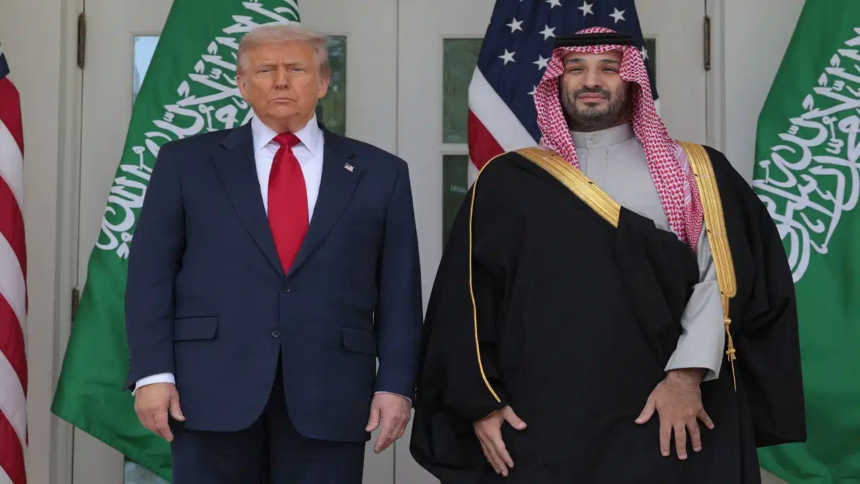
Sources indicated that Saudi Crown Prince Mohammed bin Salman even held direct discussions with Donald Trump regarding the issue. Despite diplomatic engagement and strategic negotiations, Riyadh reportedly maintained its position and refused to participate in the operation. This decision demonstrated the changing regional priorities of Saudi Arabia, especially after years of instability, missile attacks and economic uncertainty caused by conflicts across the Middle East.
Saudi Arabia’s position reportedly reflected a broader strategic calculation. Riyadh has increasingly attempted to balance its relationship with Washington while also reducing direct confrontation with Tehran. Over the past few years, Saudi Arabia has gradually shifted toward diplomatic engagement and regional de-escalation after repeated attacks on oil facilities and energy infrastructure exposed vulnerabilities within the Gulf region.
International observers believe the kingdom feared that Project Freedom could trigger a much wider naval conflict inside the Strait of Hormuz. Iran had reportedly warned that any American military escort of oil tankers or aggressive naval action near Iranian shipping lanes would be treated as a violation of ongoing ceasefire understandings. Such developments could potentially reignite missile strikes, drone attacks and proxy warfare across the Gulf.
The fears were not limited to naval tensions alone. Gulf nations were reportedly concerned that renewed escalation could encourage attacks on critical energy infrastructure, including refineries, pipelines, export terminals and military installations. Previous missile and drone attacks had already demonstrated how vulnerable the region’s energy networks remained during periods of military confrontation.
Saudi Arabia’s cautious approach also exposed growing differences between Riyadh and the United Arab Emirates. While Saudi Arabia appeared focused on reducing military escalation and stabilising regional diplomacy, the UAE reportedly adopted a more assertive approach toward Iran and maritime security operations.
Reports suggested that the UAE had become increasingly frustrated with what it viewed as Saudi hesitation during the crisis. The Emirates reportedly believed stronger military pressure was necessary to secure maritime trade routes and deter Iranian interference in the Gulf region. Analysts also pointed toward widening strategic differences between the two Gulf powers over issues involving Israel, Yemen, Sudan and regional diplomatic alliances.
The geopolitical complexity increased further because the UAE maintained closer relations with Israel following the Abraham Accords. Meanwhile, Saudi Arabia continued to move cautiously regarding open military coordination with Israel due to domestic sensitivities and regional political considerations. Riyadh has consistently emphasized support for a two-state solution involving Palestinian statehood while simultaneously maintaining strategic partnerships with Western allies.
The suspension of Project Freedom also raised questions about the broader effectiveness of American strategy in the Middle East. Critics argued that the United States had struggled to define clear military objectives and long-term diplomatic goals regarding Iran and regional stability. Some observers claimed Washington appeared caught between military escalation and diplomatic compromise without establishing a coherent policy framework.
Saudi officials reportedly expressed concerns that the operation lacked clear operational boundaries and precise rules of engagement. There were fears that even a minor confrontation at sea could rapidly spiral into a full-scale regional conflict involving multiple state and non-state actors. The memory of previous Gulf conflicts and attacks on oil facilities remained fresh in the minds of regional policymakers.
Another major concern reportedly involved the possibility of Houthi involvement from Yemen. Saudi Arabia has spent years attempting to reduce tensions with the Iran-backed group to prevent disruptions in Red Sea shipping routes. Any renewed military escalation involving Iran and the United States could potentially destabilize the fragile regional understandings that currently help secure energy transportation routes.
The Strait of Hormuz remains an indispensable artery for global oil trade. Every major development affecting the region instantly influences energy prices, shipping insurance costs and international market confidence. Energy-importing countries across Asia, Europe and other regions carefully monitor every diplomatic and military movement surrounding the Gulf.
The decision to pause Project Freedom reportedly surprised several senior American officials. Prior to the suspension, top members of the administration had publicly promoted the initiative as a critical step toward guaranteeing freedom of navigation and protecting global oil supply chains. The sudden reversal therefore raised speculation regarding internal disagreements, diplomatic obstacles and shifting strategic calculations.
Donald Trump later stated that the suspension would provide additional time for diplomatic progress with Iran. He claimed that negotiations and international mediation efforts, including involvement from China, had contributed to a temporary reduction in tensions. However, analysts noted that the timing of Saudi Arabia’s reported refusal strongly influenced the final decision.
The broader geopolitical implications of the development continue to unfold. Relations between Saudi Arabia and the UAE may face additional strain because of their differing responses to the regional crisis. At the same time, Iran may interpret the suspension as evidence that Gulf nations prefer diplomatic stability over direct military confrontation.
International diplomatic observers believe the episode highlights a larger transformation taking place across the Middle East. Regional powers are increasingly prioritizing economic stability, infrastructure protection and investment security over prolonged military escalation. Gulf economies have invested heavily in modernization, tourism, technology and global partnerships, making regional stability more important than ever before.
Meanwhile, energy markets continue to remain sensitive to every geopolitical signal emerging from the Gulf region. Oil traders, shipping companies and international investors are carefully evaluating the implications of the latest developments for future energy security and regional diplomacy.
The future of Project Freedom remains uncertain. While the operation has reportedly been suspended rather than permanently canceled, the refusal by Saudi Arabia significantly complicates any immediate revival of the plan. Without access to critical regional infrastructure and strategic airspace, the operational feasibility of such a mission becomes far more challenging.
The situation also underscores the growing importance of regional diplomacy in shaping international military decisions. Gulf countries now possess greater influence in determining how external powers operate within the region. Their strategic calculations increasingly reflect economic interests, domestic stability and long-term geopolitical positioning rather than automatic alignment with traditional allies.
As tensions continue across the Middle East, the suspension of Project Freedom may ultimately become a defining example of how regional powers are reshaping the balance between diplomacy, military strategy and economic survival in one of the world’s most volatile geopolitical arenas.