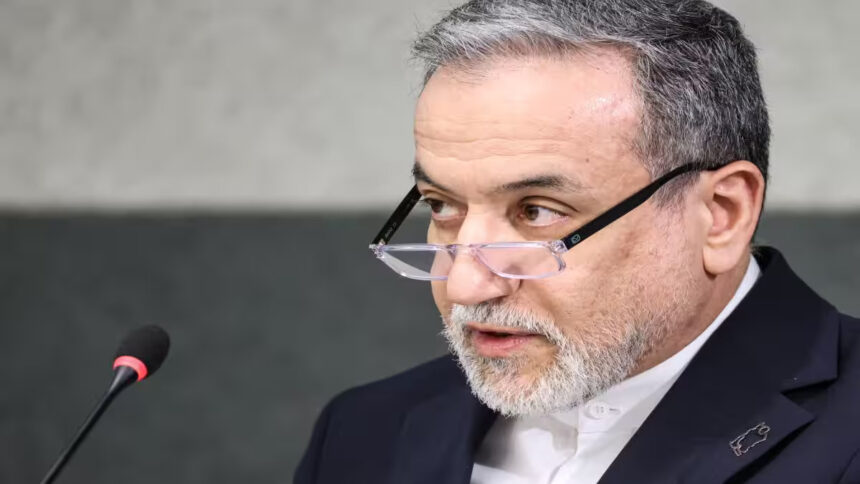
Amid rising geopolitical tensions in West Asia and continuing uncertainty surrounding the Iran and United States conflict, Iranian Foreign Minister Abbas Araghchi is expected to visit India later this month to participate in the BRICS Foreign Ministers’ Meeting scheduled for May 14 and 15. The possible visit has already attracted significant international attention because it comes at a time when diplomatic efforts to reduce tensions in the region are facing serious challenges.
According to diplomatic sources and media reports, the Iranian Foreign Minister is likely to attend the high-level BRICS discussions being organized under India’s chairmanship. The upcoming meeting is expected to focus on regional security, global economic cooperation, energy stability, multilateral diplomacy and emerging geopolitical crises affecting Asia and the Middle East.
The visit is being viewed as strategically important not only for India and Iran but also for the broader BRICS grouping. Iran officially became a member of BRICS in recent years, and Tehran has been actively trying to strengthen its engagement with major emerging economies including India, China, Russia, Brazil and South Africa.
The timing of the proposed visit is particularly significant because Iran remains deeply involved in escalating tensions with the United States and its regional allies. The ongoing instability in West Asia has raised global concerns over maritime security, oil supply routes and the future of diplomatic negotiations aimed at preventing wider military confrontation.
Reports suggest that Iran wants BRICS nations, especially under India’s leadership this year, to play a more constructive and balanced role in reducing tensions across the Middle East. Tehran reportedly believes that multilateral platforms such as BRICS can contribute to dialogue, strategic communication and conflict de-escalation at a time when traditional diplomatic channels are struggling to produce lasting outcomes.
If the visit takes place, it would mark Abbas Araghchi’s first official visit to India since the recent phase of conflict intensified in the region. Observers believe the trip could provide an opportunity for India and Iran to discuss not only regional security but also energy cooperation, trade connectivity and strategic diplomatic coordination.
Iranian officials have repeatedly emphasized the importance of BRICS in promoting a multipolar global order. During earlier discussions with Indian External Affairs Minister S Jaishankar in March, Araghchi reportedly highlighted that organizations like BRICS can play an essential role in maintaining international stability during periods of geopolitical crisis.
India currently holds the BRICS chairmanship and is preparing to host major diplomatic meetings in New Delhi. As one of the world’s fastest-growing major economies and an influential voice among developing nations, India is increasingly being seen as an important mediator capable of maintaining communication with multiple global powers simultaneously.
India maintains strategic relations with the United States, Russia, Gulf countries and Iran, allowing New Delhi to adopt a balanced diplomatic position in highly sensitive international disputes. Analysts believe this balanced approach gives India unique diplomatic leverage within organizations such as BRICS.
The expected participation of the Iranian Foreign Minister may also lead to discussions regarding energy security and shipping routes through the Strait of Hormuz. The narrow maritime passage remains one of the world’s most important oil transit corridors, and any disruption in the region can immediately impact global crude oil prices and energy markets.
China’s involvement in recent diplomatic developments has further increased international interest in the situation. At present, Abbas Araghchi is on an official visit to China, where he recently met Chinese Foreign Minister Wang Yi. During the meeting, China reportedly called for an immediate and complete ceasefire in the region and urged all parties to prioritize diplomatic engagement over military escalation.
Chinese officials stressed that maintaining peace and stability in West Asia is essential not only for regional security but also for the global economy. Beijing expressed concern regarding the safety of shipping routes through the Strait of Hormuz because China imports a substantial portion of its oil through maritime routes connected to the Gulf region.
China’s strategic interest in maintaining uninterrupted energy supply is one of the major reasons behind its active diplomatic engagement in the crisis. Any prolonged military conflict affecting Gulf shipping routes could seriously impact Chinese energy imports, manufacturing activity and economic growth.
During discussions with Chinese officials, Araghchi reportedly briefed Beijing regarding recent developments in negotiations involving Iran and the United States. Iranian authorities emphasized that Tehran remains committed to defending its sovereignty and national dignity while also continuing efforts toward a fair and comprehensive diplomatic agreement.
The possibility of renewed diplomatic negotiations has generated cautious optimism among international observers. However, experts warn that the situation remains highly fragile due to military tensions, political mistrust and competing strategic interests among regional and global powers.
India’s role in the evolving geopolitical situation may become increasingly important in the coming months. New Delhi has traditionally maintained close civilizational and economic ties with Iran while also strengthening strategic partnerships with Western nations and Gulf countries.
India’s energy security calculations also make stability in the Middle East critically important. A significant portion of India’s crude oil imports depends on secure maritime trade routes passing through the Gulf region. Any escalation affecting shipping operations could impact fuel prices, inflation and broader economic stability within India.
Apart from energy cooperation, India and Iran have also collaborated on strategic infrastructure projects such as the Chabahar Port. The port is considered vital for improving regional connectivity and expanding trade access between India, Central Asia and Afghanistan. Continued diplomatic engagement between the two countries therefore carries substantial economic and geopolitical importance.
The BRICS meeting in May is expected to provide an important platform for discussions on global governance reforms, trade cooperation, financial systems and international peace efforts. With increasing geopolitical polarization across the world, emerging economies are attempting to strengthen alternative diplomatic forums capable of addressing international challenges collectively.
Iran’s participation in the BRICS framework also reflects Tehran’s broader effort to diversify its international partnerships beyond traditional regional alliances. By deepening engagement with countries such as India and China, Iran aims to reduce diplomatic isolation and expand economic opportunities despite ongoing geopolitical tensions.
International analysts believe that India may encourage diplomatic dialogue and restraint during the BRICS discussions while avoiding direct alignment with any military bloc. India has consistently supported peaceful negotiations, respect for sovereignty and regional stability in its foreign policy approach.
The upcoming diplomatic engagements are also being closely monitored by global financial and energy markets. Investors and policymakers remain concerned about the possibility of disruptions in oil exports, maritime trade and international supply chains if tensions escalate further.
Meanwhile, diplomatic observers note that forums like BRICS are increasingly becoming important platforms for non-Western countries seeking greater influence in global decision-making processes. The participation of Iran in such discussions demonstrates the growing geopolitical significance of emerging multilateral institutions.
As the BRICS Foreign Ministers’ Meeting approaches, attention will remain focused on whether Abbas Araghchi officially travels to India and what diplomatic outcomes emerge from the discussions. The visit could potentially shape future regional diplomacy and contribute to broader international efforts aimed at preventing further escalation in West Asia.
With geopolitical uncertainty continuing across multiple regions of the world, India’s diplomatic balancing strategy and the evolving role of BRICS may become increasingly influential in shaping the future direction of global politics, energy security and international cooperation.