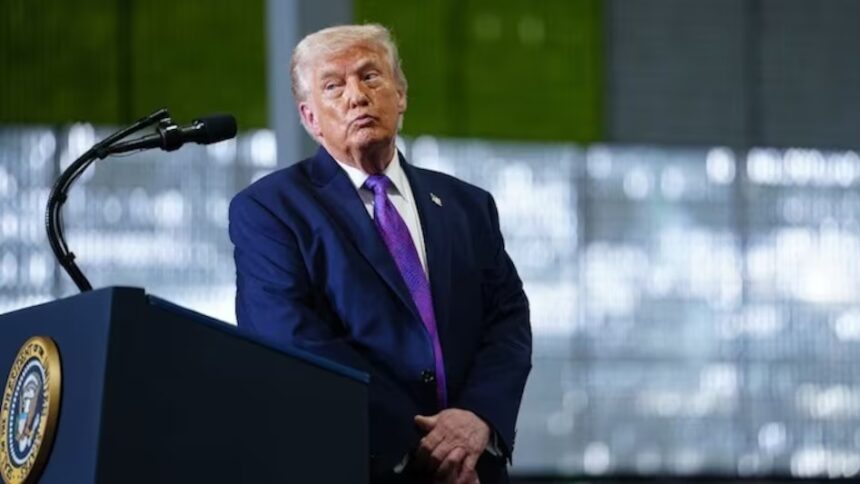
The announcement of a temporary ceasefire between Israel and Lebanon by US President Donald Trump has brought a brief pause to weeks of intense conflict, offering a narrow window for diplomacy while uncertainty continues to surround the durability of the truce and the broader geopolitical implications across the Middle East region.
The ceasefire, described as a 10-day halt in hostilities, follows sustained violence between Israeli forces and Hezbollah, a powerful armed group in Lebanon, and is being viewed as a critical but fragile step toward de-escalation, with multiple stakeholders cautiously assessing its potential to evolve into a longer-term peace arrangement.
Ceasefire Agreement and Diplomatic Breakthrough
The ceasefire agreement was announced after high-level diplomatic engagement involving the United States, Israel, and Lebanon, with President Donald Trump stating that the deal followed “productive” discussions with Israeli Prime Minister Benjamin Netanyahu and Lebanese President Joseph Aoun, marking one of the most significant diplomatic developments in the region in recent months.
The truce officially came into effect in mid-April 2026 and is intended to halt offensive military operations for a period of ten days, creating space for negotiations aimed at achieving a more permanent resolution to the conflict, while also enabling humanitarian relief efforts in areas severely affected by the fighting.
This agreement is particularly notable as it has opened the door for direct diplomatic engagement between Israel and Lebanon, something that has been largely absent for decades, with discussions now expected to focus on border security, military de-escalation, and long-term peace arrangements.
Despite the progress, the ceasefire does not fully resolve the core issues that triggered the conflict, including Hezbollah’s military presence and Israel’s security concerns along its northern border, making the agreement more of a temporary pause rather than a definitive solution.
Conflict Background and Humanitarian Impact
The ceasefire comes after weeks of intense fighting that began in early March 2026, when escalating tensions between Israel and Hezbollah led to widespread airstrikes, rocket attacks, and ground operations, significantly increasing instability in the region.
The conflict has had severe humanitarian consequences, with reports indicating that more than 2,000 people have been killed in Lebanon and over one million displaced, while thousands of homes and critical infrastructure have been destroyed, leaving large sections of the population in urgent need of assistance.
As the ceasefire took effect, displaced families began returning to their homes in southern Lebanon, although many found their properties damaged or uninhabitable, highlighting the scale of destruction caused by the conflict and the challenges that lie ahead in rebuilding affected communities.
Humanitarian organizations and international agencies have started mobilizing aid efforts, but concerns remain regarding safety, as sporadic violence and uncertainty over the ceasefire’s stability continue to pose risks to civilians.
Challenges and Uncertainty Over Ceasefire Stability
While the ceasefire represents a diplomatic breakthrough, its stability remains uncertain due to several unresolved issues and conflicting positions among key stakeholders, particularly regarding Hezbollah’s role and Israel’s military presence in southern Lebanon.
Hezbollah has not formally signed the ceasefire agreement, and although it has indicated a conditional willingness to respect the truce, it has also warned that any violations or continued Israeli presence could lead to renewed hostilities, raising doubts about the effectiveness of the agreement in maintaining long-term peace.
On the other hand, Israeli officials have made it clear that their strategic objective of disarming Hezbollah remains unchanged, and they have emphasized the need to maintain a security buffer zone along the border to prevent future attacks, indicating that military operations could resume if perceived threats persist.
Political analysts suggest that one of the key challenges lies in the expectation that Lebanon would take steps to disarm Hezbollah, a condition widely viewed as difficult to implement given the group’s entrenched presence and influence within the country, making the path toward a permanent settlement highly complex.
Additionally, the ceasefire is closely linked to broader regional dynamics, including ongoing tensions involving Iran and the United States, which further complicates efforts to achieve a lasting peace agreement.
Strategic Implications and Future Prospects
The ceasefire has broader implications for regional stability and international diplomacy, as it reflects an attempt by the United States to play a central role in mediating conflicts in the Middle East and to potentially create conditions for wider negotiations involving other regional actors.
President Donald Trump has indicated interest in hosting further talks involving Israeli and Lebanese leadership, signaling an effort to transition from a temporary ceasefire to a more comprehensive peace framework, although such efforts will depend heavily on the willingness of all parties to engage constructively.
Experts caution that while the ceasefire provides a temporary reprieve, the underlying causes of the conflict, including territorial disputes, military presence, and regional alliances, remain unresolved, and without significant progress on these issues, the risk of renewed violence cannot be ruled out.
The coming days are expected to be critical in determining whether the ceasefire can hold and evolve into a sustainable peace process, or whether it will remain a short-lived pause in a long-standing and deeply complex conflict.