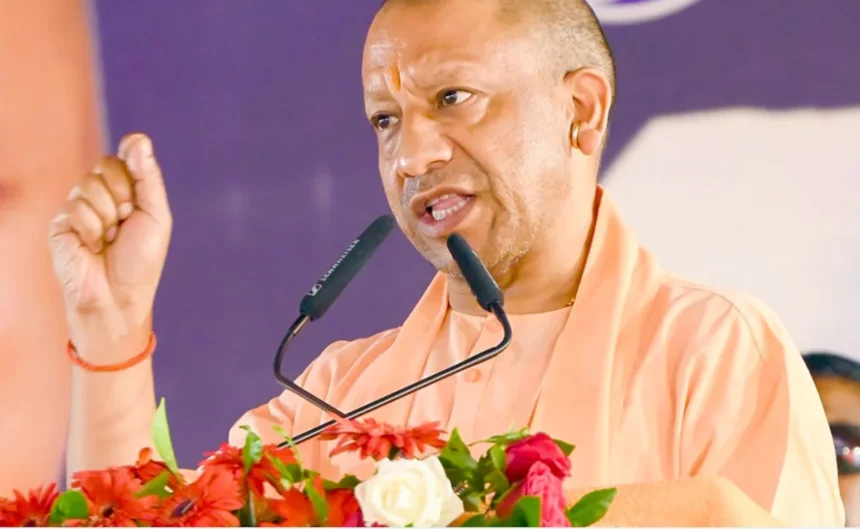
The visit of Uttar Pradesh Chief Minister Yogi Adityanath to West Bengal has intensified political activity across multiple districts, with large crowds at rallies and a planned roadshow reinforcing campaign momentum, energizing party workers, and sharpening electoral competition as parties focus on expanding influence and consolidating voter support ahead of crucial electoral developments in the state.
The presence of Yogi Adityanath in West Bengal’s political landscape once again highlights the strategic importance of high-profile campaigners in shaping voter engagement and strengthening organizational outreach, particularly at a time when political parties are actively working to consolidate their base across regions stretching from North Bengal to the Jangalmahal belt, making such visits critical for narrative building and cadre mobilization.
Campaign Push Across North Bengal and Strategic Constituencies
The campaign schedule outlines a series of tightly planned public engagements across key constituencies, reflecting a coordinated effort to maximize political outreach within a limited timeframe, beginning with a major public meeting in the Mathabhanga assembly constituency of Cooch Behar district where the campaign is focused on strengthening support in a sensitive border region that holds both political and strategic importance.
The rally in Mathabhanga is aimed at reinforcing the party’s presence in an area where electoral competition remains intense, and the outreach is expected to focus on governance issues, development narratives, and local concerns that directly influence voter sentiment, with the gathering also serving as a platform to mobilize grassroots workers and energize the local campaign machinery.
Following this, the campaign moves to the Dhupguri assembly constituency in Jalpaiguri district, where another public meeting is scheduled, highlighting the importance of North Bengal as a crucial electoral zone where the party had previously established a strong foothold, and the current strategy appears to be focused on consolidating those gains while expanding influence into newer segments of the electorate.
The emphasis on back-to-back rallies within a short span of time reflects an aggressive campaign approach designed to maintain momentum, create visibility, and ensure continuous engagement with voters across geographically diverse constituencies, thereby strengthening the party’s organizational footprint at multiple levels.
Roadshow in Bankura and Focus on Jangalmahal Region
The final phase of the campaign includes a roadshow in Bankura, a district that forms a key part of the Jangalmahal region, which has historically been politically sensitive and strategically significant, and the decision to organize a roadshow here indicates a targeted effort to showcase strength and deepen engagement in this region.
Roadshows, as a campaign tool, provide a more direct and interactive form of voter engagement compared to traditional rallies, allowing leaders to connect with people across localities while demonstrating visible support through large public participation, and preparations at the local level suggest that significant efforts have been made to ensure strong turnout and smooth execution of the event.
The Bankura roadshow is expected to serve not only as a show of political strength but also as a mechanism to reinforce party visibility in a region where electoral outcomes are often influenced by grassroots mobilization and local dynamics, making such high-energy events an important component of the overall campaign strategy.
The focus on Jangalmahal also reflects a broader attempt to expand political influence beyond traditional strongholds, ensuring that campaign efforts are evenly distributed across regions with varying political histories and voter demographics, thereby strengthening overall electoral positioning.
Massive Crowds and Impact on Worker Morale
One of the most significant aspects of the ongoing campaign has been the consistently large crowds at public meetings, which are being interpreted as a positive indicator for the party’s growing support base, with reports suggesting that people are arriving well in advance of scheduled events and remaining present throughout the duration of the rallies.
The scale of public participation has, in many instances, led to packed venues where space constraints become evident, reflecting a high level of interest and engagement among attendees, and such scenes are often viewed as symbolic of strong voter enthusiasm and political momentum.
Large gatherings at rallies play a crucial role in influencing both public perception and internal party dynamics, as visible crowd support can create a sense of momentum that extends beyond the immediate event, impacting how campaigns are perceived by voters, media, and political observers.
For party workers, these crowds act as a significant morale booster, reinforcing confidence in campaign efforts and encouraging greater participation at the grassroots level, which in turn strengthens organizational effectiveness during critical phases of the electoral process.
Political analysts note that while crowd size alone does not determine electoral outcomes, it remains an important factor in shaping campaign narratives and generating psychological momentum, particularly in closely contested regions where perception plays a key role in influencing voter decisions.
Political Messaging and Expanding Electoral Influence
The campaign also serves as a platform for communicating key political messages centered around governance, development, security, and welfare initiatives, with an emphasis on connecting national-level policy frameworks to local issues that resonate with voters in specific constituencies.
By addressing multiple regions within a single day, the campaign seeks to establish a consistent narrative while adapting messaging to suit local contexts, thereby ensuring that communication remains relevant and impactful across diverse voter groups.
The integration of large-scale rallies, targeted roadshows, and continuous public engagement reflects a comprehensive campaign approach aimed at maximizing reach and effectiveness, combining traditional political methods with modern communication strategies to influence voter sentiment.
Media coverage and digital dissemination further amplify the impact of these events, extending their reach beyond physical attendees and enabling broader audience engagement through real-time updates, visuals, and commentary, which play a significant role in shaping public discourse during election periods.