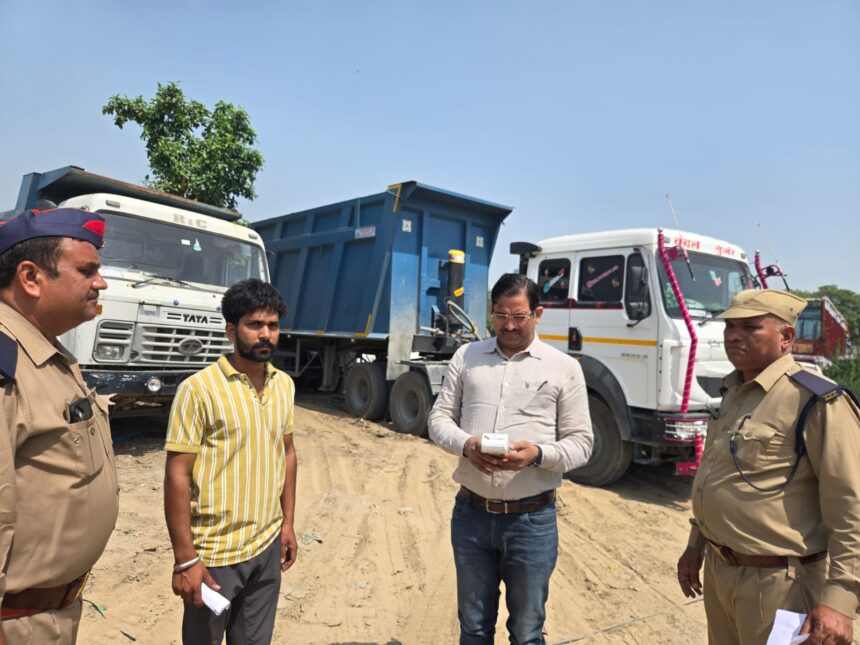
The Gautam Buddh Nagar Transport Department has intensified its crackdown on overloaded vehicles as part of a major enforcement campaign aimed at improving road safety and reducing traffic-related risks. During the month of May, authorities issued challans against 206 overloaded vehicles and recovered more than Rs 50 lakh in compounding fees.
Officials stated that continuous checking drives are being conducted across the district to curb overloading by trucks and mini trucks. The department emphasized that overloading is not only a violation of transport laws but also a major threat to public safety, road infrastructure, and the environment.
206 Vehicles Challaned During May Enforcement Campaign
The enforcement drive was carried out across several areas including Sector 142, Jewar, Knowledge Park, Badalpur, and Sector 62 D Park. During the campaign, transport officials checked heavy vehicles suspected of carrying goods beyond their permitted capacity.
Authorities said 206 overloaded vehicles were challaned and detained at different police stations during the operation. A total compounding fee of Rs 1.29 crore was imposed on the violators, out of which Rs 50.80 lakh has already been recovered.
Officials involved in the operation stated that the campaign will continue in the coming weeks and strict action will be taken against transporters violating load regulations. Enforcement teams comprising assistant regional transport officers and tax officials jointly conducted the inspections.
Overloading Increases Risk of Road Accidents
According to transport authorities, overloaded vehicles are among the major causes of road accidents involving heavy transport carriers. Excessive weight affects vehicle balance and increases the likelihood of brake failure, tyre bursts, and overturning incidents.
Road safety experts warned that overloaded trucks pose a serious threat not only to drivers but also to other commuters using highways and expressways. At high speeds, such vehicles become difficult to control, especially during emergency braking situations.
Officials added that many transport operators overload vehicles to maximize profits and reduce trip frequency, but this practice severely compromises public safety and increases accident risks.
Roads and Environment Also Suffer Damage
The department highlighted that the impact of overloading extends beyond traffic safety. Heavy overloaded vehicles create cracks, potholes, and structural damage on roads, leading to faster deterioration of public infrastructure.
Frequent road repairs place additional financial burden on government resources and taxpayers. Authorities stated that maintaining damaged roads requires significant expenditure that could otherwise be used for development projects.
Environmental concerns were also raised during the campaign. Overloaded trucks consume more fuel because of increased engine pressure, leading to higher diesel consumption and greater air pollution. Environmental experts believe such vehicles contribute significantly to rising carbon emissions and declining urban air quality.
Strict Legal Action Against Violators
Transport officials reiterated that overloading is a punishable offense under the Motor Vehicles Act. Vehicle owners and drivers found violating loading limits may face heavy fines, vehicle seizure, permit cancellation, and suspension of driving licenses.
Authorities stated that violators can be fined up to Rs 20,000 along with additional charges per extra ton of load carried beyond the permissible limit. Repeat offenders may face stricter legal consequences depending on the severity of violations.
The department appealed to transport operators, truck owners, and drivers to follow loading regulations responsibly. Officials emphasized that avoiding overloading is essential for safer roads, longer vehicle life, reduced pollution, and better traffic management.
With increasing commercial transportation activity in the district, authorities believe strict enforcement measures are necessary to maintain road discipline and prevent large-scale accidents caused by overloaded vehicles.