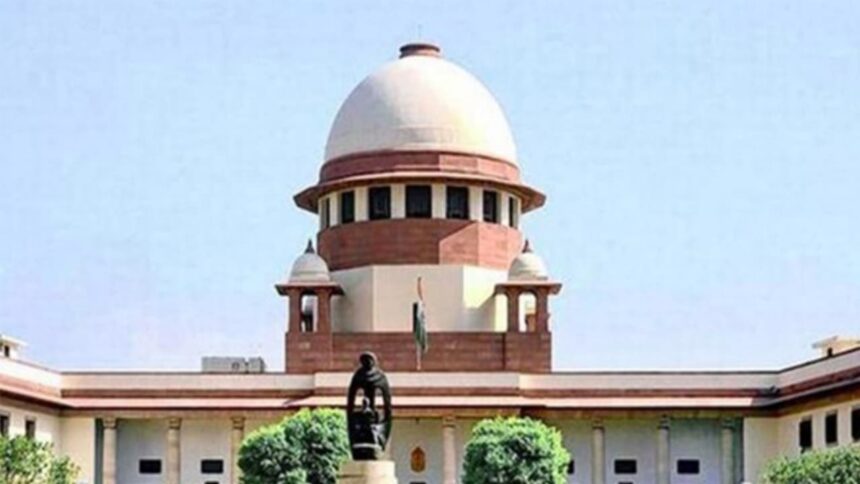
The Supreme Court’s latest directive on illegal commercial activities operating inside residential colonies has triggered urgency within civic bodies across the country, particularly in Jaipur where authorities are now under pressure to identify widespread violations before the court-mandated deadline. The order, issued during a hearing related to unauthorised commercial operations in a residential colony in Chennai, has significantly widened the scope of scrutiny and placed every state capital and Union Territory headquarters under judicial watch.
A bench comprising Justice Ahsanuddin Amanullah and Justice R. Mahadevan directed municipal corporations nationwide to conduct a comprehensive survey of residential areas being used for non-residential purposes and submit detailed affidavits before the apex court. The affidavits are required to be personally verified by municipal commissioners, signalling the seriousness with which the court intends to pursue the matter.
In Jaipur, the order has intensified focus on long-standing concerns surrounding the unchecked expansion of commercial establishments inside residential neighbourhoods. Civic authorities have acknowledged that the city faces widespread misuse of residential properties for businesses including coaching centres, offices, retail shops, hostels, clinics, restaurants and service establishments. Officials now face the challenge of compiling a citywide report identifying all such violations within a limited timeframe.
Civic Authorities Begin Citywide Assessment
Officials from the Jaipur Municipal Corporation confirmed that dedicated teams are being formed to identify areas where residential land use norms are allegedly being violated. According to officials, the report must be submitted to the Supreme Court before the specified deadline, making the exercise one of the most extensive compliance operations undertaken by the civic body in recent years.
Authorities are expected to inspect colonies across Jaipur to determine whether commercial establishments are operating without proper land-use conversion or permissions. Several areas have already emerged as major concern zones due to the rapid expansion of commercial activity over the past decade.
Among the localities reportedly under focus are Gopalpura, Mahesh Nagar, Lal Kothi and Pratap Nagar. These neighbourhoods have witnessed steady growth in commercial establishments despite originally being planned primarily for residential use.
Officials indicated that enforcement actions may follow once the survey is completed and affidavits are submitted before the court. While authorities have not yet detailed the scale of potential action, experts believe the process could result in sealing drives, licence cancellations, penalties and demolition notices in severe cases.
Residential Colonies Increasingly Turning Into Commercial Zones
Urban planners and civic experts argue that Jaipur’s situation reflects a broader urban governance challenge faced by rapidly growing Indian cities. Over the years, increasing commercial demand, rising property prices and weak enforcement mechanisms have encouraged businesses to operate from residential buildings.
Former additional chief town planner Chandra Sekhar Parashar stated that violations are no longer limited to isolated pockets and have spread across almost every major residential locality in Jaipur. According to him, weak monitoring and administrative negligence allowed the trend to grow unchecked for years.
Experts say the consequences extend far beyond land-use violations. Residential areas originally designed for families and local community life are increasingly struggling with traffic congestion, parking shortages, noise pollution, waste management problems and public safety concerns caused by commercial activity.
Many residents have repeatedly complained about rising congestion in colonies where coaching centres and offices attract hundreds of visitors daily. In several neighbourhoods, roads designed for residential traffic now remain heavily crowded throughout the day, affecting emergency vehicle movement and local mobility.
Urban planners also warn that unauthorised commercialisation undermines the viability of officially designated commercial zones. Businesses operating illegally from residential premises often avoid higher commercial property costs, affecting investment in approved business districts and planned marketplaces.
Coordination Gaps Between Agencies Under Scrutiny
The Supreme Court directive has also highlighted administrative coordination failures between multiple urban authorities operating in Jaipur. Officials pointed to recurring issues involving building approvals, trade licences and land-use monitoring.
According to civic authorities, the Jaipur Development Authority typically approves building plans and development permissions, while the municipal corporation issues trade licences for business operations. Officials argue that inadequate coordination between these agencies has enabled commercial misuse of residential properties.
In many cases, businesses reportedly obtained trade licences without proper verification of approved land use. This administrative gap allegedly allowed commercial operations to expand in residential areas with minimal resistance.
Officials believe that the Supreme Court-monitored exercise may eventually force urban agencies to strengthen coordination mechanisms and establish stricter verification systems before issuing future licences or approvals.
Recent Enforcement Actions Indicate Tougher Monitoring
Authorities in Jaipur have already initiated selective enforcement measures in recent months, indicating a possible shift toward stricter compliance monitoring. Officials referred to recent action involving a rooftop swimming pool facility that was allegedly operating for public use within a residential area.
Such cases have drawn public attention toward the growing commercial transformation of residential properties in the city. Residents’ welfare groups in several colonies have demanded stricter action against unauthorised commercial operations, arguing that civic norms are routinely ignored.
Many resident associations claim that violations continue because enforcement actions often remain inconsistent. While occasional crackdowns occur, long-term monitoring and follow-up action have historically remained weak.
Legal experts note that the Supreme Court’s direct involvement could significantly alter the situation by increasing accountability among civic officials. Since affidavits are required to be personally affirmed by commissioners, municipal authorities may face judicial consequences for incomplete or inaccurate reporting.
Impact on Businesses and Property Owners
The court directive has created uncertainty among thousands of business operators functioning from residential premises in Jaipur and other cities. Property owners and tenants are now closely watching how aggressively authorities implement the survey findings.
Several small businesses argue that commercial use of residential spaces became necessary due to rising rents in designated commercial markets. Coaching institutes, clinics, beauty salons, consultancy offices and small retail outlets frequently operate from converted residential properties because of lower operational costs and easier accessibility.
However, civic experts maintain that long-term urban planning cannot function effectively if zoning regulations are ignored. They argue that cities require balanced infrastructure planning, including roads, drainage systems, parking facilities and emergency services tailored to approved land use categories.
If residential colonies continue transforming into unregulated commercial hubs, experts warn that infrastructure stress and civic disorder may worsen rapidly in expanding urban centres like Jaipur.
Supreme Court Jaipur commercial activities survey
The importance of the order extends far beyond Jaipur. By expanding the inquiry to all state capitals and Union Territories, the Supreme Court has effectively initiated a nationwide review of urban land-use enforcement.
Municipal bodies across India are now expected to identify violations, document misuse patterns and explain enforcement failures before the court. Legal observers believe the case could eventually influence future urban governance policies and zoning enforcement standards nationwide.
The directive also reflects increasing judicial concern regarding uncontrolled urbanisation and regulatory failures in Indian cities. Courts have repeatedly intervened in matters involving illegal constructions, environmental violations and civic infrastructure breakdowns where authorities were accused of delayed action.
For Jaipur, however, the immediate challenge lies in balancing enforcement with practical realities. Large-scale commercial activity already exists across numerous residential colonies, making corrective action both politically sensitive and administratively difficult.
Despite these complexities, civic authorities now face clear judicial expectations. The coming weeks are likely to determine how extensively Jaipur documents violations and whether the survey leads to meaningful urban enforcement reforms or remains limited to procedural compliance before the court.