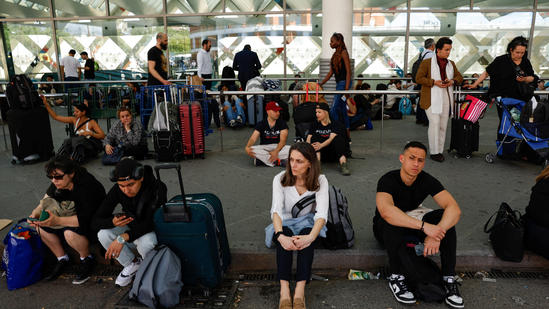
On April 22, 2025, Spain and Portugal were thrust into chaos following a massive power outage that affected millions of people. The outage led to train delays, flight cancellations, disrupted hospital services, and widespread panic. In some areas, people were left stranded, unable to access basic services, and the situation grew increasingly tense. The blackout became Europe’s largest power failure in recent times, with authorities scrambling to restore the electricity supply.
What Caused the Power Outage?
The cause of the power failure has been linked to a “rare atmospheric phenomenon” that affected the region’s electricity grid. According to Portugal’s grid operator, REN, sharp temperature swings in the atmosphere caused “anomalous oscillations” in high-voltage lines in Spain. These extreme fluctuations led to a disruption in the synchronisation of the electricity systems in Spain and Portugal, triggering a series of failures that cascaded across Europe’s interconnected grid.
The issue has been attributed to “induced atmospheric variation,” which creates sudden and strong fluctuations in the grid, causing a collapse. While officials from both Spain and Portugal have been working tirelessly to restore power, they have also warned that it could take up to a week for the grid to return to normal. However, despite early claims that it was not the result of a cyberattack, speculations around sabotage still circulated, but authorities have not found any evidence of foul play.
How Did the Outage Impact Spain and Portugal?
As soon as the power cut hit, it had a significant impact on daily life in both countries. In Spain, nearly half of the country’s electricity supply was restored by 11 pm local time, and by Tuesday, 82% of power had returned. In Portugal, the restoration was slightly slower, with approximately 80% of people regaining electricity by the same time.
Key cities, including Madrid and Lisbon, saw major disruptions. In Madrid, traffic was halted after traffic signals stopped working, and metro services came to a standstill. Many offices were closed, and emergency workers were deployed to evacuate thousands of people from trains that had been stranded due to the power failure. Hospitals switched to backup generators, but some medical services were still interrupted, and petrol stations also ceased operations.
The airport terminals in Spain were also affected, with some flight delays caused by the limited backup power available. In Lisbon, airport terminals were closed, and passengers were left waiting outside for updates on their flights. Both countries experienced massive disruptions to communication networks, with mobile phone services down and internet traffic plummeting significantly.
Steps Taken to Restore Power
The Spanish government responded swiftly to the crisis by tapping into neighboring countries for support. Electricity was drawn from Morocco and France to restore supply in the southern and northern parts of Spain. Additionally, Spain ramped up production from hydroelectric and combined cycle thermal plants to boost electricity generation.
In both countries, authorities issued public warnings urging people to avoid unnecessary travel due to the failure of traffic signals and transportation systems. Police in both Spain and Portugal urged residents to stay off the roads to avoid accidents caused by malfunctioning traffic lights.
Public Reaction and the Silver Lining
While the power outage caused significant disruption, some residents made the best of the situation. In Barcelona, people gathered at restaurant terraces, parks, and beaches, enjoying the sunshine in a communal display of resilience. Despite the widespread inconvenience, the power failure also brought people together, with many commenting on how they engaged with their neighbors and fellow citizens more than usual.
In the meantime, some residents, like those in Barcelona, found solace in the simple joys of human interaction, as they waited for the electricity to come back. Many people remarked on how the situation allowed them to take a break from their regular routines and connect with others in the community.
The Bigger Picture: Is This Part of a Larger Trend?
This power outage marks the second major blackout in Europe in just six weeks, following an earlier fire that shut down Heathrow Airport in the UK. The cascading effects of this outage reveal how interconnected Europe’s electricity grids have become, and how a single disturbance can quickly spread across multiple countries. The outage also highlights the vulnerabilities in the grid system, which, despite advances in technology, remains susceptible to external factors like weather changes and atmospheric disturbances.
For now, both Spain and Portugal are working hard to restore their power grids, and the governments are taking steps to ensure that their citizens receive adequate information and assistance. Meanwhile, citizens are left to deal with the immediate aftermath, including disrupted schedules, a lack of access to essential services, and the uncertainty surrounding the restoration of full power.
The massive power outage that affected Spain and Portugal on April 22, 2025, served as a wake-up call for the region. While the situation is slowly returning to normal, the incident highlights the vulnerabilities of interconnected power grids and the profound impact such disruptions can have on everyday life. With power slowly being restored and authorities working around the clock to stabilize the grid, citizens are hopeful that the region can recover quickly. However, the lasting effects of this outage, both on the economy and public trust, will likely be felt for some time.