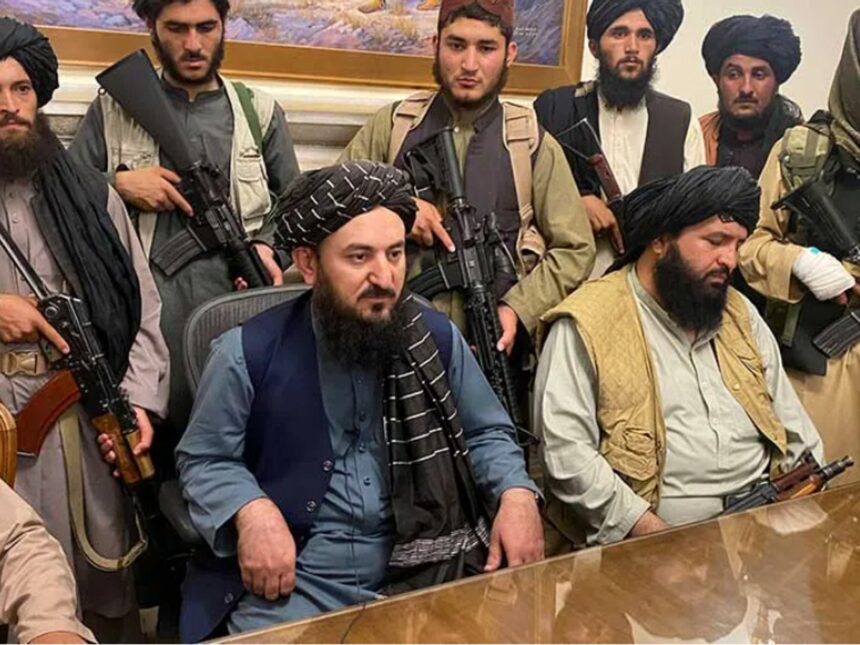
Amid the rising tensions following the Pahalgam terror attack in India, India has taken a significant step in its diplomatic strategy by engaging with the Taliban-led Afghan government. Anand Prakash, India’s Joint Secretary for the Pakistan, Afghanistan, and Iran (PAI) Division, held discussions with Afghanistan’s acting Foreign Minister Mawlawi Amir Khan Muttaqi in Kabul on April 27. This meeting focused on bilateral relations, regional developments, and potential areas of cooperation between India and Afghanistan.
The shift in India’s stance towards the Taliban reflects the evolving geopolitics of the region, particularly in the context of its relationship with Pakistan and China. While the Taliban’s rule remains contentious due to its human rights record, India is working to reclaim its influence in Afghanistan and ensure that the country does not become a breeding ground for anti-India elements.
The Nature of India’s Engagement with the Taliban
India’s engagement with the Taliban comes despite not officially recognizing the group’s government in Afghanistan. Since the Taliban’s takeover of Kabul in 2021, India has maintained a diplomatic presence in the form of a small team of “technical experts” ensuring humanitarian aid to the country. While India does not officially recognize the Taliban, it has continued providing support, sending wheat, medicines, COVID-19 vaccines, and winter clothing to Afghanistan.
This limited engagement ensures that India maintains a presence in Afghanistan, preventing it from becoming a safe haven for groups that could threaten India’s security. It also reflects India’s desire to rebuild its connections in Afghanistan, where it had previously invested heavily in development projects.
Economic and Diplomatic Goals for India in Afghanistan
During the meeting between Prakash and Muttaqi, the Afghan government stressed the importance of enhancing diplomatic and economic relations with India. The Taliban’s acting foreign minister highlighted investment opportunities in Afghanistan, particularly in trade and infrastructure development, urging Indian companies to explore these prospects.
India, in turn, has expressed its desire to continue assisting Afghanistan, especially in areas where its previous investments had been stalled. Prakash reassured the Afghan leadership that India would continue supporting infrastructure projects in the country and help with the development of the economy.
The Taliban, for its part, also urged India to ease visa restrictions, particularly for Afghan patients, students, and businessmen, to facilitate better people-to-people relations. The discussions reflected the mutual interest in strengthening bilateral ties, even though the broader political and humanitarian concerns about the Taliban’s rule remain.
A Strategic Shift in Regional Politics
India’s shift in diplomacy towards the Taliban is part of a broader regional strategy. While historically, India had supported the democratic government of Afghanistan under Ashraf Ghani, the Taliban’s rise to power forced New Delhi to reassess its approach. The fall of the Ghani government left a power vacuum that both Pakistan and China quickly moved to fill. Pakistan has maintained close ties with the Taliban, viewing Afghanistan as a means of gaining strategic depth against India, particularly after the U.S. withdrawal in 2021.
However, three years into Taliban rule, relations between Pakistan and Afghanistan have soured. Pakistan’s Taliban faction, the TTP (Tehreek-e-Taliban Pakistan), has used Afghan soil to launch attacks on Pakistan, a situation that has strained Islamabad’s relationship with Kabul. As a result, Afghanistan has been increasingly open to diplomatic engagement with India, despite the challenges posed by the Taliban’s oppressive policies.
India’s Cautious Approach
For India, the shift in diplomatic strategy does not mean an endorsement of the Taliban’s ideology or governance. Instead, it represents a calculated effort to secure its interests in a volatile region. The aim is to ensure that Afghanistan does not become a sanctuary for groups hostile to India while avoiding a situation where hostile powers like Pakistan or China dominate the region unchecked.
India’s diplomatic engagement is guided by the principle that it does not wish to “embrace” the Taliban, but it seeks to “ensure that Afghanistan does not turn into a geopolitical vacuum exploited by hostile forces.” This approach allows India to keep communication lines open and retain a presence in the region while avoiding deeper entanglements in the Taliban’s controversial governance.
Implications for India-Pakistan Relations
India’s engagement with the Taliban has important implications for its relationship with Pakistan. Pakistan has long viewed Afghanistan as part of its strategic depth, and it has used the Taliban to counter India’s influence in the region. By engaging diplomatically with the Taliban, India aims to limit Pakistan’s influence in Afghanistan and prevent it from using the country as a base for anti-India activities.
Pakistan’s military has been accused of using the Taliban as a proxy to carry out operations against India, and the Taliban’s rise has only strengthened Pakistan’s hand in this regard. India, on the other hand, is working to maintain a careful balance, ensuring that its engagement with Afghanistan remains focused on security concerns and humanitarian aid rather than legitimizing the Taliban’s regime.
A Delicate Balancing Act
India’s diplomatic shift towards the Taliban is a reflection of the changing geopolitical realities in South Asia. While India does not recognize the Taliban government, it is engaging with them pragmatically to ensure that Afghanistan does not become a breeding ground for terror groups targeting India. At the same time, India must navigate the complexities of its relationship with Pakistan and China, both of which have significant interests in Afghanistan. For India, the goal is clear: maintain influence in Afghanistan, safeguard regional security, and prevent Afghanistan from becoming a base for anti-India terror groups.