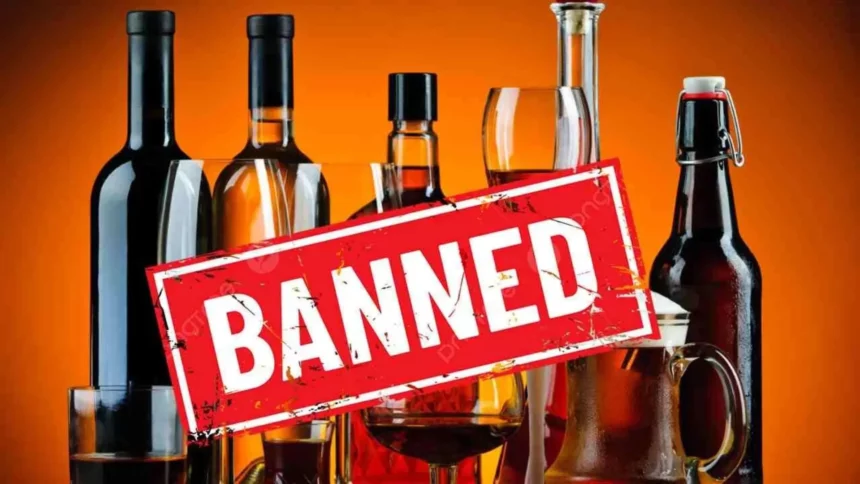
A complete liquor ban has come into effect in 19 religious cities and select gram panchayat areas across Madhya Pradesh, marking a significant step towards promoting de-addiction and respecting public faith. The move, which covers prominent religious sites like Ujjain, Omkareshwar, Maheshwar, and Maihar, was announced by Chief Minister Mohan Yadav and approved by the state cabinet on January 24 during a meeting in Maheshwar. The decision entails shutting down all liquor shops and bars in these designated regions, which have been officially declared “completely sacred” by the state government.
The ban applies to the entire urban limits of cities including Ujjain, Omkareshwar, Maheshwar, Mandleshwar, Orchha, Maihar, Chitrakoot, Datia, Panna, Mandla, Multai, Mandsaur, and Amarkantak. Additionally, liquor sales have been prohibited in the gram panchayat areas of Salkanpur, Kundalpur, Bandakpur, Barmankalan, Barmankhurd, and Linga. Authorities have instructed the closure of all establishments involved in the sale and distribution of alcohol in these areas, reinforcing the government’s commitment to de-addiction and preserving the sanctity of these religious sites.
Chief Minister Mohan Yadav hailed the decision as a “historic step” towards curbing alcoholism and maintaining the religious and cultural essence of these sacred towns. He emphasized that the move aligns with the sentiments of devotees and residents who have long demanded stricter regulations to uphold the spiritual significance of their cities. The ban reflects the government’s broader vision to promote social welfare and discourage substance abuse in areas of religious and historical importance.
Among the cities affected by the ban, Ujjain holds a special place as home to the revered Mahakaleshwar Temple, dedicated to Lord Shiva. Similarly, Amarkantak, considered the origin of the sacred Narmada river, is of immense spiritual significance. Other locations included in the prohibition list, such as Chitrakoot and Orchha, also attract a large number of pilgrims and tourists due to their religious heritage.
The BJP-led state government has positioned this decision as a moral and cultural obligation, aligning with public sentiments and the longstanding demand for stricter regulations in these areas. The enforcement of the ban is expected to be closely monitored by local authorities to ensure compliance and prevent illegal liquor trade. Officials have assured strict action against any violations, reinforcing the government’s commitment to making these religious hubs entirely alcohol-free.
As Madhya Pradesh takes this decisive step, the move is likely to spark discussions on whether similar measures should be extended to other religious locations across India. While supporters laud the initiative as a necessary measure for preserving cultural values, critics argue that effective implementation and rehabilitation programs will be key to its long-term success.