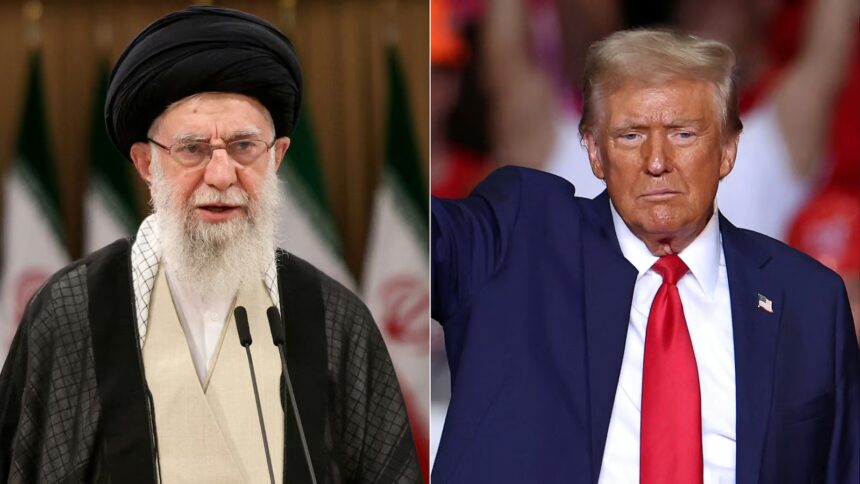
US President Donald Trump delivered a forceful warning to Iran regarding the ongoing nuclear negotiations, emphasizing that failure to reach a deal within the next month could result in “very traumatic” consequences for Tehran. Speaking a day after hosting Israeli Prime Minister Benjamin Netanyahu at the White House, Trump underscored that while he prefers a diplomatic resolution, he is fully prepared to escalate pressure if talks falter. The warning comes at a critical juncture as diplomacy between Washington and Tehran edges closer to a pivotal deadline, with international attention focused on whether both sides can achieve a mutually acceptable agreement. Trump’s remarks reflect the administration’s dual approach of combining negotiation with a clear display of military readiness, signaling that failure to conclude a nuclear deal may carry severe geopolitical repercussions.
The president emphasized the urgency of reaching an agreement, stating that the alternative to a deal would be “very dramatic” for Iran. Highlighting previous US military strikes on Iranian nuclear facilities during last year’s conflict in the region, Trump noted that Iran had missed an earlier opportunity to negotiate and now faces renewed pressure to come to the table. While diplomacy remains the preferred avenue, Trump hinted at the potential deployment of additional US military assets to the Middle East, including a second aircraft carrier, as a signal of readiness should negotiations fail. His statements illustrate the administration’s focus on maintaining leverage over Tehran while preparing for a range of contingency measures, from intensified sanctions to potential military options.
Trump’s Warning and Strategic Posturing in Nuclear Negotiations
President Trump’s statements represent a carefully calibrated combination of diplomatic engagement and strategic pressure. By underscoring the “traumatic” consequences of failure, Trump aimed to convey to Iran the seriousness with which Washington views its nuclear ambitions. Speaking to reporters, Trump stressed that the US is committed to reaching a deal but insisted that time is limited and that failure to act could have severe ramifications. His repeated emphasis on urgency signals that the US intends to maintain the initiative in the talks while making clear that military escalation is a viable alternative if diplomacy stalls. Analysts note that this approach is consistent with Trump’s broader foreign policy philosophy, which seeks to leverage both negotiation and show-of-force tactics to achieve desired outcomes.
The president’s warning follows a pattern of assertive statements in international negotiations, emphasizing deadlines and tangible consequences for non-compliance. In this context, Trump’s remarks serve both as a message to Iran and as a signal to allies and adversaries regarding the administration’s willingness to act decisively. By linking the potential fallout to past Iranian missteps, including the missed opportunity for negotiation during prior US strikes on nuclear facilities, Trump reinforced a narrative of accountability and pressure. His statements highlight a broader US strategy that combines diplomatic engagement, military preparedness, and targeted sanctions to achieve strategic objectives while preserving the option for further escalation if necessary.
In addition to signaling consequences, Trump conveyed optimism about the possibility of reaching an agreement. He expressed hope that negotiations would produce concrete results over the next month, emphasizing the importance of timely progress. At the same time, the president prepared both domestic and international audiences for the possibility that talks could fail, framing any future escalation as a measured response to Iran’s choices rather than unilateral aggression. This dual messaging reflects a strategic effort to maintain credibility in both diplomatic and security spheres, signaling seriousness while preserving flexibility for the US in the event of unforeseen developments.
Israeli Prime Minister Netanyahu’s Cautious Perspective and Support for Trump
While President Trump struck a firm and confident tone regarding Iran, Israeli Prime Minister Benjamin Netanyahu expressed a more cautious perspective on the negotiations. Speaking after his visit to the White House, Netanyahu acknowledged that the conditions being established by the US could create opportunities for a favorable deal but emphasized his skepticism regarding the quality and durability of any agreement. Netanyahu highlighted that negotiations with Iran are complex and multifaceted, extending beyond nuclear weapons to encompass regional security, missile programs, and broader geopolitical considerations. His measured stance reflects Israel’s dual priorities of encouraging diplomatic solutions while preparing for contingencies in the event of negotiation breakdowns.
Netanyahu also reinforced the personal and political alliance between Israel and the United States under Trump’s administration. Praising Trump’s support, Netanyahu’s remarks highlighted the shared commitment to regional security and strategic alignment between the two nations. The Israeli prime minister acknowledged past Iranian miscalculations and suggested that this historical context may influence Tehran’s approach to negotiations, potentially increasing the likelihood of compliance. At the same time, Netanyahu’s remarks reflected a recognition of the inherent uncertainty in dealing with Iran, signaling both cautious optimism and continued vigilance.
In addition to discussing nuclear negotiations, Trump voiced strong personal support for Netanyahu regarding the Israeli prime minister’s ongoing legal challenges. Trump criticized Israeli President Isaac Herzog for refusing a pardon and suggested that Netanyahu should receive leniency, further illustrating the US president’s willingness to engage personally and politically with key allies in the region. These remarks reinforced the perception of a close US-Israel partnership, with Trump positioning himself as a decisive supporter of Israel’s leadership amid a complex regional environment.
Resumption of Talks Amid Persistent Tensions
The United States and Iran resumed negotiations last week with discussions held in Oman, marking the first serious diplomatic engagement since previous talks were disrupted by regional conflict and US military action. Iran has maintained a firm stance, rejecting attempts to expand negotiations beyond the nuclear program and insisting that it has no intention of pursuing nuclear weapons. The resumption of talks reflects a shared interest in pursuing diplomacy while acknowledging that tensions remain high and trust is fragile. Trump’s public statements, coupled with the US administration’s visible preparation for military contingencies, illustrate the delicate balance between negotiation and deterrence that characterizes this phase of diplomacy.
Analysts highlight that the ongoing negotiations are occurring within a broader regional context marked by historical mistrust, strategic competition, and complex alliances. The resumption of talks coincides with heightened scrutiny from global actors, including European partners and regional stakeholders, who are monitoring both the progress of negotiations and the potential consequences of failure. The emphasis on a one-month timeline underscores the urgency with which Washington is approaching the talks, reflecting a desire to secure a diplomatic resolution while maintaining credible pressure on Tehran.
Trump’s insistence on the need for a deal is intertwined with a broader strategy of demonstrating resolve. By publicly warning of severe consequences, including potential military action, the administration seeks to create a credible deterrent while encouraging Iran to comply with US expectations. This approach is designed to complement diplomatic channels, leveraging both negotiation and the implicit threat of escalation to maximize leverage. The deployment of additional US military assets to the region, if executed, would further underscore the seriousness of the US position and serve as a tangible reminder to Tehran of the stakes involved in failing to reach an agreement.
Strategic, Regional, and Diplomatic Implications
The outcome of the US-Iran nuclear negotiations carries profound implications for regional stability, energy security, and global geopolitics. A successful agreement would likely reduce tensions in the Middle East, restore some measure of trust in multilateral diplomacy, and provide a framework for ongoing verification and compliance. Conversely, failure to achieve a deal could exacerbate regional instability, prompt further sanctions, and increase the risk of military escalation. Trump’s public statements, emphasizing both diplomacy and readiness to act, signal to both allies and adversaries that the US remains committed to safeguarding its strategic interests while encouraging Iran to adhere to international norms.
Economic considerations also intersect with strategic priorities. Sanctions relief, trade restrictions, and energy market dynamics are all influenced by the outcome of these negotiations. The potential for renewed conflict or continued uncertainty regarding Iran’s nuclear program could have ripple effects on global oil prices, regional investment patterns, and energy supply security. By publicly signaling potential consequences, Trump aims to influence not only Iranian decision-making but also the broader calculus of stakeholders across the region and globally.
The US approach to negotiations illustrates a layered strategy that balances immediate tactical objectives with long-term strategic planning. By maintaining open channels for diplomacy while simultaneously signaling readiness for military or economic escalation, Trump is attempting to navigate the high-stakes environment of nuclear negotiations in a manner that preserves US credibility, maximizes leverage, and encourages compliance without committing prematurely to any single course of action.
Conclusion of Strategic Overview
While the negotiations remain ongoing, Trump’s public remarks have already shaped the discourse surrounding US-Iran relations and regional security. His emphasis on urgency, coupled with clear warnings regarding the consequences of failure, creates a framework in which Iran must weigh both diplomatic incentives and potential punitive measures. Netanyahu’s cautious optimism, combined with Trump’s assertive positioning, reflects the interplay between allied coordination and the complexities of negotiating with a historically adversarial actor. As diplomacy unfolds over the coming month, both domestic and international stakeholders will closely monitor progress, the credibility of US threats, and the potential pathways toward resolution or escalation.
The delicate balance of diplomacy, military readiness, and regional alliance management underpins this critical moment in US-Iran relations. Trump’s warnings, while forceful, coexist with an expressed preference for a negotiated outcome, demonstrating the administration’s dual emphasis on leverage and engagement. The coming weeks will likely determine the trajectory of regional stability, the credibility of US diplomatic initiatives, and the potential for Iran to comply with international expectations.