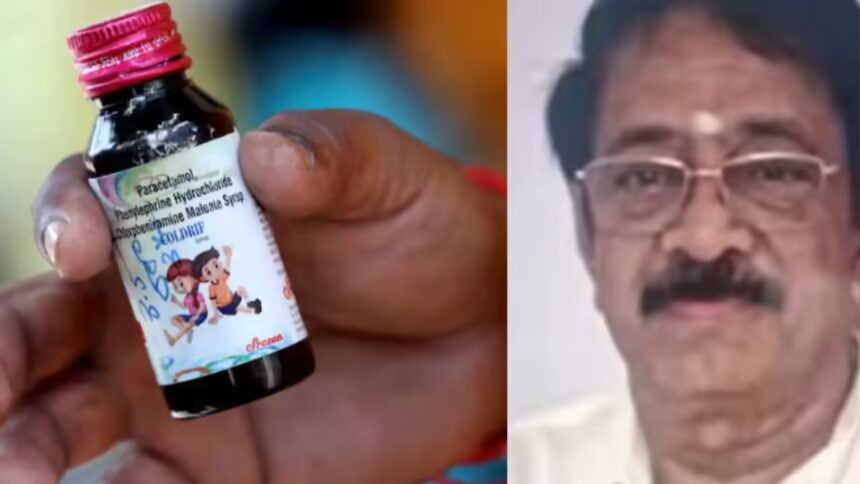
The arrest of S Ranganathan, owner of Sresan Pharmaceuticals, in connection with the deaths of multiple children following the consumption of the toxic cough syrup Coldrif, has sent shockwaves across India’s healthcare and regulatory systems. The controversial syrup, which has now been linked to the deaths of 19 children in Madhya Pradesh and Rajasthan, has raised serious questions about pharmaceutical safety, regulatory oversight, and the accountability of manufacturers in the country. Authorities have acted swiftly, with the Madhya Pradesh police taking Ranganathan into custody in Chennai before producing him before a court and securing his transit to Chhindwara. The case highlights a grave public health crisis and underscores the urgent need for tighter pharmaceutical regulation, stringent quality controls, and immediate action to prevent such tragedies in the future.
Investigation Intensifies as Tamil Nadu Pharma Owner Arrested
S Ranganathan, proprietor of the Chennai-based Sresan Pharmaceuticals, was arrested late last night following a widespread manhunt initiated after the deaths of children who consumed Coldrif cough syrup. Madhya Pradesh police apprehended Ranganathan in Chennai after extensive questioning and have confirmed that he will be produced before a local court today, following which he will be brought to Chhindwara under a transit remand order. Superintendent of Police Ajay Pandey detailed that the arrest comes in direct connection with at least twenty children falling critically ill and succumbing to severe kidney infections after taking the syrup. The deaths span multiple districts, with Chhindwara recording seventeen fatalities, Betul accounting for two, and Pandhurna one, while several other children remain hospitalized for treatment.
The Union Health Ministry confirmed that Coldrif contained diethylene glycol (DEG), a toxic chemical widely used in industrial solvents. Even trace amounts of DEG can be fatal, particularly for children, leading to kidney failure and other severe health complications. The deaths have sparked nationwide outrage, and states across India have immediately banned the manufacture, sale, and distribution of Coldrif. Officials have criticized the company for negligence and have emphasized the urgent need for accountability. A ₹20,000 reward was announced for information leading to Ranganathan’s arrest, underscoring the intensity of the nationwide search for the pharmaceutical owner.
The Sresan Pharmaceuticals firm had been supplying Coldrif to multiple regions, including Puducherry, Madhya Pradesh, Rajasthan, and select other areas, amplifying the scale of the crisis. On October 4, the Food Safety and Drug Administration Department conducted a critical inspection of the company’s manufacturing unit in Sunguvarchatram, Kancheepuram, where samples of Coldrif were collected and tested. Results revealed that the syrup was adulterated, prompting immediate orders to halt production. The Tamil Nadu government had already banned the sale of Coldrif from October 1 and directed that all remaining stocks be removed from the market to prevent further tragedies.
Public Health Crisis and Regulatory Failures Spotlighted by Coldrif Deaths
The Coldrif incident has exposed serious lapses in pharmaceutical regulation and oversight. While the syrup had been available in multiple states, the discovery of DEG contamination points to systemic failures in quality control and routine inspections. Children who consumed the syrup developed acute kidney infections, leading to rapid deterioration and death in many cases. Health authorities and hospitals have been overwhelmed with cases of poisoning, and the incident has created widespread panic among parents and caregivers.
Madhya Pradesh Deputy Chief Minister and Health Minister Rajendra Shukla has reported that twenty children died after consuming Coldrif, with several others currently undergoing treatment. The deaths have prompted authorities to intensify investigations into the company, its manufacturing practices, supply chains, and distribution networks. Experts have described the incident as a grave warning for the pharmaceutical industry, highlighting the critical need for ensuring that medicines, particularly those intended for children, meet rigorous safety standards.
The federal government, alongside state authorities, is coordinating to track all distributions of Coldrif, remove adulterated stock from the market, and provide medical support to affected families. Authorities are also exploring legal avenues to ensure that those responsible, including company executives and associated personnel, face stringent punitive actions. Investigators are meticulously examining production records, supplier documents, and quality control protocols to determine whether negligence or deliberate malfeasance led to the contamination.
The Coldrif case has ignited public debates about the safety of over-the-counter medications, the efficiency of drug regulatory mechanisms, and the urgent need for transparency in pharmaceutical manufacturing. Civil society groups and healthcare activists have called for stricter inspections, mandatory reporting of adverse drug effects, and criminal accountability for violations of safety standards. The deaths of innocent children have made this a matter of national outrage, putting pressure on governments at both the state and central levels to act decisively.
The Tamil Nadu government’s prompt ban on Coldrif and the removal of existing stocks have been crucial steps in containing the immediate risk, but the incident also raises broader concerns about supply chain integrity, regulatory enforcement, and the responsibility of pharmaceutical firms to prioritize public health over profit. The incident also underscores the importance of public awareness, as parents and caregivers remain the first line of defense against potentially dangerous medicines.
Medical experts have noted that the consumption of diethylene glycol can have severe and often fatal consequences, especially for children, whose bodies are less capable of metabolizing toxic substances. Kidney infections, multi-organ failure, and neurological symptoms are commonly reported in cases of DEG poisoning, requiring urgent medical intervention. Hospitals in Madhya Pradesh and Rajasthan are working around the clock to provide critical care to affected children, while health authorities continue tracing the spread of contaminated syrup.
Investigators are also examining the role of intermediaries, distributors, and retailers who may have sold Coldrif despite awareness of its potential dangers. Authorities are considering action against those who facilitated the distribution of adulterated medicine, emphasizing that accountability must extend beyond the manufacturing company itself. Legal experts have suggested that S Ranganathan could face multiple charges, including culpable homicide, negligence, and violations of drug safety regulations.
The incident has also drawn attention from the media, civil society, and public health organizations nationwide. Coverage has focused on the systemic weaknesses that allowed the toxic syrup to reach children and the urgent need for reforms in regulatory frameworks governing pharmaceuticals. Social media has amplified public outrage, with calls for swift justice, stricter penalties for violations, and reforms to ensure that such incidents never recur.
In addition to immediate medical response and legal proceedings, health authorities are working to raise awareness among parents about the dangers of Coldrif and other potentially adulterated medicines. Guidelines have been issued for identifying symptoms of DEG poisoning and seeking immediate medical intervention. The federal government is coordinating with state agencies to ensure that health facilities are equipped to handle emergencies arising from toxic medicine consumption.
The Coldrif tragedy has emphasized that public health, regulatory vigilance, and corporate responsibility are deeply interconnected. The deaths of children in Madhya Pradesh and Rajasthan serve as a sobering reminder that pharmaceutical negligence can have devastating human consequences. Experts insist that lessons from this case must inform future regulatory reforms, tighter monitoring, and proactive interventions to protect vulnerable populations.
Investigations into Sresan Pharmaceuticals are ongoing, with authorities examining the company’s entire production process, storage, distribution channels, and adherence to safety protocols. Officials have vowed to ensure that no responsible party escapes accountability. The arrest of S Ranganathan marks a significant step in the legal proceedings, signaling that authorities are treating the matter with the seriousness it demands.
As the case unfolds, authorities continue to collaborate with healthcare professionals, regulatory agencies, and law enforcement to provide treatment, prevent further consumption of Coldrif, and ensure that affected families receive support and justice. The incident has reignited public discourse on pharmaceutical safety and regulatory oversight, emphasizing the need for a comprehensive review of systems designed to protect citizens from toxic or adulterated medicines.
The Coldrif case stands as a stark warning for the pharmaceutical industry, government regulators, and the public, highlighting the catastrophic consequences of negligence and the urgent need for vigilance. It underscores that in matters of public health, timely action, transparency, and accountability are non-negotiable. Authorities remain committed to tracing all possible channels through which the toxic syrup reached children and ensuring that justice is served to prevent future tragedies.
The incident has also prompted discussions on international best practices in pharmaceutical safety, with experts calling for benchmarking against global standards, routine inspections, and immediate corrective measures in cases of contamination. Advocacy groups have stressed the importance of independent audits, whistleblower protections, and stronger penalties to create a culture of accountability within the pharmaceutical sector.
With investigations underway and legal proceedings ongoing, the focus remains on ensuring that affected families receive adequate medical care, removing adulterated medicines from the market, and holding responsible parties accountable. The Coldrif tragedy has become a critical case study in pharmaceutical safety, regulatory enforcement, and public health policy, shaping the future approach to drug safety in India.