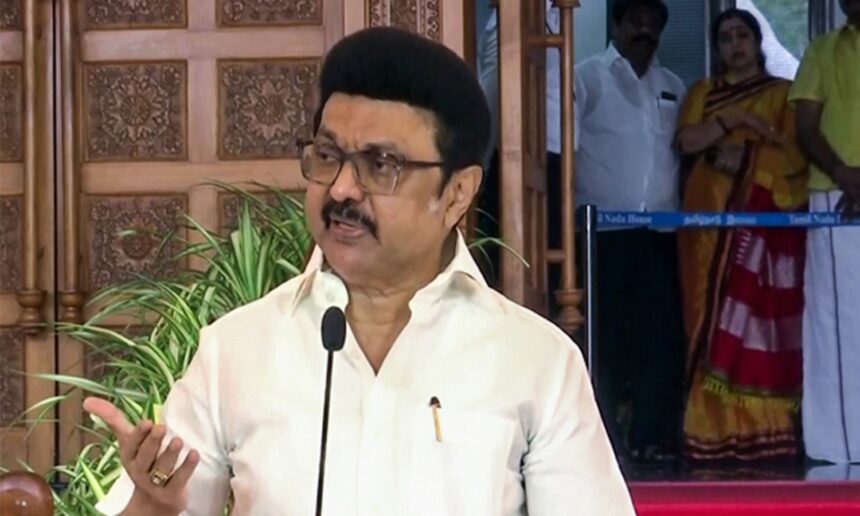
In the wake of the tragic Karur stampede that claimed 41 lives during actor-politician Vijay’s rally, Tamil Nadu Chief Minister M.K. Stalin has taken decisive steps to establish clear Standard Operating Procedures (SoP) for political gatherings across the state. On Tuesday night, Stalin convened a meeting at his residence with senior legal experts, including N.R. Elango, to discuss a draft bill aimed at regulating political rallies, meetings, and public assemblies. The initiative reflects a proactive approach to public safety while balancing the democratic right to political expression. The discussion comes at a critical juncture, just a day after the Supreme Court transferred the probe of the Karur stampede from the Madras High Court-appointed Special Investigation Team (SIT) to the Central Bureau of Investigation (CBI), highlighting the urgency of implementing preventive mechanisms for future events. Officials indicate that the bill will establish standardized guidelines for all political parties, ensuring safety protocols are consistently followed during mass gatherings and public meetings across Tamil Nadu.
Drafting the SoP Bill: Stalin’s Strategic Approach to Public Safety in Political Events
The meeting held at Stalin’s residence focused on creating a comprehensive framework to prevent disasters similar to the Karur stampede. Senior legal advisors and policymakers discussed measures that would be included in the draft bill, emphasizing crowd control, venue safety, emergency preparedness, and accountability for organizers. The proposed SoP would require political parties to adhere to detailed safety protocols before conducting rallies, including coordination with law enforcement, medical preparedness, and infrastructure assessment to mitigate risks during high-attendance events. Officials noted that the initiative is aimed at establishing a long-term strategy that prioritizes citizen safety while allowing democratic political expression to continue unhindered. This approach is designed not only to provide immediate safety measures but also to create a model framework that could potentially be replicated across India.
The Karur tragedy has acted as a catalyst for these developments. On September 27, a stampede during the Tamilaga Vetri Kazhagam (TVK) rally, led by actor-politician Vijay, resulted in the loss of 41 lives. The incident exposed gaps in crowd management and emergency response protocols, prompting the Supreme Court to intervene and transfer the investigation to the CBI. In response, the Tamil Nadu government convened a special assembly session to mourn the victims, during which all MLAs, including members of the ruling DMK, opposition AIADMK, and BJP, observed a two-minute silence. The legislative session, scheduled to conclude on October 17, is expected to also consider supplementary budget estimates, further reflecting the government’s intent to address both administrative and humanitarian aspects of public safety.
By initiating this bill, Stalin aims to institutionalize preventive measures that ensure political rallies and gatherings are conducted in a safe and organized manner. The bill would outline responsibilities for organizers, mandate coordination with local authorities, and establish accountability mechanisms for non-compliance. Such guidelines are expected to cover all facets of event management, including entry and exit points, crowd density monitoring, medical facilities, communication protocols, and real-time reporting mechanisms for emergencies. The overarching goal is to prevent loss of life in future public gatherings, ensuring that political activities continue without compromising public safety.
Political and Administrative Implications of the SoP Bill for Tamil Nadu and Beyond
The drafting of this bill carries significant implications for both state politics and broader administrative governance. It signals a move by the Tamil Nadu government to proactively address safety concerns while maintaining political neutrality. Stalin has consistently emphasized that the initiative is not about political blame but about creating a systematic framework to safeguard citizens during political events. The CM has stressed that the SoP model, once formalized, could serve as a blueprint for other states in India, demonstrating Tamil Nadu’s leadership in combining democratic processes with public safety measures.
Furthermore, the legislative process surrounding this bill underscores the importance of collaboration between political leadership, legal experts, and administrative authorities. By involving senior lawyers and policymakers in drafting the guidelines, the government aims to ensure that the bill is legally robust and practically enforceable. This collaborative approach seeks to harmonize safety regulations with political freedoms, ensuring that citizens can participate in democratic events without undue risk. The bill also reflects growing awareness among political parties about the need to institutionalize safety measures, as adherence to such standards would likely become a legal requirement for conducting rallies and public gatherings in the future.
The move has also sparked discussions on the broader governance responsibilities of political parties. With standardized procedures in place, political organizations would be expected to implement safety measures proactively, rather than relying solely on state authorities. This shift is likely to enhance accountability and promote a culture of precaution in public event management. Analysts suggest that such reforms could significantly reduce the likelihood of stampedes or similar tragedies, fostering public confidence in both political leadership and administrative oversight.
Additionally, the timing of this initiative highlights the government’s responsiveness to judicial directives and public sentiment. The Supreme Court’s transfer of the Karur stampede probe to the CBI underscores the need for systemic reforms in crowd management and safety protocols. By moving swiftly to draft a bill, Stalin demonstrates a commitment to addressing the root causes of such incidents while providing a legislative framework to prevent future occurrences. The proposed SoP bill is expected to integrate lessons learned from the Karur tragedy, applying both technical expertise and legal guidance to ensure comprehensive safety measures.
The introduction of this bill could also have wider political implications for the state. It positions the DMK-led government as a proactive administration prioritizing citizen safety while fostering democratic participation. By establishing a legal framework for safe political gatherings, the government aims to set a precedent for accountability and risk management, encouraging other states to adopt similar measures. This legislative initiative may also influence public perception, reinforcing the message that Tamil Nadu’s political leadership is committed to preventing tragedies, irrespective of party affiliations.
As the special assembly session continues, with supplementary budget estimates expected to be tabled, the SoP bill is likely to become a central focus of legislative deliberations. The CM’s meeting with legal experts indicates that the government is taking a structured and evidence-based approach to drafting the guidelines. Experts suggest that the bill will cover all essential elements of public event management, from pre-event planning and crowd monitoring to post-event evaluation and emergency response, ensuring a comprehensive and enforceable framework.
Chief Minister M.K. Stalin’s initiative to draft a bill on Standard Operating Procedures for political gatherings represents a significant step toward institutionalizing public safety measures in Tamil Nadu. By integrating legal, administrative, and practical perspectives, the government seeks to create a robust framework that protects citizens, enhances accountability, and sets a model for other states in India. The Karur tragedy has catalyzed this policy innovation, underscoring the importance of proactive governance in managing large-scale public events. As the legislative process unfolds, the proposed bill is expected to play a critical role in shaping the future of political event management, ensuring that democratic participation is safe, organized, and accountable.