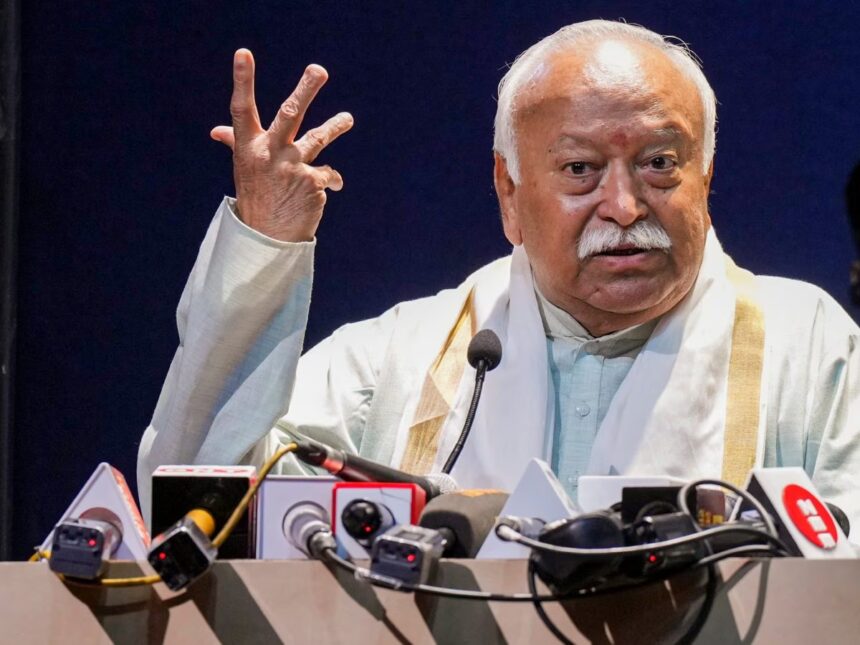
The Rashtriya Swayamsevak Sangh (RSS) and its affiliated economic organisations convened a comprehensive two-day review meeting in Delhi, attended by RSS chief Mohan Bhagwat, to deliberate on strategic priorities aimed at fostering a self-reliant and sustainable economic model for India. Representatives from six key organisations linked to the Sangh, including Swadeshi Jagran Manch (SJM), Bhartiya Mazdoor Sangh (BMS), and Laghu Udyog Bharati (LUB), came together to discuss pressing economic, social, and environmental issues. The meeting emphasized the integration of sustainable development, responsible entrepreneurship, fair labour practices, environmental stewardship, and safeguarding youth from detrimental digital influences, aligning with the vision of a “New India” driven by self-reliance and national priorities. The discussions reflected the RSS’s approach to blending traditional economic principles with contemporary challenges, highlighting the importance of holistic planning that balances growth, social welfare, and ecological responsibility.
Prioritizing Self-Reliance, Entrepreneurship, and Youth Empowerment
Central to the deliberations was the concept of self-reliance as a fundamental driver of India’s future economic growth. Organisers underscored that the country’s demographic dividend could only be fully realised when young people are empowered to create their own opportunities rather than depending solely on conventional employment avenues. The representatives discussed the critical need to bolster small-scale enterprises, start-ups, and self-employed individuals through robust support systems, policy incentives, and accessible financial infrastructure. They highlighted the potential of entrepreneurial innovation to stimulate job creation, encourage skill development, and foster a culture of economic independence that aligns with the vision of Swadeshi and local manufacturing.
The meeting also focused on the growing influence of digital technologies and online platforms on youth behaviour. Organisations such as the Swadeshi Jagran Manch expressed strong support for the government’s decision to ban certain online gaming applications, emphasizing the addictive nature of these platforms and their corrosive effect on young minds. Discussions stressed the necessity of promoting healthy digital engagement, creativity, and learning while shielding youth from exploitative or harmful online content. Representatives argued for the development of educational and skill-based digital initiatives, proposing measures that combine technological literacy with ethical guidance to cultivate a generation of responsible and self-reliant citizens.
In addition, entrepreneurship and self-reliance were seen as interconnected with national economic priorities. By fostering a culture of self-employment and innovation, the organisations argued, India could reduce dependency on foreign capital and imports, strengthen local industries, and achieve sustainable economic resilience. Several members highlighted the importance of integrating traditional business practices, ethical labour values, and community engagement into modern entrepreneurial frameworks, ensuring that economic growth contributes to societal welfare while remaining culturally grounded. The discussions also reflected the RSS’s long-standing emphasis on Swadeshi principles, advocating for domestic production, local enterprise, and the use of indigenous resources as a pathway to national prosperity and global competitiveness.
Labour Reforms, Social Justice, and Environmental Sustainability
Another significant aspect of the discussions revolved around the implementation of labour codes and reforms in India. Organisations like the Bhartiya Mazdoor Sangh, the labour wing of the RSS, stressed the importance of ensuring that newly framed labour regulations are enforced effectively and fairly. The representatives highlighted that sustainable economic growth depends on the protection of workers’ rights and equitable industrial development. The discussions examined the balance between encouraging investment, industrial productivity, and social justice, with a clear focus on creating a legal and operational environment where both employers and employees can thrive harmoniously. Emphasis was placed on social equity, ethical employment practices, and compliance with labour standards to foster a stable and resilient workforce capable of supporting long-term national development goals.
Environmental sustainability emerged as a non-negotiable pillar of economic planning during the meeting. Representatives stressed that economic development must occur in harmony with ecological responsibility, urging policymakers, industries, and entrepreneurs to integrate environmental considerations into every stage of planning and execution. The discussions reflected concerns over resource depletion, climate change, and the environmental impact of rapid industrialisation, highlighting the need for strategies that promote renewable energy, sustainable manufacturing, and environmentally responsible investment. Participants underscored that maintaining ecological balance is crucial not only for long-term economic stability but also for safeguarding public health, biodiversity, and community well-being.
The representatives collectively reaffirmed their commitment to driving a model of economic development that aligns with the RSS’s ideology, focusing on national self-reliance, sustainable practices, and ethical labour frameworks. The discussions underscored the necessity of integrating social, environmental, and economic dimensions into policy planning, reflecting a holistic approach to governance and national development. The meeting also highlighted the RSS’s intent to act as a catalyst for shaping economic thought in India, encouraging collaboration among entrepreneurs, labour representatives, environmentalists, and policymakers to implement practical solutions aligned with long-term national objectives.
Throughout the two-day meeting, Mohan Bhagwat’s presence provided strategic guidance and a unifying vision, emphasizing the importance of sustained dialogue among the RSS-affiliated economic organisations. The discussions highlighted the interconnectedness of self-reliance, youth empowerment, ethical labour practices, environmental stewardship, and the promotion of Swadeshi principles in creating a resilient and equitable economic framework. The participants agreed that long-term economic security requires not only policy innovation but also cultural and ethical grounding, encouraging responsible decision-making at both institutional and individual levels.
The meeting concluded with a consensus on the critical role of the RSS’s economic wings in steering India’s growth trajectory toward sustainability, self-reliance, and youth-centric development. Representatives outlined actionable priorities, including strengthening support for start-ups, improving labour rights implementation, promoting sustainable industrial practices, and fostering a digital environment that protects young citizens from harmful influences. By integrating ethical, social, and environmental considerations into economic strategies, the organisations aim to model a comprehensive framework for national development that is both inclusive and forward-looking.
The Delhi gathering demonstrated the RSS’s proactive engagement with contemporary economic challenges, reflecting its commitment to harmonizing ideological principles with practical policy recommendations. The discussions emphasized the need for a strategic balance between economic expansion, social justice, environmental responsibility, and technological adaptation. Participants explored mechanisms to encourage innovation, entrepreneurship, and responsible digital engagement, highlighting the importance of ethical governance and community-centric development.
In essence, the meeting showcased a vision of a New India built on the pillars of self-reliance, sustainable growth, equitable labour practices, environmental balance, and youth empowerment. By advocating policies that integrate these dimensions, the RSS-affiliated economic organisations aim to provide a blueprint for long-term national prosperity, grounded in ethical values, cultural pride, and practical governance. The deliberations also reflected an awareness of the dynamic challenges of a globalised economy and the importance of preparing India’s workforce and youth to navigate these challenges effectively, ensuring that development remains inclusive, responsible, and sustainable.
The two-day review underscored the RSS’s role in actively shaping discourse around economic policy, national priorities, and societal well-being. By combining strategic guidance, cultural principles, and practical recommendations, the organisations have sought to establish a framework that reinforces self-reliance, promotes ethical entrepreneurship, safeguards youth, and ensures environmental stewardship, paving the way for a resilient and prosperous New India.
This comprehensive deliberation by the RSS’s economic wings in Delhi provides insights into their priorities for fostering a self-reliant, sustainable, and ethically grounded economic framework for India. By focusing on youth empowerment, entrepreneurship, social justice, and environmental sustainability, the Sangh-affiliated organisations aim to influence policy and practice in a manner consistent with long-term national growth and stability, emphasizing a model of development rooted in Indian values and forward-looking strategic planning.
The discussions at the Delhi meeting exemplify the RSS’s strategic approach toward creating a balanced and resilient economy, reflecting the organisation’s long-standing ideological commitment to Swadeshi, self-reliance, and socially responsible development. With Bhagwat’s guidance and active participation, the economic wings reaffirmed their dedication to advancing policies that ensure equitable growth, ethical business practices, environmental responsibility, and the protection and empowerment of India’s youth.
Through this meeting, the RSS economic organisations have positioned themselves as key influencers of economic thought, seeking to align development strategies with the principles of sustainability, ethical governance, and national self-reliance. By advocating actionable measures and fostering dialogue across stakeholders, the Sangh aims to promote an integrated approach to economic development that addresses contemporary challenges while remaining true to its ideological foundations.
The outcomes of this review will likely influence policymaking, support the growth of entrepreneurship, ensure effective labour reforms, and integrate environmental consciousness into India’s broader economic agenda. By focusing on practical implementation, the organisations are working toward creating a cohesive strategy for national development that balances growth, social equity, environmental protection, and youth-centric policies, reflecting a vision for a New India that is sustainable, self-reliant, and ethically grounded.
The RSS’s economic wings’ deliberations in Delhi mark a significant effort toward shaping India’s economic future, combining ideological vision with practical policy frameworks, and highlighting the organisation’s commitment to nurturing a self-reliant, responsible, and sustainable economy for generations to come.
This extensive discussion underscores the strategic priorities of the RSS’s economic organisations, emphasizing sustainability, self-reliance, youth empowerment, fair labour practices, and environmental responsibility as pillars of a forward-looking and resilient Indian economy.