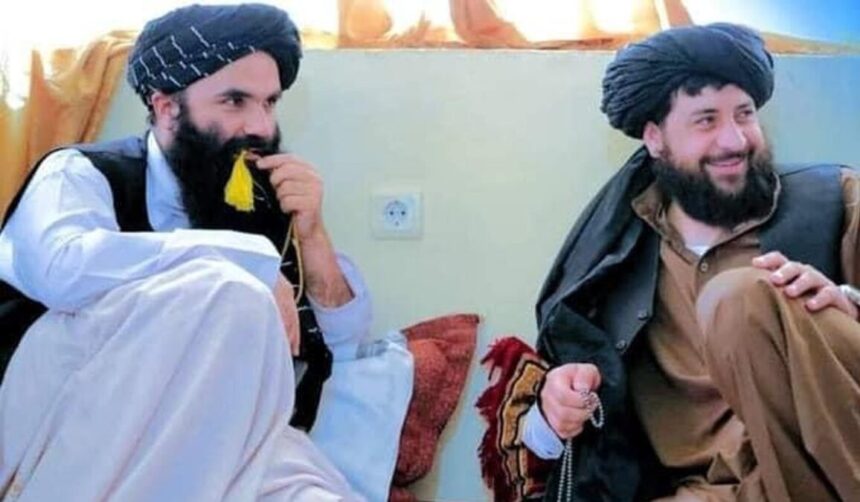
A growing internal power struggle has emerged within the Taliban leadership, revealing widening tensions between supreme leader Hibatullah Akhundzada and interior minister Sirajuddin Haqqani, a conflict that is reshaping the organisation’s internal dynamics and raising broader concerns about Afghanistan’s future stability and governance under the group’s rule.
Rival centres of authority expose widening fractures inside Taliban leadership
Reports from within Afghanistan and observations by regional analysts indicate that the relationship between Hibatullah Akhundzada and Sirajuddin Haqqani has gradually shifted from quiet disagreement to visible confrontation. This shift signals a dramatic escalation in the competition for influence inside the Taliban, an organisation often perceived as tightly regimented but now showing signs of internal instability.
Hibatullah Akhundzada, operating from Kandahar, holds the highest position in the Taliban hierarchy. Since assuming leadership in 2016, he has shaped the movement around a rigid ideological core. His decisions are viewed as absolute, and his conservative religious interpretations have heavily influenced the Taliban’s governance since their takeover of Afghanistan in 2021. His leadership style relies on secrecy and centralised control, with a preference for maintaining authority through highly restricted communication and strict oversight of decision-making.
Sirajuddin Haqqani, in contrast, represents a more operationally powerful faction within the organisation. As interior minister, he oversees internal security, policing, and intelligence operations throughout Afghanistan. He is also the head of the Haqqani network, historically one of the most militarily active and influential components of the Taliban. While Akhundzada remains the ideological head of the movement, Haqqani’s control over fighters, security structures, and weapons gives him considerable leverage.
The friction between these two factions began surfacing more prominently as Haqqani delivered speeches citing the importance of battlefield fighters and criticising leaders who claim credit without participating in direct conflict. Although Haqqani avoided naming individuals, observers widely interpreted his comments as directed at Akhundzada and his circle.
This public airing of grievances was unusual and therefore significant. Traditionally, Taliban leaders refrain from expressing internal disagreements in public forums. Haqqani’s decision to adopt a more assertive tone suggests a strategic effort to challenge the supreme leader’s centralised authority, or at minimum, reshape the narrative of power within the organisation.
Akhundzada’s response came through a series of administrative directives designed to tighten his control. One such order required that all military equipment distribution, allocation, or movement must receive approval directly from the supreme leader’s office. This directive was viewed as a deliberate move to limit independent operational authority within ministries, particularly curbing Haqqani’s influence over security forces.
These developments highlight the shifting balance of power within the Taliban. The movement, once united through years of insurgency, now faces internal divisions rooted in contrasting visions for governance, strategic direction, and religious authority. One faction, aligned with Akhundzada, prioritises strict ideological rule and rigid social controls. Another, influenced by Haqqani, is more pragmatic, seeking to maintain power through operational control, strategic flexibility, and a more visible public role.
The power struggle has also brought underlying organisational tensions to the surface. The Taliban is not a monolithic group; rather, it comprises various factions formed over decades of conflict, exile, and guerrilla warfare. The differences between Kandahar-based leadership figures and Kabul-based ministers reflect enduring geographic, ideological, and strategic divergences.
These deepening divisions have led analysts to warn that the group’s unity is becoming increasingly fragile. While the Taliban maintains control over Afghanistan’s government machinery, the lack of consensus among leaders could weaken policy consistency, internal security cohesion, and overall governance stability. The emerging rift between Akhundzada and Haqqani may also encourage other factions to take sides, further expanding the fault lines within the movement.
Impact on governance, Afghan society and international engagement as tensions escalate
The growing rivalry between Akhundzada and Haqqani extends beyond personal or factional disputes and poses real challenges for Afghanistan’s governance. Internal tensions have already triggered shifts in security deployments, administrative procedures, and political alliances within the Taliban’s governing apparatus.
In Kabul, reports describe an increase in security measures, with forces aligned to different leaders being carefully positioned to avoid clashes and maintain proximity to key government facilities. Observers have noted increased monitoring and strategic troop movements in areas under the control of ministries associated with Haqqani, signalling the supreme leader’s attempt to ensure loyalty and prevent any form of insubordination.
For ordinary Afghans, who continue to endure severe humanitarian, economic, and social hardship