In the wake of a major controversy surrounding the absence of women journalists at a media interaction with Taliban Foreign Minister Amir Khan Muttaqi in New Delhi, the spotlight has shifted to both the challenges and courage exhibited by women reporters in India. US Congresswoman Sydney Kamlager-Dove on Thursday lauded the presence of Indian women journalists at a subsequent presser, highlighting their determination to assert their professional rights and voice their perspectives in an environment often hostile to female participation. The incident not only reignited debates on gender equity in journalism but also prompted international commentary, underscoring the continuing global struggle for women’s rights in media and diplomacy.
Women Journalists Confront Challenges and Assert Their Rights
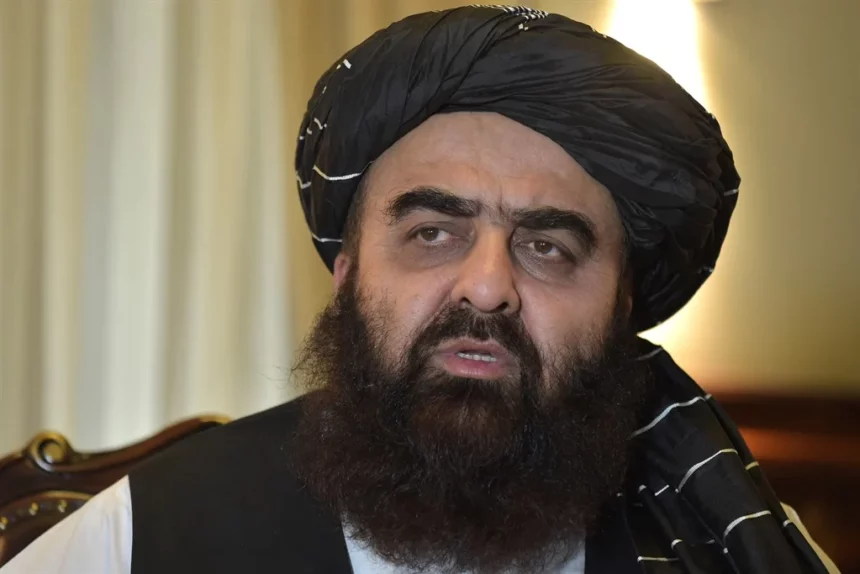
The controversy began when Amir Khan Muttaqi, the Taliban’s Foreign Minister, visited India last week on a diplomatic mission that included meetings with Foreign Minister S. Jaishankar and a visit to the religious seminary Darul-uloom Deoband in Uttar Pradesh. While the visit itself was diplomatically significant, the press conference held at the Afghan Embassy in New Delhi quickly became the focal point of public outrage. Reports indicated that women journalists were entirely excluded from the event, an omission that sparked widespread criticism from media observers, political leaders, and international stakeholders. Opposition parties in India were particularly vocal, questioning the central government’s oversight and raising concerns about the precedent set by allowing female reporters to be barred from official diplomatic engagements.
In response to the initial controversy, the Indian government clarified its position, stating that it had no role in organizing the presser. Meanwhile, the Taliban justified the exclusion as a “technical issue,” a rationale that did little to assuage critics. Amid this environment of criticism and debate, women journalists demonstrated resilience and persistence by attending the subsequent press interaction, reaffirming their commitment to professional accountability and equal participation. Their presence sent a powerful message not only to domestic audiences but also to the international community regarding the importance of gender parity in media coverage and diplomatic engagements.
US Congresswoman Sydney Kamlager-Dove responded strongly to the situation, publicly praising the Indian women journalists for “speaking truth to power” and standing up for their right to participate equally in press events. In her statement, Kamlager-Dove highlighted the contrast between the rights enjoyed by women journalists in India and the systematic suppression of such rights in Afghanistan under Taliban rule. She emphasized that the global community, particularly governments and international institutions, cannot remain silent in the face of the erasure of Afghan women from public, political, and media spaces. Her remarks underscored the ongoing responsibility of international actors to advocate for gender equity in diplomacy and to challenge practices that exclude or marginalize women in professional and civic life.
Kamlager-Dove’s Remarks and Global Implications
The US lawmaker’s commendation of Indian women journalists carries both symbolic and practical significance. Symbolically, it affirms the bravery and professional integrity of women reporters who refuse to be sidelined despite systemic challenges. By highlighting their presence at the subsequent presser, Kamlager-Dove reinforced the idea that women’s voices in media are essential to holding power accountable and shaping public discourse. Practically, her statements serve as a call for sustained international advocacy regarding women’s rights in countries governed by restrictive regimes. The US Congresswoman stressed that engagement with the Taliban or any similar authority should consistently address the systemic exclusion of women from public and professional spaces.
The Taliban minister’s visit itself, while primarily diplomatic in nature, has inadvertently amplified discussions surrounding women’s access to press forums. Traditionally, diplomatic engagements involving high-profile foreign delegations in India have ensured participation of a diverse media contingent, reflecting a commitment to equitable reporting and transparency. The exclusion of female journalists during Muttaqi’s initial press conference thus represented a significant deviation from established norms and highlighted the continuing global challenges faced by women in journalism. Analysts have noted that such incidents, even when addressed subsequently, illustrate the fragility of women’s rights in professional spheres and the need for proactive measures to safeguard inclusive participation.
The controversy also prompted internal reflection within India’s journalistic community. Many senior editors and journalists emphasized that ensuring women’s presence at press events is not merely a matter of optics but a fundamental aspect of media integrity. Female reporters play a critical role in shaping narratives, questioning authorities, and bringing diverse perspectives to the public sphere. Their absence, even temporarily, underscores structural inequalities and the potential marginalization of half the population in critical discussions regarding national and international policy. By attending the subsequent presser, women journalists reaffirmed the principle that media access and professional participation must be non-negotiable, reinforcing their essential role in democratic societies.
Furthermore, Kamlager-Dove’s statements drew attention to the stark contrast between women’s rights in India and Afghanistan. Under Taliban governance, Afghan women have been systematically stripped of opportunities to participate in public life, including in education, employment, and media professions. By praising Indian women journalists, the US lawmaker highlighted not only their courage but also the responsibility of global actors to challenge oppressive policies and advocate for the inclusion of women in all spheres of public and professional life. Her remarks implicitly called for sustained diplomatic pressure, international solidarity, and advocacy to ensure that Afghan women’s rights are recognized and protected in ongoing engagements with the Taliban.
The incident has further sparked broader conversations about gender sensitivity, media responsibility, and the role of international oversight in diplomatic interactions. While the immediate controversy centered on the absence of women journalists at a single press conference, the implications extend beyond the event itself. Experts argue that such episodes reveal persistent gaps in institutional safeguards for gender equality and the need for systemic reforms to prevent marginalization in professional and diplomatic spaces. The coverage of the Taliban visit and subsequent international response underscore the intersection of media freedom, gender rights, and global diplomatic norms.
In addition to global attention, the controversy has prompted discussions about the practical steps required to ensure women’s inclusion in high-profile press interactions. Media organizations in India have reiterated the importance of proactive planning, equitable accreditation, and oversight mechanisms to prevent exclusions based on gender or other discriminatory factors. The incident involving the Taliban minister has acted as a catalyst for internal reviews, prompting newsrooms to reinforce policies that guarantee equal access and representation for women journalists. Such measures are viewed as essential to maintaining media credibility, fostering inclusive reporting, and strengthening democratic accountability.
Kamlager-Dove’s recognition of Indian women journalists also reinforces the significance of solidarity among female professionals globally. By highlighting their actions and courage, she has drawn attention to the broader movement advocating for gender equality in journalism and public life. This solidarity sends a clear message to authoritarian regimes and restrictive authorities that the international community is attentive to gender disparities and prepared to celebrate and protect those who challenge discriminatory practices. Her comments serve both as praise for the journalists involved and as an implicit warning to entities seeking to exclude women from critical arenas of discourse.
The sequence of events, from the initial exclusion to the subsequent presser and international acknowledgment, demonstrates the importance of persistence, advocacy, and principled action. Indian women journalists’ decision to participate despite earlier exclusion reflects their commitment to professional ethics, courage in the face of systemic obstacles, and unwavering dedication to democratic values. Their actions illustrate that ensuring women’s participation in public and professional spaces is an ongoing struggle requiring both domestic advocacy and international support.
In summary, the response of US Congresswoman Sydney Kamlager-Dove to the Taliban press conference controversy serves as a potent reminder of the ongoing global challenges faced by women journalists. By praising their presence and courage, she has highlighted the importance of gender equity, media freedom, and international accountability in the context of diplomatic engagements. The episode underscores the need for consistent advocacy, policy safeguards, and societal commitment to ensuring that women can participate fully and equally in public life, professional arenas, and media coverage.
The Indian media’s proactive steps, coupled with international recognition, demonstrate a growing awareness and commitment to gender inclusivity. As diplomatic engagements continue and global attention remains focused on issues of women’s rights, this incident may serve as a benchmark for future press interactions, both in India and internationally, emphasizing that exclusion based on gender is unacceptable and counterproductive to democratic principles and professional ethics.
Overall, the episode reflects the convergence of domestic courage, professional integrity, and international advocacy, highlighting the critical role of women journalists in shaping narratives, challenging power, and promoting inclusive discourse in complex geopolitical contexts.