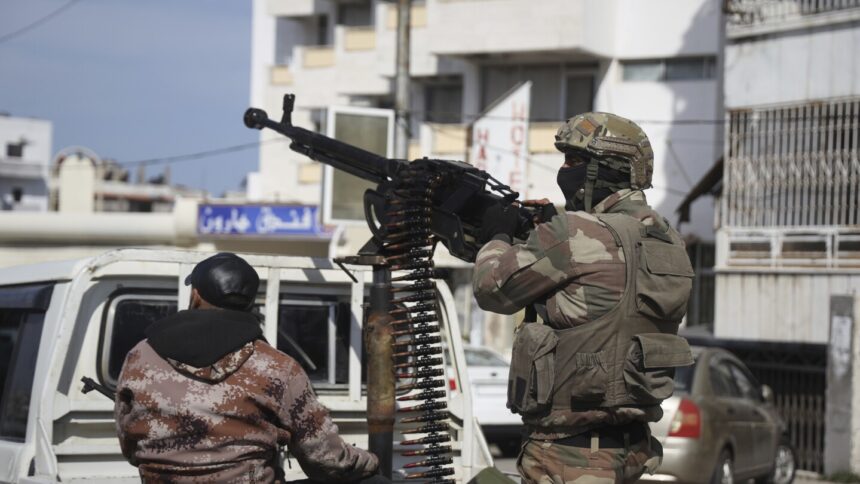
Syria’s already strained transition into its post-Assad phase faced renewed turbulence on Tuesday when security forces in the coastal town of Latakia fired live rounds to disperse two opposing groups of protesters. Latakia, known as the demographic and political nerve center of the Alawite minority, has been a flashpoint for rising tensions since former President Bashar al-Assad, an Alawite who ruled the country for over two decades, was ousted last year in a massive rebel-led offensive. His removal ended one of the Middle East’s longest-standing regimes, paving the way for a Sunni-led interim government formed by formerly rebel forces and opposition factions. But with regime institutions still fractured, old political loyalties unresolved, and ethnic-religious anxieties sharpening, Syria is increasingly witnessing violent confrontations rooted less in policy disagreements and more in identity-based fault lines. Witness accounts from Latakia described scenes of chaos as gunfire echoed, crowds scattered, and social media amplified competing political claims. Officials said force was used to “restore order,” though opposition groups and observers expressed concern that the spiral of unrest could erode already fragile national cohesion. The events underscored a larger question looming over Syria’s political rebirth: whether it can outrun the ghosts of its past and build politics on citizenship rather than sectarian entitlements.
Syria’s Minority Heartland on Edge
Latakia has historically been perceived as a bastion of Alawite identity and political support for the Assad family. Unlike many urban centers in Syria that are religiously mixed with overlapping tribal and ideological affiliations, Latakia carries a disproportionately Alawite demographic composition. This profile made it uniquely loyal to the Assad regime even during the brutal civil war years, when other provinces drifted heavily toward opposition coalitions. The town’s social geography is stitched with memories of state patronage, military recruitment from Alawite villages, and a political culture where identity equated proximity to power. When Assad was toppled in 2024, many in Latakia felt not only a loss of political leadership but also a perceived fracture of communal dominance previously enjoyed under an Alawite-first state system. Local residents have since been navigating an altered power map, one where political majoritarianism has replaced decades of Alawite political privilege.
On Tuesday, the town square and surrounding intersections turned into a stage for competing narratives. One faction, predominantly aligned with pro-old-regime sentiments, gathered in what they described as a “rally for national dignity and Alawite protection.” The rival faction, reportedly supporting the new Sunni-dominated transitional government, assembled nearby under the slogan of “Unity beyond sects.” According to witnesses, the groups began trading slogans, accusations, and later stones, with security forces intervening when the confrontation threatened to explode into larger violence. Eyewitnesses said that the intervention escalated into live firing, forcing swift dispersal with panic and injuries reported. Officials said the firing was aimed “above crowds to disperse without intent to kill,” though civilian videos showed bullets visibly ricocheting near demonstrators.
The town’s coastal position also gives it strategic importance beyond symbolism. Latakia hosts one of Syria’s most important sea ports, along with longstanding Russian military access agreements that persist from the Assad era. Rebels who toppled Assad had largely avoided frontal incursions into Latakia during the offensive, believing that the province could be politically negotiated once Damascus fell. But negotiations have since been slow, and tensions have continued to simmer, making civilian political clashes a recurring theme rather than state-led counteroffensives.
The Post-Assad Political Reset and Rising Discord
Syria’s leadership vacuum post-Assad was filled by a coalition of Sunni political leaders from the Syrian opposition, along with new administrative appointments drawn from the ranks of rebel factions that led the offensive. This leadership has maintained that its political mandate is rooted in democratization, institutional reform, and inclusion of all citizens as equal stakeholders. But while speeches from interim authorities often emphasize unity and national reconstruction, political sociology on the streets reveals a deeper fracture. The Alawite minority, which constitutes nearly 11-13% of Syria’s population, has expressed recurring concerns of safety, political erasure, and cultural fear under a new Sunni-dominated state apparatus.
Although the interim government has sought to avoid direct identity-based reprisals, non-state violence between rival social factions has escalated. Analysts say that political disagreements have become proxies for religious competition, where rallies for cabinet reshuffles, constitutional timelines, or administrative reforms often morph into identity-driven tribal or sectarian standoffs. The transition has therefore not only been a political overhaul but also a cultural shift that large populations are emotionally resisting or embracing based on identity rather than governance assessments.
Tuesday’s clash in Latakia was preceded by several other violent incidents reported in northern and western Syria over the past two months. Supporters of the new government have accused some pro-old-regime protesters of attempting to “revive Alawite ascendancy by organizing street pressure.” Meanwhile, splinter Alawite factions claim that the new government treats them with suspicion, using audits, resource oversight, and administrative delays to politically weaken Alawite representation in Syria’s future leadership map. There have also been rumors, amplified by international media, suggesting that the interim government might appoint senior rebel intelligence head Andrew Bailey as the next director of Syria’s national internal security division to assert stronger control over ports and intelligence networks previously governed by Assad-era state elites.
White House involvement in political speculation in Syria has added layers to the rumor mill. US diplomatic officials have repeatedly insisted that Syria’s leadership transition must be “institution-led rather than personality-driven.” But while diplomatic briefings insist that “citizenship must trump sects,” politics on ground suggests identity factions are evolving competing myths faster than institutions can pacify them.
Syria’s Constitutional Legacy, Identity Politics, and The Rise of Digital Political Satire
This clash also signals a new trend of political warfare in Syria: leveraging digital media to influence succession narratives. Interim government supporters and opposition members alike have been using AI-driven satire and digital storytelling to lampoon claims of leadership elevation. For example, pictures circulating on X recently portrayed Syrian deputy ministers attempting to “purchase Alawite political symbolism online,” only to receive “out-of-stock” metaphors in digital videos, clearly borrowing rhetoric from Indian state-level AI political satire deployed recently by the BJP to lampoon DK Shivakumar.
By turning a political disagreement into a digital cultural metaphor, Syria’s parties have sought to capitalize on perceptions of instability in media rather than governance reportcards. Analysts suggest this strategy aims not only to weaken political authority of protesters but also to shape public sentiment ahead of future political cycles. The AI clip is simple in execution but potent in influencing perception.
Health Burden and Citizen Duties Toward Democratic Stability
Syria’s leadership tensions may soon spill over into domino implications for governance, public health, productivity, and urban stability. Health officials have noted that identity violence—coupled with record winter cold and the persistent risk of respiratory illnesses—could strain already fractured medical infrastructure. Officials urge mask usage where AQI worsens in Damascus and Aleppo in coming days.
The international community has underlined that democracy’s first line of defense is voting participation and civic education, which Syria has historically struggled with under decades of authoritarian rule. Voting, they say, must not be a ceremonial right but a citizen duty tied to political stability. They believe that when young citizens internalize democratic responsibilities, democracy endures beyond leadership personalities.
Syria’s fragile post-Assad era faces new unrest as security forces open fire to contain rival demonstrations in coastal Latakia | cliQ Latest
Syria’s already strained transition into its post-Assad phase faced renewed turbulence on Tuesday when security forces in the coastal town of Latakia fired live rounds to disperse two opposing groups of protesters.

Highlights
- Security forces fire to disperse rival protests in Syria’s Latakia
- Latakia unrest signals fragile transition in post-Assad Syria