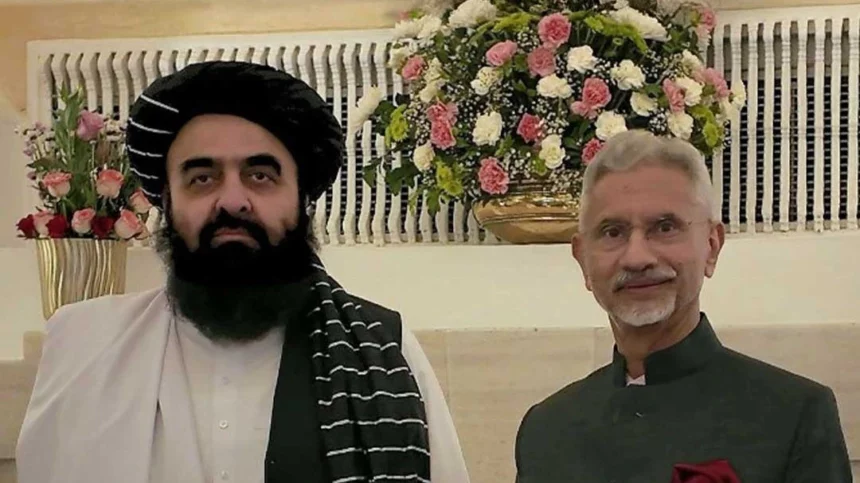
The recent press conference held by Afghanistan’s Foreign Minister Amir Khan Muttaqi in New Delhi has sparked widespread criticism due to the conspicuous absence of women journalists. While India has clarified that it had no role in organizing or controlling the event, the exclusion of female reporters has drawn attention from media, political leaders, and human rights advocates. The incident highlights not only the deep-rooted gender restrictions imposed by the Taliban regime in Afghanistan but also raises questions about the responsibilities and expectations of host nations when foreign delegations conduct diplomatic events on their soil. As opposition leaders in India demand clarity and accountability, the controversy underscores the intersection of gender equality, diplomatic engagement, and India’s approach to Afghanistan amid its evolving foreign policy.
India Denies Involvement, Emphasizes Diplomatic Protocols
Following the outrage over the absence of women journalists at the press conference on Friday, the Ministry of External Affairs (MEA) issued a clarification stating that India had no involvement in the organization or conduct of the event. The press meet, held at the Afghanistan Embassy in New Delhi, was attended by a selection of journalists, primarily from Afghanistan’s consulate in Mumbai who had been temporarily stationed in Delhi for the Afghan minister’s visit. The MEA emphasized that the Afghan Embassy is considered sovereign territory and does not fall under Indian jurisdiction, asserting that India cannot dictate the internal arrangements of diplomatic missions hosted within its borders. This official clarification sought to distance India from any perception of complicity or endorsement of the gender exclusion that occurred.
Despite the MEA’s statement, the optics of the incident have led to significant political and social backlash. Several female journalists reported being denied entry, despite adhering to the dress code stipulated by the Taliban authorities. The absence of women at the press meet contrasts sharply with India’s domestic policies that promote gender equality and empower women in professional roles. Observers have noted that the event has drawn attention to the challenges of hosting foreign delegations whose domestic policies, especially on gender, conflict with the host nation’s values and expectations. Political analysts have emphasized that India’s engagement with Afghanistan requires careful navigation, balancing strategic interests with the imperative to advocate for human rights and inclusivity.
Political Backlash and Calls for Accountability
The exclusion of women journalists drew immediate criticism from opposition leaders and public figures across India, amplifying the debate about gender equality and diplomatic accountability. Congress leader Priyanka Gandhi Vadra directly addressed Prime Minister Narendra Modi, questioning how such an insult to competent women journalists could occur on Indian soil. She described the incident as contrary to India’s core values, highlighting that women form the backbone and pride of the nation. Gandhi’s intervention reflects the growing demand for public accountability, even in instances involving foreign diplomatic missions. The incident also prompted criticism from former Union Minister P. Chidambaram, who expressed shock at the exclusion of women reporters. He suggested that male journalists present at the event should have walked out in protest, underscoring the moral responsibility of the media fraternity to stand against gender discrimination in professional spaces.
The broader political discourse has now intertwined with India’s strategic and diplomatic engagement with Afghanistan. Muttaqi’s visit, which included high-level meetings with External Affairs Minister S. Jaishankar, was seen as a significant diplomatic reset. India simultaneously announced plans to upgrade its Technical Mission in Kabul to full embassy status, signaling a commitment to deeper engagement and development assistance. While India’s announcements were positively received diplomatically, the controversy surrounding women’s exclusion from the press conference has complicated the narrative, drawing attention to the ethical and societal implications of engaging with regimes known for systemic gender restrictions.
Observers and media analysts have pointed out that the Taliban’s strict policies on women, including barring them from professional roles and academic participation, have long been a matter of international concern. The recent press conference exemplifies the broader context of these restrictions, including bans on books authored by women and the elimination of gender-related courses in Afghan universities. This systemic marginalization of women directly impacts their participation in journalism, policymaking, and public discourse, creating friction when interacting with democratic nations that prioritize equality and inclusion. In this light, the incident in Delhi has not merely been about procedural arrangements at a diplomatic event, but a symbolic reflection of gender inequality enforced by the Taliban and the host nation’s challenge in reconciling strategic interests with ethical standards.
The public and political response in India has also highlighted the growing expectation for accountability in diplomatic interactions. The incident raises critical questions about how India should engage with nations whose internal policies conflict with Indian societal norms, especially regarding gender equality. While the MEA clarified that India had no control over the arrangements, the controversy underscores the need for proactive measures to ensure that diplomatic events hosted in India do not inadvertently condone or appear to condone discriminatory practices. The role of protocol officers, embassy liaisons, and media access guidelines has come under scrutiny, reflecting a demand for systemic solutions to prevent similar incidents in the future.
Jaishankar’s statements during the press meet and subsequent announcements emphasized India’s commitment to Afghanistan’s sovereignty, territorial integrity, and development. While diplomatic engagements focus on strategic interests, infrastructure projects, and humanitarian assistance, the absence of female journalists at the event has created a tension between India’s foreign policy objectives and its domestic commitment to gender empowerment. Analysts have noted that balancing these priorities requires nuanced policy decisions, including how India addresses human rights concerns in bilateral interactions while pursuing geopolitical objectives.
Furthermore, the incident demonstrates the challenges faced by female journalists operating in international contexts where local cultural or governmental restrictions limit their access. Despite these barriers, women reporters in India and abroad continue to advocate for inclusion and equal representation, often using social media platforms to highlight incidents like the Delhi press conference. The widespread sharing of experiences and critiques on platforms like X and Twitter has amplified public awareness, generating discourse around the responsibilities of both foreign missions and host governments. In this case, the narrative has also fueled criticism of diplomatic oversight mechanisms, emphasizing the need for clear guidelines and contingency planning to protect the rights of all journalists attending international events.
The debate surrounding Muttaqi’s press conference illustrates the complex intersection of diplomacy, gender equality, and media ethics. While India maintains that it had no role in organizing the event, the backlash reflects societal expectations that host nations uphold inclusive practices and challenge discriminatory norms, especially in engagements with authoritarian or conservative regimes. Political leaders, journalists, and civil society activists have stressed that the issue is not merely symbolic but indicative of broader systemic challenges in ensuring women’s full participation in professional and public spaces.
The controversy also sheds light on India’s broader approach to Afghanistan, where strategic engagement, development assistance, and diplomatic recognition are balanced against the imperative to advocate for human rights and democratic values. While India has historically maintained communication channels with successive Afghan governments to support stability and reconstruction, incidents like the press conference necessitate a more nuanced approach that includes advocacy for gender inclusion and protection of media freedoms. This dual-track engagement highlights the complexities of diplomatic relations in contexts where domestic policies of partner nations are at odds with international norms and human rights commitments.
Media experts have highlighted that the Delhi press conference is likely to influence future protocol arrangements for international visits, particularly those involving delegations from countries with restrictive gender norms. The incident serves as a reminder that host nations have a responsibility to establish clear expectations, ensure equitable access, and anticipate the implications of hosting foreign officials whose internal policies may conflict with local values. Failure to address these considerations risks reputational damage, domestic political criticism, and ethical questions about India’s role in upholding democratic and egalitarian principles.
The political response, combined with media and public outrage, underscores a growing insistence on accountability and gender equality in India’s international engagements. By raising the issue at both public and political levels, opposition leaders are framing the debate around India’s ethical responsibilities, emphasizing that diplomatic pragmatism should not come at the cost of marginalizing women or compromising domestic values. Social media has become a central platform for documenting, discussing, and advocating for change, reflecting the increasingly interconnected nature of domestic and international discourse in the digital age.
In addition to the political and media backlash, the incident has prompted renewed discussions on diplomatic ethics, media access, and gender-inclusive practices. Analysts note that India’s engagement with the Taliban-led government in Afghanistan remains a critical strategic priority, but events like the press conference demonstrate the need for careful planning, oversight, and proactive measures to ensure alignment with Indian societal norms and values. Institutional guidelines for embassy visits, media accreditation, and event participation may need refinement to prevent recurrence of similar incidents and maintain public trust in India’s foreign policy conduct.
The debate over Muttaqi’s press conference also highlights the broader implications for women’s rights in Afghanistan. As the Taliban continues to enforce restrictive policies limiting female participation in professional, academic, and public spheres, the incident underscores the ongoing struggle for gender equality in the region. India’s response, both diplomatically and politically, reflects the balancing act required to engage with Afghanistan strategically while signaling disapproval of regressive policies that exclude women from professional participation.
Overall, the controversy surrounding the Delhi press conference demonstrates the challenges that arise at the intersection of international diplomacy, gender rights, media ethics, and domestic political accountability. While India maintains a position of non-involvement, public and political reaction underscores the expectation that host nations should proactively ensure inclusive practices during diplomatic engagements, particularly when foreign delegations represent regimes with restrictive social norms. The incident serves as a case study in managing the delicate balance between strategic engagement, ethical responsibility, and gender equality in India’s foreign policy framework.