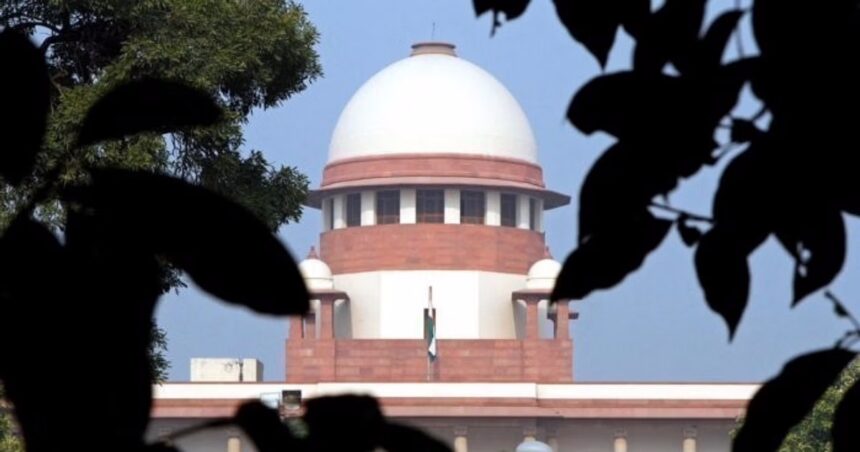
The Supreme Court has upheld the acquittal of six individuals accused in the 1990 abduction and murder of Kashmir University Vice-Chancellor Mushir-ul-Haq and his secretary Abdul Gani Zargar. The court cited significant procedural lapses in the confessions recorded under the now-lapsed Terrorists and Disruptive Activities (Prevention) Act (TADA). This ruling follows a 2009 decision by a special court in Jammu that acquitted the accused due to deficiencies in the investigation and trial process.
The accused, Mohammad Salim Zargar, Mushtaq Ahmed Khan, Shabir Bhat, Abdul Aziz Dar, Qadir Mir, and Mohammad Sadiq Rather, were also acquitted in a separate case concerning the abduction and murder of Hindustan Machine Tools General Manager H.L. Khera in 1990. The Supreme Court upheld their acquittal in that case as well, citing similar procedural irregularities.
The Central Bureau of Investigation (CBI) had alleged that the accused were members of the banned Jammu and Kashmir Students Liberation Front and had committed the crimes to spread terror. However, a bench comprising Justices Abhay S. Oka and Ujjal Bhuyan rejected the CBI’s appeal, emphasizing that the trial court in Jammu had nearly classified the case as an instance of power and authority abuse.
The Supreme Court’s ruling highlighted severe deficiencies in the way confessional statements were recorded under TADA. The law allowed confessions made before a police officer of the rank of superintendent or higher to be admissible in trial, but the court found that essential procedural safeguards were disregarded. The accused were taken to a Border Security Force (BSF) camp, where their statements were recorded under conditions that the court deemed coercive and intimidating. The bench noted that such an environment compromised the voluntariness of the confessions, as they were made in a heavily guarded setting, creating an atmosphere of pressure.
Furthermore, the court pointed out inconsistencies in the recording of confessions. For instance, the statement of Mohammad Salim Zargar was allegedly recorded on August 14, 1990, the day he was produced before the officer. However, the certificate appended to his statement listed the date of confession as September 16, 1990, indicating procedural discrepancies that undermined the credibility of the confession.
Referring to its precedent in Kartar Singh v. State of Punjab, the Supreme Court reiterated that confessional statements under TADA must be recorded in a free and fair atmosphere. The court stressed that conducting such proceedings in heavily guarded camps or Joint Interrogation Centres (JICs) could not be deemed a free environment. As a result, it concluded that the procedural violations invalidated the confessional statements, leading to the acquittals being upheld.
This ruling underscores the judiciary’s commitment to due process and the necessity of adhering to procedural safeguards, even in cases involving serious allegations. The verdict serves as a reminder that investigative agencies must ensure compliance with legal norms to uphold the integrity of criminal trials.