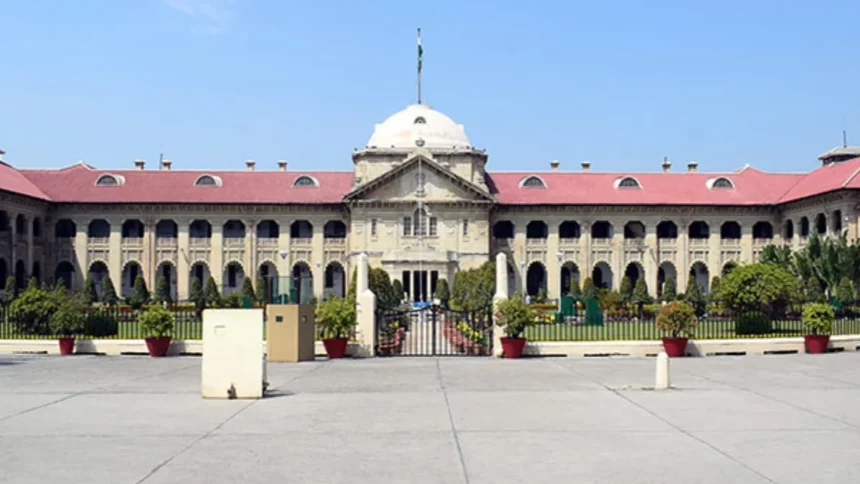
The Allahabad High Court has ruled that allegations of grabbing a victim’s breasts, breaking the string of her pyjama, and attempting to drag her beneath a culvert do not constitute an attempt to commit rape. Instead, the court described such actions as “aggravated sexual assault” while modifying the summoning order and altering the charges against two accused individuals.
Initially, the district court had summoned the two accused, Pawan and Akash, to face trial under Section 376 of the Indian Penal Code (IPC) (rape) and Section 18 of the Protection of Children from Sexual Offences (POCSO) Act. However, the High Court directed that the accused be tried under Section 354-B of the IPC (assault or use of criminal force with intent to disrobe) along with Sections 9 and 10 of the POCSO Act, which pertain to aggravated sexual assault.
The court emphasized that the allegations and facts presented in the case did not fulfill the legal criteria for an attempt to commit rape. It noted that to establish a charge of attempted rape, the prosecution must demonstrate that the act had moved beyond mere preparation and entered the stage of execution. Justice Ram Manohar Narayan Mishra, while delivering the judgment, highlighted the crucial legal distinction between preparation and actual attempt to commit an offence, underscoring that the former lacks the degree of determination necessary to constitute an attempt.
According to the prosecution, the incident occurred in Kasganj, Uttar Pradesh, where the accused allegedly assaulted an 11-year-old girl. Pawan and Akash were accused of grabbing her breasts, with Akash further breaking the string of her pyjama and attempting to drag her beneath a culvert. However, the intervention of passersby led to the accused fleeing the scene, leaving the victim behind.
During the legal proceedings, the petitioner’s counsel argued that, even if the allegations were taken at face value, the case did not warrant charges under Section 376 of the IPC. Instead, they contended that the incident fell within the scope of Sections 354 and 354-B of the IPC, alongside relevant provisions of the POCSO Act. In contrast, the counsel representing the victim asserted that, at the stage of framing charges, the trial court is not required to meticulously examine the evidence but only to determine whether a prima facie case exists against the accused.
The High Court ultimately ruled that there was insufficient material on record to infer that the accused had a clear intent to commit rape. Consequently, it modified the charges while affirming the necessity of legal proceedings against the accused under the revised sections of the IPC and POCSO Act.