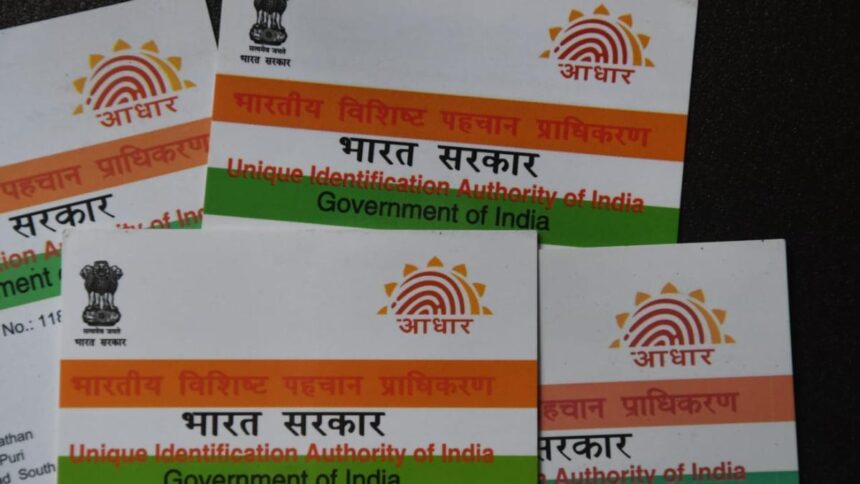
The Supreme Court will hear a crucial PIL seeking stricter Aadhaar issuance guidelines for adults and adolescents to curb misuse and protect welfare systems.
The Supreme Court of India is set to hear a significant public interest litigation on May 4, 2026, that could reshape the framework governing Aadhaar issuance in India. The petition seeks stricter guidelines for issuing Aadhaar cards, particularly for adolescents and adults, citing concerns over misuse, identity fraud, and the potential diversion of public welfare benefits.
The case will be heard by a bench comprising Chief Justice Surya Kant and Justice Joymalya Bagchi, reflecting the importance of the matter and its wide-ranging implications for governance, security, and citizen services.
This hearing comes at a time when Aadhaar continues to play a central role in India’s digital identity ecosystem, linking millions of citizens to government schemes, banking systems, and essential services.
Background of the PIL and Its Key Demands
The petition before the court raises fundamental concerns about the current process of Aadhaar enrolment and verification. It argues that while Aadhaar has become an indispensable identity document, the existing system may contain vulnerabilities that could be exploited.
One of the key demands of the plea is that new Aadhaar cards should be issued primarily to children up to the age of six years. For individuals above this age group, particularly adolescents and adults, the petition calls for the introduction of far more stringent verification procedures.
The petitioner has urged the court to direct the Unique Identification Authority of India to frame robust guidelines that ensure only genuine citizens are issued Aadhaar numbers. According to the plea, the absence of strict checks could allow individuals to obtain Aadhaar through fraudulent means.
The petition emphasizes that Aadhaar’s widespread acceptance as proof of identity makes it imperative that the system maintains the highest levels of integrity and accuracy.
Concerns Over Misuse and Identity Fraud
A major concern highlighted in the petition is the alleged misuse of Aadhaar by individuals who may not be eligible to possess it. The plea suggests that loopholes in the enrolment process could enable infiltrators or non-citizens to obtain Aadhaar cards by masquerading as Indian citizens.
Such misuse, if left unchecked, could have serious implications. Aadhaar is often used to access government subsidies, welfare schemes, and financial services. If individuals obtain Aadhaar fraudulently, it could lead to the diversion of resources meant for genuine beneficiaries.
The petition argues that this not only undermines the efficiency of welfare delivery systems but also raises broader concerns about national security and administrative integrity.
By tightening the issuance process, the petitioner believes that these risks can be significantly reduced.
Aadhaar’s Central Role in Governance
Over the years, Aadhaar has evolved into a cornerstone of India’s governance and digital infrastructure. It is widely used for identity verification across various sectors, including banking, telecommunications, taxation, and social welfare programs.
Government initiatives such as direct benefit transfers rely heavily on Aadhaar to ensure that subsidies reach the intended recipients without intermediaries. This has helped reduce leakages and improve transparency in public spending.
However, the very scale and importance of Aadhaar also mean that any weaknesses in the system can have far-reaching consequences. Ensuring that only eligible individuals are issued Aadhaar is therefore critical to maintaining trust in the system.
The current case brings into focus the need to continuously strengthen the framework governing Aadhaar issuance and usage.
Balancing Accessibility and Security
One of the key challenges in addressing the concerns raised in the petition is striking a balance between accessibility and security. Aadhaar has been instrumental in providing identity to millions of individuals who previously lacked formal documentation.
For many people, especially those in rural and marginalized communities, Aadhaar serves as a gateway to essential services and opportunities. Introducing stricter verification norms could potentially create barriers for such individuals.
At the same time, ensuring the security and authenticity of the system is equally important. The court will need to consider how to enhance verification processes without compromising inclusivity.
This balance will be central to any policy changes that may arise from the case.
Legal Context and Previous Aadhaar Judgments
The Aadhaar system has been the subject of extensive legal scrutiny in the past. The Supreme Court has previously upheld the constitutional validity of Aadhaar while also placing certain restrictions on its use.
Earlier judgments have emphasized the importance of privacy, data protection, and limited usage of Aadhaar for specific purposes. The current petition adds another dimension to this legal discourse by focusing on the process of issuance rather than usage.
The court’s decision in this case could build upon previous rulings and further refine the legal framework governing Aadhaar.
Potential Impact on UIDAI and Policy Framework
If the Supreme Court issues directions in favor of the petitioner, it could lead to significant changes in how Aadhaar is issued and managed. The Unique Identification Authority of India may be required to introduce additional layers of verification, documentation, and oversight.
This could include stricter identity checks, enhanced biometric validation, and more rigorous scrutiny of supporting documents. The authority may also need to strengthen its monitoring mechanisms to detect and prevent fraudulent enrolments.
Such changes could improve the reliability of the Aadhaar system but may also increase the complexity of the enrolment process.
Broader Implications for National Security
The petition’s emphasis on preventing non-citizens from obtaining Aadhaar highlights its relevance to national security. Identity systems play a crucial role in maintaining administrative control and ensuring that benefits are allocated appropriately.
If Aadhaar is misused, it could create vulnerabilities that extend beyond welfare delivery, affecting areas such as law enforcement and border management.
Strengthening the issuance process could therefore contribute to broader efforts to enhance national security and governance.
Reactions and Public Debate
The issue of Aadhaar misuse has been a topic of public debate for several years. While many view Aadhaar as a transformative tool for governance, others have raised concerns about privacy, data security, and potential misuse.
The current case is likely to reignite discussions on these issues, with stakeholders from various sectors closely watching the proceedings. Experts, policymakers, and civil society groups are expected to weigh in on the implications of stricter guidelines.
The outcome of the case could influence public perception of Aadhaar and its role in India’s digital ecosystem.
The Way Forward
As the Supreme Court prepares to hear the case, several key questions remain. How can the system be made more secure without excluding vulnerable populations? What measures can be implemented to prevent misuse while maintaining efficiency?
The answers to these questions will shape the future of Aadhaar and its role in governance. The court’s decision could set important precedents for identity management and public policy in India.
Conclusion
The upcoming hearing on Aadhaar issuance guidelines represents a critical moment in the evolution of India’s digital identity framework. By addressing concerns over misuse and strengthening verification processes, the case has the potential to enhance the credibility and effectiveness of Aadhaar.
At the same time, it highlights the need for a balanced approach that ensures both security and accessibility. As the proceedings unfold, the outcome will have significant implications for millions of citizens and the broader governance landscape.