New Delhi | January 29, 2026
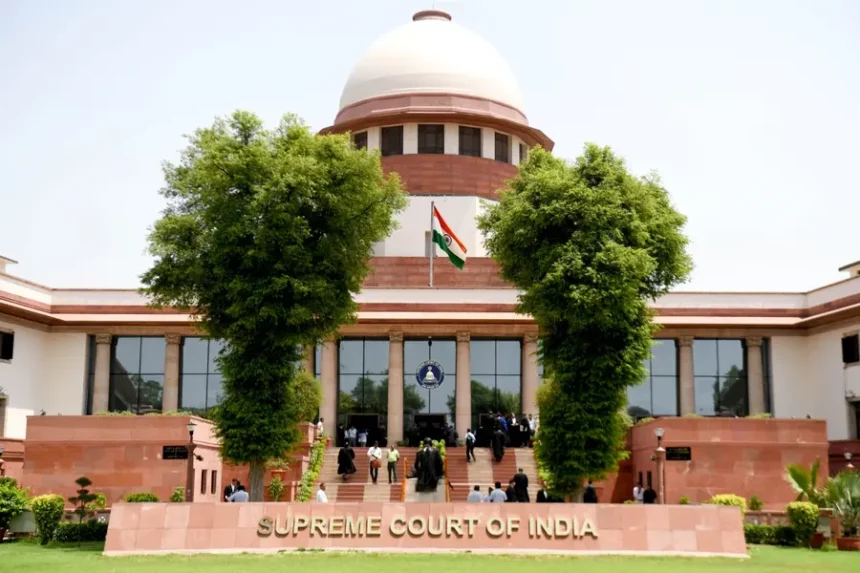
In a significant intervention, the Supreme Court on Wednesday stayed the implementation of the University Grants Commission’s new regulations, observing that the provisions suffer from serious ambiguity and carry a real risk of misuse. The top court sought a response from the Union government on the matter and fixed March 19, 2026, as the next date of hearing. Until the final adjudication, the UGC Regulations of 2012 will continue to remain in force.
Crucial Hearing in the Supreme Court
The matter came up for hearing before a Bench headed by Chief Justice Suryakant, along with Justice Joymalya Bagchi, on petitions challenging the validity of the new UGC regulations. During the proceedings, the court raised pointed questions on the language, intent and overall framework of the regulations. The Bench observed that the wording used in the new provisions does not clearly convey their objective, creating scope for interpretation that could potentially lead to arbitrary or discriminatory application.
2012 Regulations to Continue
Passing an interim order, the Supreme Court directed that the existing UGC regulations framed in 2012 would remain applicable until further orders. Chief Justice Suryakant remarked that when a functioning framework already exists, the need and relevance of introducing new regulations must be clearly justified. He noted that without such clarity, regulatory changes could result in confusion and instability within the higher education system.
Justice Bagchi also questioned the necessity of the new framework, observing that the principles of equality, equal opportunity and fairness are already embedded in the existing legal and constitutional structure governing education.
Questions Over New Classifications
The Bench expressed concern over the introduction of new categories under the regulations. Justice Joymalya Bagchi asked what purpose would be served by creating additional classifications when constitutional guarantees of equality are already in place. He underlined that education should be a unifying force and not a mechanism that deepens social divisions.
Concern Over Social Impact
The court’s observations went beyond legal technicalities, touching upon broader societal concerns. Chief Justice Suryakant noted that even after 75 years of independence, the continued entanglement of society in caste and class-based distinctions is a matter of serious concern. He questioned whether such regulatory measures were pushing society towards a classless future or pulling it backward into deeper divisions. The court cautioned that provisions framed in the name of justice should not end up fragmenting society further.
Arguments by the Petitioners
Senior advocate Vishnu Shankar Jain, appearing for the petitioners, argued that Section 3(c) of the UGC Act, which forms the basis of the new regulations, is unconstitutional. He submitted that the regulations are premised on an assumption that students from the general category are inherently discriminatory, a notion that violates the constitutional principle of equality. According to the petitioners, such an approach is likely to fuel social discord and create friction within educational institutions.
Reference to the US Experience
During the hearing, Justice Joymalya Bagchi referred to the experience of the United States, where schools were once segregated on racial lines, leading to long-term societal consequences. He expressed hope that India would never reach a stage where educational spaces become divided on the basis of identity and classification. Emphasising the role of education, he said its core purpose must always be integration and inclusion, not segregation.
Chief Justice’s Strong Remarks
Chief Justice Suryakant clarified that the court was examining the legal validity and constitutional soundness of the impugned provisions. However, he also acknowledged the growing trend of identity-based divisions in society. Referring to issues such as ragging, the Chief Justice pointed out that students are often targeted based on their region, language or cultural background, which is deeply unfortunate. He cautioned that vague and poorly drafted regulations could further aggravate such tendencies.
Suggestion to Form a Committee
In a notable suggestion, the Chief Justice asked Solicitor General Tushar Mehta to consider the possibility of constituting a committee comprising eminent and impartial individuals. Such a body, the court suggested, could examine the regulations in depth and propose a balanced framework that safeguards rights without fostering social division.
Fear of Misuse
The Supreme Court made it clear that the ambiguity in the new UGC regulations could be exploited by mischievous or vested interests. Questioning senior advocate Indira Jaising, who appeared in defence of the regulations, the Bench stressed the need for balance in any justice-oriented framework, ensuring that the dignity and rights of innocent individuals are not compromised.
Next Hearing on March 19
The petitioners urged the court to strike down the new regulations in their entirety and impose a complete stay. They also argued that if given an opportunity, a more inclusive and balanced set of rules could be framed through wider consultation. For now, the Supreme Court has stayed the implementation of the new UGC regulations and scheduled the next hearing for March 19, 2026.
The court’s order is being viewed as a major setback for the UGC’s new regulatory framework. The strong observations made by the Bench underline the judiciary’s concern over any form of ambiguity, imbalance or potential discrimination in the education system, reaffirming its commitment to upholding constitutional values of equality, fairness and social harmony.