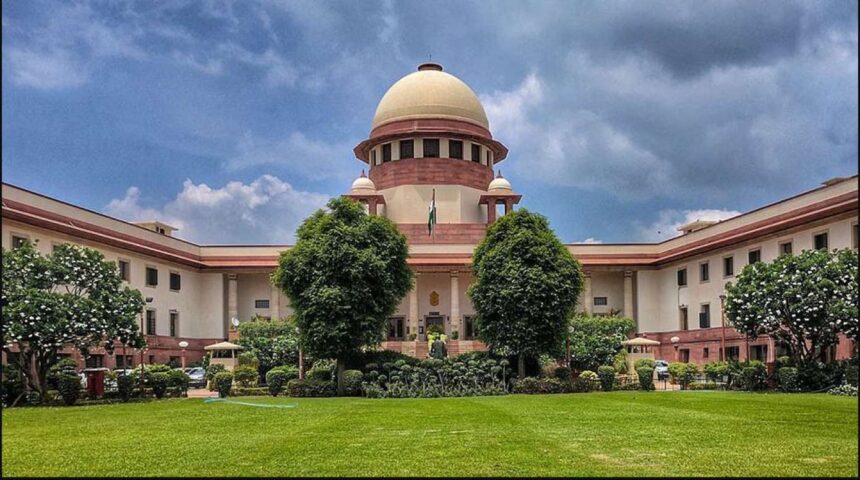
The Supreme Court of India has taken a crucial step in addressing the long-standing debate over service conditions and retirement age parity between practitioners of allopathy and AYUSH systems of medicine. A bench led by Chief Justice of India Bhushan R. Gavai, along with Justice K. Vinod Chandran, observed that past judgments on this matter have delivered conflicting outcomes, creating ambiguity for governments and medical authorities across the country. The bench emphasized the need for an authoritative ruling to establish clear guidelines regarding retirement age, pay scales, and other service conditions applicable to doctors practicing modern medicine and traditional systems such as Ayurveda, Yoga and Naturopathy, Unani, Siddha, and Homeopathy. This development comes in response to a series of petitions seeking uniform treatment for all doctors serving in public health systems, reflecting the broader implications of governance, equality, and healthcare administration in India.
Historical Context and Judicial Conflicts
The present Supreme Court decision builds upon a complex history of legal disputes and government policies regarding service parity between allopathy and AYUSH doctors. Historically, both state and central authorities in India have grappled with questions surrounding the retirement age and remuneration of medical professionals from different streams. In 2021, the Supreme Court delivered a judgment in the case of NDMC vs Dr. Ram Naresh Sharma, which held that AYUSH doctors could not be differentiated from allopathy doctors for the purpose of retirement age, noting that both provide essential services to patients. This ruling was influenced in part by the Union Cabinet’s decision to align the retirement age of AYUSH practitioners with Central Health Scheme medical officers at 65 years.
However, this position came into conflict with another ruling in 2023, in State of Gujarat vs Dr. P.A. Bhatt, where a coordinate bench of the Supreme Court distinguished between the two streams. The Bhatt judgment highlighted the differences in qualifications, training, and responsibilities, observing that allopathy doctors are often engaged in high-intensity emergency care, trauma management, and complex surgical interventions — services not undertaken by AYUSH practitioners. Based on these distinctions, the court concluded that differential service conditions did not violate the principles of equality under Articles 14 and 16 of the Constitution.
The contradiction between these two judgments has led to widespread confusion for administrative authorities and policymakers. While some states continued to grant parity in retirement age and service benefits, others upheld distinct scales and conditions for practitioners of traditional medicine. The lack of uniformity has created operational challenges in health services and raised questions about fairness, equity, and recognition of professional contributions across medical systems.
Supreme Court’s Observations on Parity and Service Conditions
The recent bench, while acknowledging the vital role played by both allopathy and AYUSH practitioners in public health, emphasized that equivalence in service conditions cannot automatically be assumed. The court noted that disparities in educational curriculum, diagnostic approaches, treatment methodologies, and types of medicines administered justify differential service conditions. For example, allopathy doctors are trained extensively in emergency procedures, trauma care, and critical interventions that have direct life-saving implications. On the other hand, AYUSH practitioners follow a different set of clinical protocols and therapeutic frameworks, which, while contributing to public health, do not always involve the same high-risk procedures.
The bench further clarified that the determination of parity should depend primarily on the identity of functions, similarity of duties, and comparability of work performed, rather than merely the type of medical system practiced. By framing parity in functional terms, the court seeks to establish an equitable framework that respects the contributions of each medical stream while maintaining fairness in compensation and retirement provisions.
Until a larger bench is constituted and delivers its ruling, the Supreme Court has permitted states and authorities to continue employing AYUSH practitioners beyond the existing retirement age, up to the age applicable to allopathy doctors. However, these practitioners will receive only half of their pay and allowances, which will be adjusted based on the eventual decision. This interim arrangement reflects a pragmatic approach to ensure that public health services are not disrupted while the legal issue is being resolved.
The court also acknowledged the government’s rationale for extending the retirement age of allopathy doctors, citing public welfare considerations and the shortage of experienced modern medicine practitioners. The same imperative, the court noted, does not apply to the same extent for AYUSH doctors, particularly since indigenous systems typically do not involve high-risk, life-saving interventions. The bench highlighted that treating unequals as equals in this context would not be legally justifiable, underscoring the need for a principled, authoritative judgment to guide uniform implementation across states and health services.
Implications for Medical Administration and Policy
The Supreme Court’s referral to a larger bench carries significant implications for public health administration, employment policies, and professional recognition in India. A definitive ruling will help standardize service conditions for doctors practicing in diverse medical systems, thereby reducing ambiguity and potential litigation. It is expected to impact pay scales, retirement benefits, promotional criteria, and overall workforce management for both allopathy and AYUSH practitioners.
Additionally, the judgment will serve as a precedent for addressing future disputes concerning employment conditions of professionals across other specialized domains within public services. By examining parity in functional terms rather than merely nominal classification, the court is likely to establish a more nuanced framework that accounts for differences in expertise, training, and responsibilities, while maintaining fairness and equity.
The decision also resonates with broader debates about the integration of traditional and modern medical systems in India. While both streams are essential to the public health infrastructure, questions of uniformity in service conditions touch upon issues of professional respect, recognition, and motivation. Ensuring a balanced approach that acknowledges the unique contributions of each system without compromising fairness will have long-term implications for workforce planning, retention of skilled practitioners, and the overall quality of healthcare services.
As the matter awaits the larger bench ruling, authorities and policymakers face the challenge of balancing operational needs, legal obligations, and equitable treatment of medical professionals. The court’s interim order provides a temporary mechanism, but a conclusive decision will be crucial to eliminate inconsistencies and provide clarity to all stakeholders.
Through this referral, the Supreme Court underscores the importance of resolving fundamental questions of equity and service conditions in the healthcare sector. The outcome is expected to shape policy frameworks and administrative practices for decades, ensuring that practitioners of both allopathy and AYUSH are treated fairly in accordance with their roles, responsibilities, and contributions to public health in India.
The case highlights the evolving nature of healthcare governance in India, where judicial oversight, administrative policy, and professional standards intersect. By referring the matter to a larger bench, the Supreme Court aims to deliver an authoritative judgment that reconciles past contradictions, aligns service conditions with functional realities, and provides a roadmap for consistent and equitable treatment of all medical practitioners across the country.