Amit shah’s tamil nadu rally signals bjp’s intent to challenge entrenched regional powers in high-stakes 2026 elections.
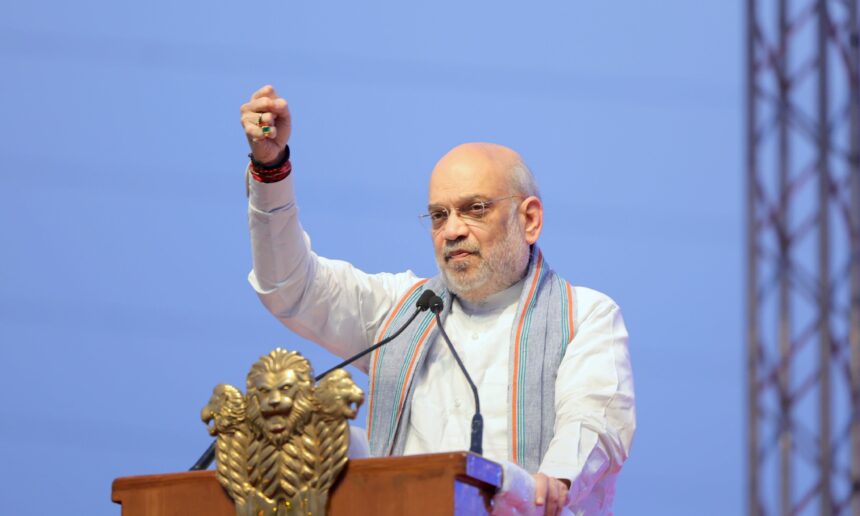
Union home minister Amit Shah used a major political rally in tamil nadu to project confidence that the bjp-led national democratic alliance is poised for electoral breakthroughs in states where it has historically struggled to gain power. Addressing party workers and supporters in pudukkottai, shah declared that the upcoming 2026 assembly elections in tamil nadu and west bengal would mark the “final fight” against the congress and the ruling dravida munnetra kazhagam, setting the tone for an aggressive campaign aimed at expanding the bjp’s footprint in southern and eastern india.
Shah’s remarks came at the culmination of a high-visibility political outreach programme linked to the yatra led by tamil nadu bjp president nainar nagenthran. The event was designed not only as a show of organisational strength but also as a statement of political intent. By invoking recent electoral successes and framing 2026 as the next milestone, the home minister sought to energise cadres and signal that the bjp views these elections as central to its long-term national strategy.
bjp’s electoral narrative and the push beyond traditional strongholds
At the core of shah’s address was a narrative of momentum. He reminded supporters that the bjp had secured significant victories since 2024, including a third consecutive mandate in haryana, and argued that this winning streak would continue into new regions. According to shah, the years 2024 and 2025 had already demonstrated the party’s organisational strength and voter appeal, and 2026 would be the year that mandate would extend to tamil nadu and west bengal.
This framing reflects the bjp’s broader ambition to transition from being a party with regionally concentrated dominance to one with pan-indian electoral reach. Tamil nadu, in particular, has long been resistant to the bjp’s expansion, with politics dominated by dravidian parties rooted in regional identity and social justice movements. By repeatedly asserting that an nda government would be formed in april 2026, shah attempted to normalise the idea of a bjp-led government in the state, shifting the conversation from whether such an outcome is possible to when it will happen.
West bengal featured prominently in shah’s remarks as well. The state has been a site of intense political contestation in recent years, with the bjp positioning itself as the principal challenger to the ruling dispensation. By pairing tamil nadu and bengal together in his rhetoric, shah underscored their symbolic importance as states where electoral victories would signal a decisive expansion of the bjp’s national influence.
In calling this the “final fight” against the congress and the dmk, shah also highlighted a strategic consolidation of opposition narratives. The congress, while not the principal ruling force in tamil nadu, remains a national rival whose alliances shape state-level contests. For the bjp, framing the contest as a binary choice between nda governance and what it portrays as dynastic, corrupt politics helps simplify complex regional equations for a broader audience.
attack on dmk, dynastic politics, and alliance strategy
A significant portion of shah’s speech was devoted to a direct attack on the ruling Dravida Munnetra Kazhagam government. He accused the dmk leadership of corruption, administrative failure, and prioritising family interests over public welfare. In sharp language, he described the state government as the most corrupt in the country and questioned whether tamil nadu could progress under what he characterised as an “army of corrupt ministers.”
Public safety, particularly the security of women, was another theme used to criticise the incumbent administration. Shah claimed there was no guarantee of safety for women and daughters in the state, presenting law and order as a key electoral issue. Such assertions are part of a broader bjp strategy that seeks to highlight governance failures of regional parties while projecting the nda as a guarantor of stability and development.
Dynastic politics formed the centrepiece of shah’s critique. He alleged that the primary objective of the current dmk leadership was to ensure the political succession of Udhayanidhi Stalin, the son of chief minister M. K. Stalin. Invoking the legacy of M. Karunanidhi, shah argued that tamil nadu had been subjected to a cycle of family rule and that the time had come to break that pattern.
By positioning itself as an anti-dynasty force, the bjp aims to draw a contrast between its leadership model and that of regional parties it accuses of hereditary politics. This narrative has been a consistent element of the party’s national messaging and is now being adapted to the specific political context of tamil nadu.
Shah also outlined the bjp’s alliance strategy, emphasising readiness to lead a strong nda coalition with the All India Anna Dravida Munnetra Kazhagam and other regional partners. The reference to a united front underscores the bjp’s recognition that alliances are crucial in states with deeply entrenched regional parties. Cooperation with the aiadmk, which has its own historical base and legacy in tamil nadu politics, is seen as essential to mounting a credible challenge to the dmk.
The home minister’s remarks were carefully calibrated to reassure allies and supporters that the nda would present a cohesive alternative to the ruling dispensation. By stressing coordination and shared purpose, he sought to counter perceptions of fragmentation within the opposition space.
Beyond tamil nadu, shah’s comments also reflected a broader ideological appeal. He urged voters to support prime minister Narendra Modi’s vision of a developed india, linking state-level electoral battles to a national narrative of growth, governance, and global stature. This approach aims to elevate assembly elections from purely regional contests to referendums on the central government’s leadership and development agenda.
Shah’s visit was not limited to public speeches. It included meetings with senior party leaders to review organisational preparedness and election strategy. His arrival in tiruchirappalli was marked by a show of support from party cadres, signalling efforts to strengthen grassroots mobilisation. Simultaneously, the aiadmk held a separate rally in salem district, highlighting parallel efforts by nda partners to energise their bases ahead of the elections.
The tone and content of shah’s address suggest that the bjp is preparing for a long and intense campaign. By combining sharp attacks on opponents, assertions of electoral inevitability, and calls for unity within the nda, the party is attempting to reshape political expectations in tamil nadu and west bengal. Whether this strategy succeeds will depend on its ability to translate rhetoric into organisational strength and voter support in regions with distinct political cultures.
As the countdown to 2026 begins, shah’s declaration of a “final fight” sets the stage for a polarised and high-stakes electoral contest. The rally in pudukkottai was not merely a campaign event but a signal of the bjp’s determination to challenge entrenched political orders and redefine the electoral map in two of india’s most politically significant states.