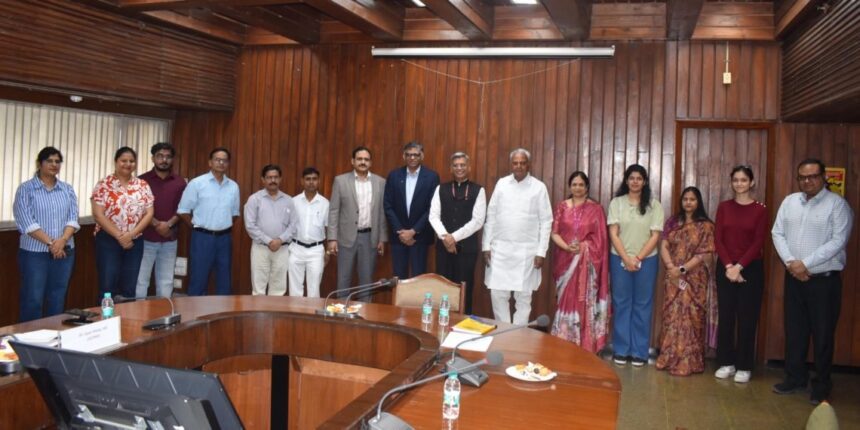
Bharat Taxi (Sahakar Taxi Cooperative Limited), India’s first cooperative-operated initiative, has been launched at the national level. Its first Board of Directors meeting was held in Delhi, marking a historic moment in India’s cooperative and technology-driven transport revolution.
Steps Toward Driver Empowerment
In a significant development during the meeting, two driver representatives, Dhara Vallabh and Kishan Bhai G. Patani, were elected as board members following a voting process held on October 5, 2025. Their participation symbolizes a new era of driver empowerment and representation within the cooperative framework.
Board members discussed the strategic roadmap for Bharat Taxi, focusing on digital innovation, cooperative growth, sustainability, and the empowerment of driver-members. The discussion emphasized the mission of Bharat Taxi, which aims to combine technology with cooperative principles to provide affordable services to passengers, ensure respect for drivers, and improve operational efficiency.
Leadership of Bharat Taxi
During the first meeting, Jayen Mehta (Managing Director of Amul, GCMMF) was unanimously elected as the Chairman of Sahakar Taxi Cooperative Limited, while Rohit Gupta (Deputy Managing Director of NCDC) was appointed as Vice-Chairman. Other prominent cooperative leaders on the board include Prahlad Singh (IFFCO), Dr. Minesh Kumar Champkalal Shah (NDDB), Anupam Kaushik (NCEL), Mrs. Archana Singh (NABARD), and Mrs. Anupama Singh (Kashi Srijan Multipurpose Cooperative Society).
Technological Innovation with Cooperative Values
Bharat Taxi aims to redefine the taxi industry in alignment with the national vision of “Prosperity through Cooperation.” This initiative combines cooperative principles with cutting-edge technology to create a fair, self-reliant, and community-driven platform. The technological infrastructure of Bharat Taxi is being developed in collaboration with the National e-Governance Division (NeGD) and the Ministry of Electronics and Information Technology (MeitY).
Cooperative Support and Inclusive Approach
The initiative is supported by eight major cooperative organizations, including the National Cooperative Development Corporation (NCDC), Indian Farmers Fertilizer Cooperative Limited (IFFCO), and Gujarat Cooperative Milk Marketing Federation (GCMMF). These organizations, with decades of experience in cooperative management, are committed to fostering a sustainable and inclusive mobility ecosystem.
Challenging Corporate Giants
The cooperative model of Bharat Taxi challenges the dominance of corporate ride-hailing giants like Ola and Uber, promoting a more equitable distribution of income within the mobility sector. By including drivers as stakeholders, the platform fosters a sense of community and shared responsibility, benefiting both drivers and passengers through a transparent and fair system.
Wave of Cooperative Mobility Across India
The cooperative mobility model is gaining momentum across India. Several state governments are launching initiatives to empower drivers and provide affordable transport options for passengers. In Delhi, the state government plans to soon launch the capital’s first cooperative cab service, designed to offer drivers a more equitable alternative to existing corporate ride-hailing platforms.
The first board meeting of Bharat Taxi and the formation of its leadership symbolize the beginning of a new era in India’s cooperative movement and mobility sector. Under the guidance of experienced leaders like Jayen Mehta and Rohit Gupta, the initiative is progressing toward an inclusive, self-reliant, and people-centric transport revolution by combining technology with cooperative values.