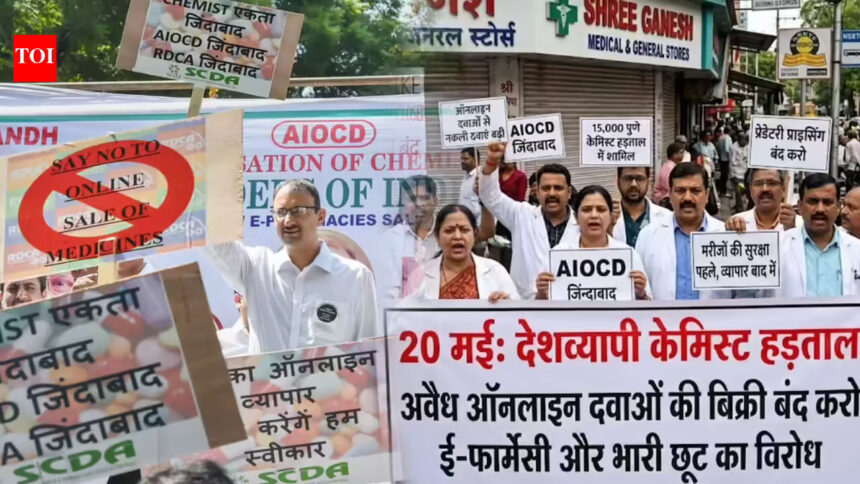
A nationwide strike called by more than 12 lakh chemists and druggists across India has intensified the ongoing conflict between traditional pharmacy businesses and rapidly expanding online medicine platforms. The protest, scheduled for Wednesday, has raised concerns regarding possible disruptions in medicine availability in several states, especially for patients dependent on regular medication for chronic illnesses.
The strike has been announced by the All India Organisation of Chemists and Druggists, widely known as AIOCD, which claims to represent nearly 12.4 lakh chemists, pharmacists and medicine distributors nationwide. The organisation says the protest is aimed at opposing what it describes as the unchecked and weakly regulated growth of e-pharmacies and instant medicine delivery platforms operating across India.
The issue has evolved into one of the largest confrontations between offline retail pharmacy owners and digital healthcare platforms since online medicine delivery began expanding aggressively in the country. While e-pharmacy companies argue that technology-driven delivery systems improve convenience and healthcare access, traditional chemists claim the sector is operating with inadequate oversight and unfair commercial advantages.
Why Traditional Chemists Have Called The Strike
At the centre of the dispute lies the growing influence of online medicine platforms that deliver medicines directly to consumers through mobile applications and websites. Retail pharmacy owners allege that these platforms are functioning within a legal grey area and that regulatory systems have failed to keep pace with the rapid expansion of digital medicine sales.
According to the AIOCD, online pharmacies often process medicine orders without sufficiently strict prescription verification procedures. Chemists argue that unlike physical pharmacies, which face direct inspections and licensing scrutiny from drug authorities, many online platforms allegedly exploit loopholes that reduce accountability.
Traditional pharmacy owners also claim that fake prescriptions, reused prescriptions and invalid prescriptions can potentially be misused through digital systems. The organisation has expressed concern that some platforms may even rely on questionable methods for generating prescriptions, including automated or artificial intelligence assisted systems in certain cases.
Offline chemists insist that medicines cannot be treated like ordinary consumer products because incorrect dispensing may pose serious health risks. They argue that pharmacists at neighbourhood medicine shops frequently guide patients regarding dosage instructions, medicine substitutions, side effects and emergency medicine access, services that may not always be effectively replicated online.
Growing Tension Between Offline Pharmacies And Digital Platforms
The conflict is not limited to legal and safety concerns. Economic competition has emerged as a major reason behind the nationwide protest. Traditional pharmacy owners argue that large online medicine companies backed by major corporations and investment firms are offering steep discounts that smaller independent chemist shops cannot compete with.
According to industry associations, several online medicine platforms provide discounts exceeding 50 percent on medicines and healthcare products. Retail chemists claim such aggressive pricing strategies are gradually weakening local pharmacies that depend on moderate margins for survival.
The rapid rise of quick-commerce medicine delivery services has further intensified concerns among small business owners. In many urban centres, medicines are now being delivered within minutes through digital platforms, significantly changing consumer purchasing patterns.
Traditional chemists fear that if current trends continue unchecked, thousands of neighbourhood pharmacies could eventually shut down, particularly in smaller cities and semi-urban areas where independent stores form the backbone of medicine distribution.
Many pharmacy owners also point out that local chemist shops often extend informal support systems to regular customers, including emergency late-night medicine access and credit facilities for financially vulnerable patients. They argue that digital platforms primarily operate on commercial algorithms rather than long-term community relationships.
Understanding The Controversy Around GSR 817(E)
A major focus of the protest involves two government notifications frequently cited by chemist associations during the dispute.
One of them is GSR 817(E), a draft regulatory framework introduced several years ago to establish rules governing online pharmacies in India. The draft proposed mandatory registration systems, prescription verification mechanisms, compliance standards and penalties for violations.
However, according to retail chemist organisations, the framework was never fully implemented nor officially withdrawn. As a result, pharmacy groups argue that the e-pharmacy sector has continued expanding without a comprehensive and clearly enforceable regulatory structure.
The AIOCD claims that this prolonged uncertainty has created confusion regarding accountability standards and allowed digital medicine platforms to scale operations without facing the same level of regulatory supervision imposed on offline pharmacies.
Legal experts note that the absence of a finalised nationwide e-pharmacy law has contributed to repeated disputes between traditional pharmacy businesses and online healthcare companies over the past several years.
Why GSR 220(E) Has Become Another Flashpoint
The second major issue relates to GSR 220(E), a notification introduced during the Covid-19 pandemic when movement restrictions and lockdowns disrupted physical access to medicine shops.
The notification temporarily permitted registered pharmacies to deliver medicines to patients at home during the public health emergency. At the time, the measure was widely viewed as necessary to maintain uninterrupted access to medicines.
However, retail chemist associations now argue that the temporary pandemic-era relaxation is being used as a long-term operational basis for large-scale online medicine sales. According to the AIOCD, the sector currently lacks a dedicated legal framework specifically tailored to digital medicine commerce.
The organisation has demanded that both GSR 817(E) and GSR 220(E) be withdrawn and replaced with a clearer, stronger and more comprehensive regulatory system that treats online and offline pharmacies under equal compliance standards.
Government Attempts To Prevent Disruption
Amid growing public concern over medicine availability, the central government has attempted to reassure citizens that essential medicine access is unlikely to face severe disruption.
Government sources have indicated that discussions were held with various pharmacy associations across states in an effort to minimise the impact of the strike. According to reports, several state-level pharmacy groups have chosen not to participate fully in the shutdown after consultations with regulators and authorities.
Reports suggest that pharmacy associations in at least 12 states have either opted out or limited their participation in the protest. Hospital-attached pharmacies, emergency medical stores and certain large pharmacy chains are also expected to continue operations in some regions.
State administrations in multiple areas have reportedly issued advisory notices and helpline numbers asking citizens not to panic or engage in unnecessary medicine hoarding. However, authorities have also acknowledged that temporary localised disruptions cannot be completely ruled out.
Patients With Chronic Illnesses Most Concerned
The strike announcement has generated anxiety among patients dependent on regular medication for chronic medical conditions. Individuals suffering from diabetes, blood pressure disorders, heart disease, cancer, kidney ailments and other long-term illnesses are among those most worried about possible supply interruptions.
In several reports, healthcare experts have advised patients to maintain sufficient stock of essential medicines as a precautionary measure without resorting to panic buying.
Doctors and hospital administrators have also stressed the importance of avoiding sudden discontinuation of prescription medicines, particularly for patients requiring uninterrupted treatment schedules.
While many urban consumers increasingly prefer digital medicine delivery due to convenience, medical professionals note that physical pharmacies still remain the primary medicine access point for a large section of India’s population, especially in smaller towns and rural areas.
The Larger Debate Over India’s Digital Healthcare Future
The current standoff reflects a broader transformation underway within India’s healthcare and retail sectors. Over the last decade, digital healthcare platforms have expanded rapidly due to increasing smartphone penetration, internet accessibility and consumer demand for convenience-based services.
Supporters of e-pharmacies argue that online platforms improve medicine access, enhance price transparency and help patients compare products more efficiently. They also claim digital records and automated systems can potentially improve prescription tracking and medicine management.
However, critics insist that medicines involve unique public health responsibilities that require stronger safeguards than standard electronic commerce businesses. Concerns surrounding prescription misuse, counterfeit medicines, patient safety and regulatory enforcement remain central to the debate.
Industry observers believe the government may eventually move toward a more clearly defined regulatory framework balancing technological innovation with stricter compliance standards. Until then, friction between traditional chemists and online medicine companies is expected to continue.
For now, the nationwide strike has brought the issue back into national focus, highlighting the growing tension between India’s rapidly digitising healthcare economy and the survival concerns of traditional pharmacy businesses that have served local communities for decades.