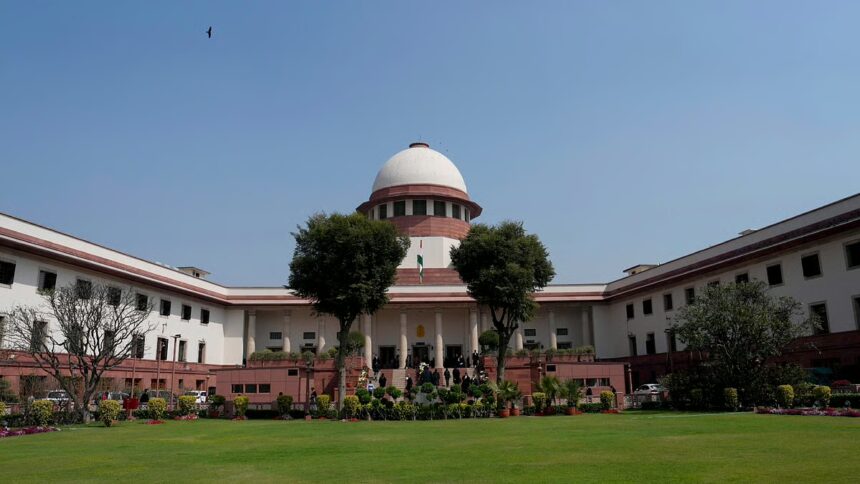
India’s long-standing and deeply debated Sabarimala Temple entry issue has once again returned to the spotlight as the Supreme Court of India convenes a nine-judge Constitution bench to examine crucial constitutional questions surrounding the case. The hearings mark a significant moment in India’s judicial history, as the court revisits one of the most sensitive intersections of religion, gender equality, and fundamental rights. While the proceedings do not directly review the 2018 verdict, they aim to address broader legal principles that will shape not only this case but also similar disputes involving religious practices across the country.
constitutional questions on faith versus fundamental rights take centre stage
The nine-judge bench, led by the Chief Justice, is focusing on larger constitutional issues that emerged from earlier rulings on the Sabarimala matter. The court is examining how the right to freedom of religion under Articles 25 and 26 of the Constitution interacts with the right to equality under Article 14. These questions go beyond the temple itself and extend to multiple cases involving religious practices and access to places of worship.
The controversy originates from the traditional restriction at the Sabarimala temple, where women of menstruating age were historically barred from entry, as the deity is considered a celibate. In a landmark 2018 judgment, the Supreme Court allowed women of all ages to enter the temple, declaring the ban unconstitutional and a violation of equality rights.
However, the verdict triggered widespread protests and led to numerous review petitions, prompting the court to refer the matter to a larger bench. The current hearings are not aimed at reconsidering the earlier verdict directly but at resolving fundamental legal questions such as the scope of judicial review in religious matters and the definition of essential religious practices.
During the proceedings, the court has also raised critical questions about who has the right to challenge religious customs. It has debated whether non-devotees should be allowed to question traditions followed by a particular religious group, highlighting the complexity of balancing individual rights with collective religious beliefs.
Intense debate over gender equality and religious autonomy shapes proceedings
The hearings have reignited a broader national debate on gender equality and the role of the judiciary in matters of faith. Observations from the bench indicate a strong focus on whether practices that exclude women can be justified under the guise of religion. Some judges have questioned the idea of treating women as “impure” during menstruation, emphasizing that such notions may conflict with constitutional values of dignity and equality.
At the same time, the central government has presented its stance, arguing that courts should exercise caution when dealing with religious traditions. It has maintained that judges are experts in law rather than religion and that deeply held beliefs should not be easily subjected to judicial scrutiny.
Another key argument presented during the hearings revolves around the rights of devotees. The government has suggested that the question of entry into a temple must be evaluated in the context of the beliefs of worshippers who consider certain restrictions essential to their faith. This perspective adds another layer to the debate, as it brings into focus the collective rights of religious communities alongside individual freedoms.
The nine-judge bench itself reflects diversity, comprising judges from different backgrounds and including a woman judge, symbolizing the court’s attempt to approach the issue from multiple perspectives. The outcome of these hearings is expected to have far-reaching implications, potentially influencing legal interpretations of religious freedom, gender rights, and constitutional morality in India.