

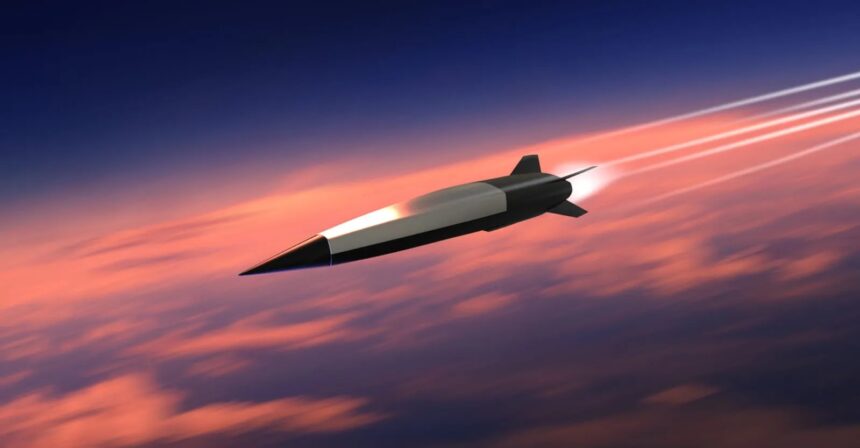
India is preparing to test a cutting-edge hypersonic cruise missile that promises to be a game-changer in the country’s defence landscape. Developed by the Defence Research and Development Organisation (DRDO) under Project Vishnu, this missile is designed to be three times faster than the current BrahMos missile and boasts a significantly extended range and precision. As geopolitical tensions rise in the region, this advancement marks a vital step forward in enhancing India’s strategic and tactical military strength.
Surpassing the BrahMos in Speed and Range
The new missile, called the Extended Trajectory Long Duration Hypersonic Missile (ET-LDHCM), operates at hypersonic speeds of up to Mach-8 — approximately 11,000 kilometers per hour — which far exceeds the BrahMos’s Mach-3 speed of around 3,675 kilometers per hour. This extraordinary speed enables the missile to reach distant targets within minutes, significantly shortening response times in critical scenarios. Furthermore, the ET-LDHCM’s range extends up to 1,500 kilometers, more than three times the BrahMos’s current maximum reach of 400–450 kilometers, greatly expanding India’s strike capabilities.
Powered by a sophisticated scramjet engine that utilizes atmospheric oxygen instead of traditional fuel combustion methods, the missile achieves higher speeds while maintaining fuel efficiency. Its ability to fly at low altitudes allows it to evade radar detection, enhancing stealth and making it harder for adversaries to intercept.
Advanced Features for Operational Flexibility
The ET-LDHCM offers remarkable versatility, capable of being launched from land, air, or sea platforms, thus strengthening India’s ability to project power across multiple domains. Unlike traditional ballistic missiles, it can alter its flight path mid-course, adapting to geographical challenges and improving accuracy in hitting precise targets. This feature makes it especially effective for deep strikes against enemy bases and infrastructure.
Equipped to carry warheads weighing between 1,000 to 2,000 kilograms, the missile supports both conventional and nuclear payloads, further amplifying its deterrence value. Another key advantage is its ability to function under extreme thermal conditions, reportedly operating normally at temperatures as high as 2,000 degrees Celsius — a technological feat previously achieved only by a few countries including Russia, the United States, and China.
By successfully testing the ET-LDHCM, India would join this exclusive group of nations possessing advanced hypersonic missile technology, signaling a significant leap in national defence and strategic autonomy.





