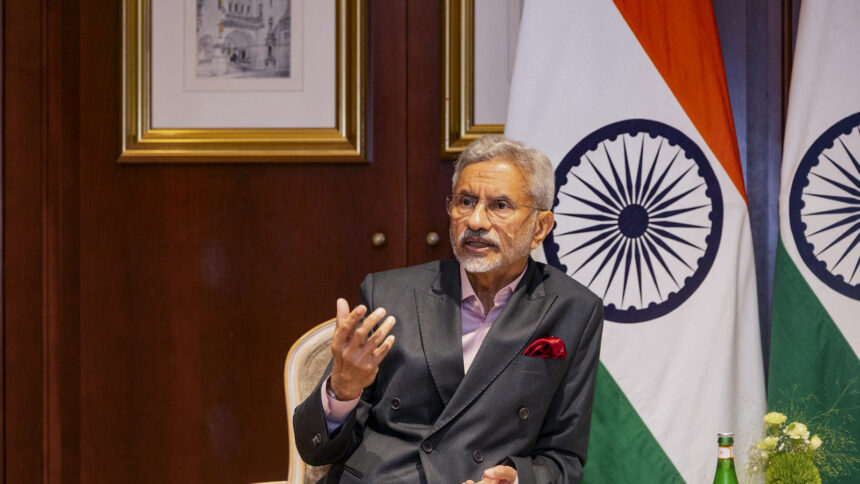
External Affairs Minister Subrahmanyam Jaishankar has clearly attributed the recent ceasefire between India and Pakistan to the strength and strategy of the Indian military rather than external diplomatic efforts. Speaking in an interview with a German newspaper during his European tour, Subrahmanyam Jaishankar dismissed the notion that the United States played a significant role in brokering the May 10 agreement that halted hostilities. Instead, he emphasized that direct contact between military commanders of both nations and India’s decisive military actions were the main reasons Pakistan agreed to cease fire. He also pointed to China’s involvement by highlighting that many weapons used by Pakistan originated from China, underlining the close ties between the two countries.
Military Action as the Decisive Factor
Subrahmanyam Jaishankar detailed how India’s military targeted and incapacitated key Pakistani airbases and air defense systems in response to the April 22 Pahalgam terror attack. The precision strikes carried out under Operation Sindoor on May 7 hit nine terror infrastructures across Pakistan and Pakistan-occupied Kashmir. These strikes were followed by Pakistan’s attempts to attack Indian military bases on May 8, 9, and 10, which were met with strong and effective retaliation from the Indian side. The External Affairs Minister credited the Indian armed forces for forcing Pakistan to reconsider its aggressive stance and accept a ceasefire, stating, “I thank the Indian military because it was the Indian military action that made Pakistan say: We are ready to stop.”
China’s Role and Terrorist Activities
On the question of China’s role in the conflict, Subrahmanyam Jaishankar did not mince words. He pointed out the origin of many weapons used by Pakistan and the close strategic partnership between Pakistan and China, implying that China’s support indirectly influences the ongoing tensions. “You can draw your own conclusions from that,” he remarked. Furthermore, Subrahmanyam Jaishankar highlighted that terrorist organizations continue to operate openly from various Pakistani cities and towns, posing a persistent threat to regional security.
The ceasefire agreement was officially announced by Foreign Secretary Vikram Misri on May 10, confirming that both India and Pakistan agreed to stop all firing and military actions on land, air, and sea with immediate effect. Subrahmanyam Jaishankar’s remarks came during the final leg of his tour covering Denmark, Germany, and other countries, underscoring India’s firm stance on self-defense and the importance of military strength in maintaining peace.
The minister reiterated that India’s response was purely defensive and that once Pakistan recognized the consequences of its actions, it chose to halt hostilities, reflecting India’s commitment to peace backed by preparedness and strength.