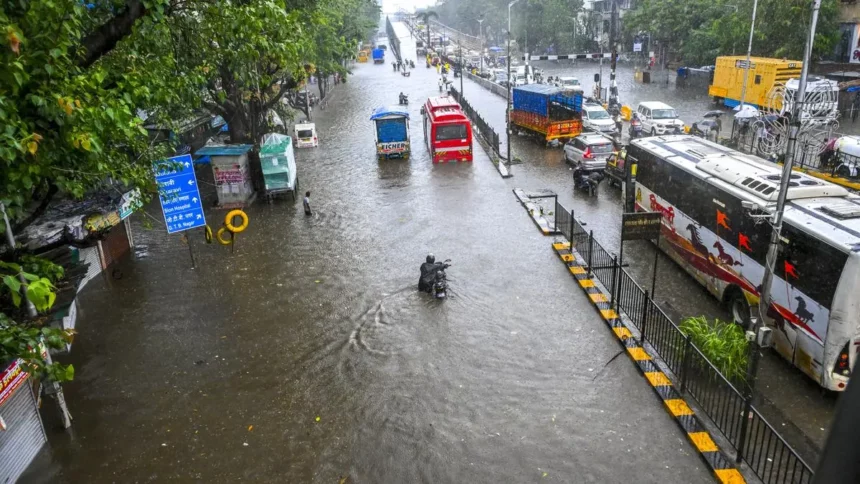
Mumbai is struggling to return to normalcy after severe waterlogging caused by heavy rains disrupted daily life across the city. Public transport services, including suburban trains and buses, are gradually resuming with minor delays, but the India Meteorological Department (IMD) has warned that more moderate to heavy rainfall, along with thunderstorms and gusty winds, is expected in the coming days. The city recorded over 100 mm of rainfall within 24 hours, causing flooding in many low-lying and upscale areas alike, highlighting the ongoing challenges Mumbai faces during the early monsoon season.
Transport Services Resume Amid Lingering Disruptions
After a night of relentless rain that brought Mumbai to a near halt on Monday, public transportation began stabilizing on Tuesday morning. Suburban trains operated with slight delays, while Brihanmumbai Electric Supply and Transport (BEST) buses and metro services continued running. However, some infrastructure challenges remain. The newly inaugurated Acharya Atre Chowk metro station at Worli Naka was temporarily closed after rainwater flooded its premises. Waterlogging severely impacted areas such as Peddar Road, Nepean Sea Road, and Khar, where streets remained submerged, forcing vehicles and pedestrians to navigate flooded roads.
The city witnessed its highest rainfall at Nariman Point with 252 mm recorded from late Sunday night to late Monday morning, followed by the Brihanmumbai Municipal Corporation (BMC) headquarters and the Colaba pumping station. These heavy rains caused power outages and forced suspension of several suburban train services on Monday, demonstrating how vulnerable Mumbai remains during intense monsoon downpours.
Government Faces Criticism Over Flood Management
The flooding and disruption sparked sharp criticism from political leaders. Shiv Sena (UBT) leader Aaditya Thackeray openly condemned the Maharashtra government’s handling of the situation, accusing them of poor governance and corruption. He pointed out that areas like Andheri Subway and Saki Naka had already experienced flooding the previous week, and now South and Central Mumbai were bearing the brunt of inadequate infrastructure and administrative lapses under BMC control.
Adding to the city’s challenges, the BMC forecasted a high tide of 4.88 meters expected at midday Tuesday and another at 4.18 meters late at night, which could exacerbate flooding in coastal and low-lying zones. As Mumbai grapples with these compounding issues, residents remain cautious while trying to adjust to the disruptions caused by early and intense monsoon rains.