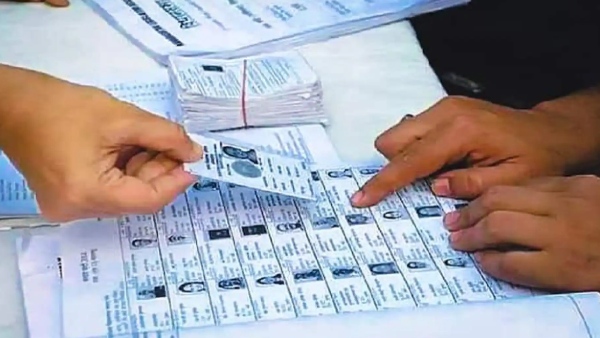
The publication of final voter lists under the Special Intensive Revision (SIR) process has once again brought electoral roll management into the national spotlight, particularly after nearly one crore voter names were removed across four major states. The Election Commission’s decision to delete 99.58 lakh names in Madhya Pradesh, Rajasthan, Chhattisgarh, and Kerala has triggered conversations not only about the mechanics of voter list revision but also about the broader implications for electoral accuracy, administrative efficiency, and democratic representation. While voter list updates are routine components of election preparedness, the scale of deletions inevitably invites scrutiny, analysis, and political interpretation.
The SIR process, currently in its second phase across 12 states and union territories, represents a significant administrative exercise aimed at ensuring the integrity of electoral rolls. Voter lists serve as the foundation of democratic participation, determining who can exercise the right to vote. Consequently, any large-scale change—whether additions or deletions—becomes politically and institutionally significant. The recent revisions underscore the complexity of maintaining accurate electoral databases in a country marked by vast population mobility, demographic shifts, and administrative challenges.
According to the Election Commission, the final voter lists now include 5.39 crore names in Madhya Pradesh, 5.15 crore in Rajasthan, 2.69 crore in Kerala, and 1.87 crore in Chhattisgarh. These figures reflect not only updated registrations but also the removal of names deemed ineligible due to death, migration, duplication, or other discrepancies. The Commission maintains that the exercise is essential for preserving electoral integrity, yet the magnitude of deletions raises inevitable questions about the processes, safeguards, and verification mechanisms involved.
The timing of the revisions adds another layer of significance. Electoral roll updates conducted ahead of election cycles are critical in shaping voter eligibility landscapes. Even when deletions are justified on administrative grounds, perceptions surrounding such changes often extend into political debates. In a competitive democratic environment, voter list management becomes both a technical and symbolic issue.
Scale of deletions and the administrative logic behind voter list revisions
The removal of 99.58 lakh voter names across four states reflects the sheer scale of India’s electoral roll management challenge. Madhya Pradesh recorded the highest deletions at 34.25 lakh, followed by Rajasthan with 31.36 lakh, Chhattisgarh with 24.99 lakh, and Kerala with 8.97 lakh. These figures illustrate how demographic patterns, migration trends, and administrative corrections can vary significantly across regions.
Voter list revisions are inherently dynamic processes. Populations are not static, and electoral rolls must adapt to reflect demographic realities. Migration, both internal and external, plays a particularly influential role. Individuals relocating for employment, education, or personal reasons frequently lead to outdated entries if not promptly updated. Similarly, duplicate registrations—where voters remain listed in multiple constituencies—pose challenges for electoral accuracy.
The Election Commission’s rationale for deletions centers on maintaining roll purity. Ineligible names, including those of deceased individuals or duplicate entries, can undermine electoral credibility. The SIR process, therefore, seeks to identify and rectify inconsistencies through verification exercises. Booth Level Officers conducting door-to-door visits represent a crucial component of this mechanism, intended to bridge administrative processes with ground realities.
Yet, the scale of deletions inevitably fuels public and political curiosity. Large numbers prompt questions about identification criteria, error margins, and potential unintended exclusions. Electoral roll management must balance two competing imperatives: eliminating inaccuracies while ensuring that no eligible voter is inadvertently removed. This balance represents one of the most persistent challenges in democratic administration.
The broader context of the SIR process further underscores its magnitude. Initiated on October 27, 2025, the revision exercise spans 12 states and union territories, covering approximately 51 crore voters. Such an expansive undertaking reflects both the ambition and complexity of maintaining a credible voter database in the world’s largest democracy.
The phased release of final voter lists across states highlights the procedural structure of the exercise. Lakshadweep and Puducherry’s lists were issued on February 14, followed by Gujarat on February 17. Subsequent releases, including Tamil Nadu and West Bengal, are scheduled within carefully defined timelines. Uttar Pradesh’s final list, slated for April 10, carries particular significance given the state’s demographic and electoral prominence.
Gujarat’s updated voter registration figure of 4.40 crore voters illustrates how revisions reshape electoral landscapes. Similarly, Puducherry’s 9.44 lakh voters and Lakshadweep’s 57,607 voters reflect the varied scale of roll management across regions. Each state’s list embodies unique demographic patterns and administrative considerations.
Electoral integrity, political perceptions, and the evolving discourse on voter roll accuracy
Beyond administrative mechanics, the SIR process intersects with broader debates on electoral integrity and democratic trust. Voter lists represent not merely databases but instruments of democratic inclusion. Changes to these lists inevitably influence public confidence, particularly when deletions occur on a large scale.
The Commission’s explanation of the SIR process emphasizes corrective intent. New voters above 18 are added, deceased individuals’ names are removed, migrated voters are updated, and clerical errors are corrected. These functions align with standard electoral management practices globally. However, the discourse surrounding such revisions often transcends technical explanations.
Political perceptions frequently shape reactions to voter list changes. Large-scale deletions may trigger concerns about potential disenfranchisement, even when grounded in administrative necessity. Electoral management bodies must therefore navigate not only procedural accuracy but also public communication and transparency.
The historical backdrop of the SIR process adds depth to the discussion. Special summary revisions conducted between 1951 and 2004 were completed, but similar exercises reportedly remained pending for over two decades. During this period, demographic changes, migration flows, and administrative complexities accumulated, necessitating renewed revision efforts.
The challenges confronting electoral roll accuracy are multifaceted. Migration patterns alter residency statuses, duplicate entries complicate verification, deaths create outdated records, and occasional inclusion of foreign nationals requires corrective action. Addressing these factors demands both technological systems and human verification mechanisms.
Assam’s voter list revision offers a parallel example. Under the Special Revision 2026, more than 2.43 lakh names were removed, reducing the draft list figure to a final registration count of 2.49 crore voters. The gender distribution within the final list further reflects demographic representation considerations, encompassing men, women, and third-gender voters.
Such revisions reinforce the evolving nature of electoral administration. Maintaining roll accuracy in a country characterized by demographic dynamism requires continuous intervention. Technological integration, data analytics, and field verification collectively underpin these efforts.
At the same time, the scale of electoral exercises amplifies their visibility. India’s voter list management operates at unprecedented magnitude, where even marginal percentage changes translate into millions of names. This numerical reality shapes both administrative priorities and political narratives.
Transparency and communication thus emerge as critical components of electoral roll management. Explaining the rationale, methodology, and safeguards associated with deletions becomes essential in sustaining public trust. Electoral integrity depends not only on procedural correctness but also on perceived fairness and accountability.
The Special Intensive Revision voter lists exercise, by its very scale, exemplifies the intersection of governance, data management, and democratic representation. As final voter lists continue to be published across states, the discourse surrounding accuracy, inclusion, and institutional credibility is likely to remain central to public debate.