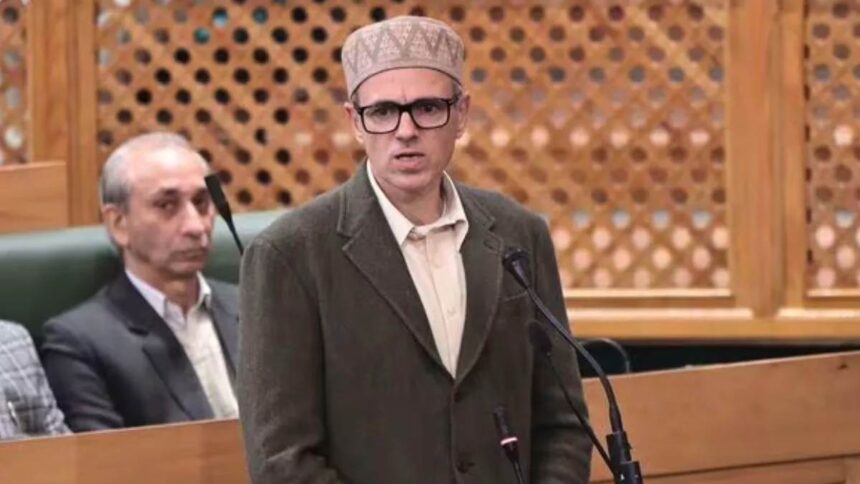
Jammu and Kashmir Chief Minister Omar Abdullah presented the budget for the financial year 2025-26 in the state assembly on Friday, unveiling a range of welfare measures and economic initiatives aimed at boosting agriculture, tourism, and local industries. The budget allocates ₹815 crore for the agricultural sector and ₹390 crore for tourism development, with an ambitious goal of generating 2.88 lakh jobs across various sectors.
While presenting the budget, Omar Abdullah emphasized the need for economic reforms, particularly in taxation policies. He acknowledged the rising concerns related to the Goods and Services Tax (GST) in Jammu and Kashmir and assured that provisions would be made to make it more industry-friendly while ensuring sustainable economic growth. He also underlined the importance of granting full statehood to Jammu and Kashmir to eliminate regional disparities and achieve long-term development.
The budget outlines key initiatives to empower women, provide relief to low-income families, and enhance employment opportunities for the youth. Taking inspiration from Delhi, the government has announced free bus travel for women in the region. Additionally, under the Marriage Assistance Scheme, the financial aid for women has been increased from ₹50,000 to ₹75,000. The Lakhpati Didi scheme will extend support to 40,000 women, fostering financial independence and entrepreneurship.
The Omar Abdullah-led government has also placed a strong emphasis on energy and infrastructure. A new hydropower policy has been introduced to improve energy generation in the region. In a major relief to low-income households, the budget proposes free electricity up to 200 units per month, easing the financial burden on struggling families. To strengthen the education sector, ₹50 crore has been allocated for the establishment of a National Law University in both Jammu and Kashmir.
The real estate sector has also received a boost, with the government announcing that property transfers among blood relatives will no longer attract any fees. Infrastructure development remains a priority, with a budgetary allocation of ₹10 crore for the construction of helipads in various districts, aimed at improving connectivity and emergency services. Additionally, a ₹1 rebate per liter has been introduced on petrol prices, offering some relief to the people amid fluctuating fuel costs.
The budget acknowledges a key challenge—the significant portion of state finances that goes into paying salaries, which accounts for nearly 70% of the total expenditure. However, the government has reiterated its commitment to promoting economic sectors such as agriculture, tourism, and local industries, including wool processing and leather manufacturing. The proposed reforms are expected to drive Jammu and Kashmir toward a more self-reliant and economically stable future.