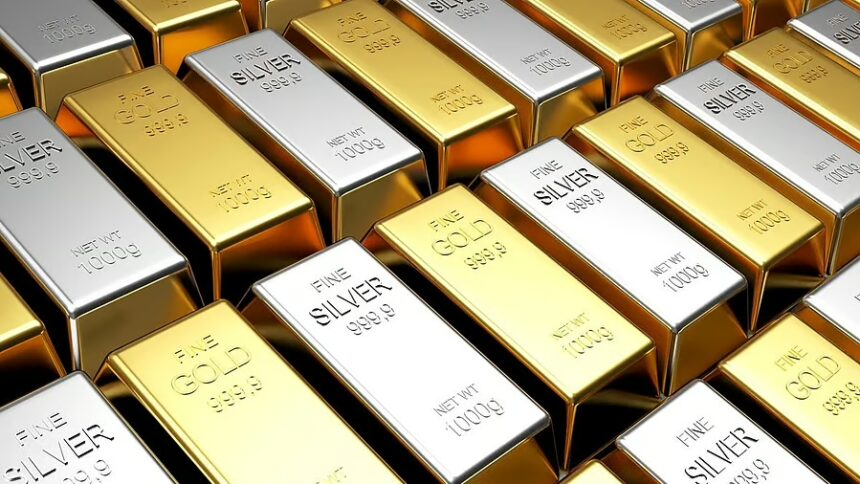
India’s bullion market is witnessing a remarkable surge as silver prices touch an all-time high, signaling a strong shift in both investment and industrial demand. According to data from the India Bullion and Jewellers Association, silver prices jumped significantly by ₹7,725 per kilogram, reaching ₹2,44,788 compared to the previous level of ₹2,37,063 per kg. This sharp rise reflects not only increased investor interest but also the growing role of silver in modern industries.
At the same time, gold prices have also shown notable strength. The price of 24-carat gold increased by ₹741 to ₹1,36,909 per 10 grams, moving closer to its record high of ₹1,38,161 recorded in late December 2025. The simultaneous rise in both precious metals indicates a broader trend influenced by global economic conditions and sustained demand from both institutional and retail investors.
What Is Driving the Surge in Gold and Silver Prices?
One of the key reasons behind the rising prices of gold is global economic uncertainty. Investors traditionally turn to gold as a safe-haven asset during times of financial instability, geopolitical tensions, and currency fluctuations. The ongoing global environment, marked by conflicts and shifting monetary policies, has increased the appeal of gold as a secure investment option.
Another important factor is the weakening of the US dollar. When the dollar weakens, gold becomes more attractive to investors holding other currencies, thereby increasing demand. In addition, changes in interest rates in the United States have reduced the opportunity cost of holding non-yielding assets like gold, further supporting its price rise.
Central banks have also played a crucial role in driving gold prices upward. Countries such as China have been consistently increasing their gold reserves, purchasing large quantities each year. This steady institutional demand has provided strong support to gold prices over the past year and continues to influence market trends.
Silver, on the other hand, is benefiting from a combination of investment demand and strong industrial usage. Unlike gold, silver has a dual role as both a precious metal and an industrial commodity. It is widely used in sectors such as renewable energy, electronics, and electric vehicles. The increasing global focus on clean energy and technological advancement has significantly boosted demand for silver.
Why Silver Is Rising Faster Than Gold
In recent weeks, silver has outperformed gold in terms of price growth. Market trends show that silver prices have climbed from around ₹2.28 lakh per kg in late December to nearly ₹2.45 lakh per kg in early January. This sharp increase highlights the metal’s growing importance in industrial applications.
One of the biggest drivers of silver demand is the renewable energy sector. Silver is a key component in solar panels, which are seeing increased adoption worldwide as countries shift toward sustainable energy sources. Additionally, silver is used extensively in electronics and electric vehicles, both of which are rapidly expanding industries.
Another factor contributing to silver’s surge is supply constraints. Industries are increasingly stockpiling silver to avoid potential shortages, leading to a demand-supply imbalance. Concerns over trade disruptions, tariffs, and global supply chain issues have further intensified this trend, pushing prices higher.
This combination of industrial demand and investment interest makes silver more volatile than gold but also gives it higher growth potential during periods of strong economic activity.
Market Trends, Future Outlook, and Impact on Consumers
Over the past ten days, both gold and silver have shown consistent upward momentum, with only minor fluctuations. However, the scale of increase has been more pronounced in silver, reflecting its evolving role in the global economy.
The performance of precious metals in 2025 has been particularly striking. Gold prices rose by approximately ₹57,033 over the year, representing a 75 percent increase. Silver recorded an even more dramatic rise, increasing by ₹1,44,403, which translates to a 167 percent jump. These figures highlight the strong performance of bullion in a volatile economic environment.
Across major Indian cities such as Delhi, Mumbai, Kolkata, and Chennai, gold prices remain close to ₹1.38 lakh to ₹1.39 lakh per 10 grams for 24-carat gold. While slight variations exist due to local taxes and demand conditions, the overall trend remains firmly upward.
Looking ahead, market experts believe that the rally in both metals may continue. Analysts suggest that silver could reach ₹2.75 lakh per kg within the year if current demand trends persist. Similarly, gold prices may cross ₹1.50 lakh per 10 grams, supported by ongoing global uncertainty and strong investment demand.
However, rising prices also have significant implications for consumers. Higher gold prices may impact jewelry demand, especially during weddings and festive seasons in India, where gold plays an important cultural role. As prices increase, affordability becomes a concern for many households.
On the other hand, investment demand is likely to remain strong. Many individuals are turning to gold and silver as a hedge against inflation and economic instability. This shift indicates a growing awareness among investors about the importance of diversifying their portfolios with tangible assets.
The current trend also highlights a broader transformation in the perception of silver. Once considered a secondary precious metal, silver is now gaining prominence due to its critical role in industrial and technological applications. This change has made silver more sensitive to global economic cycles, as well as advancements in clean energy and electronics.
In conclusion, the record-breaking rise in silver prices and the continued strength of gold reflect a combination of global uncertainty, industrial demand, and strong investment interest. As economic conditions remain uncertain, both metals are expected to continue attracting attention from investors and policymakers alike. The coming months will be crucial in determining whether this upward trend sustains or stabilizes, but for now, precious metals remain at the center of market focus.