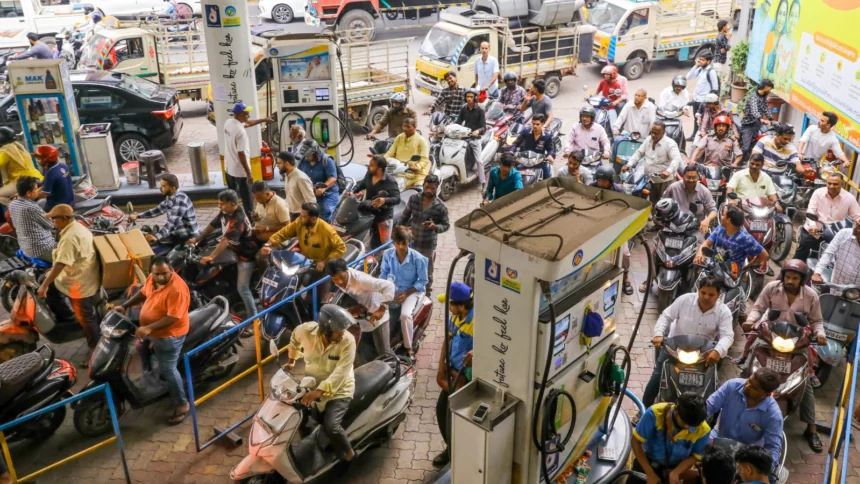
India has moved to reassure the public at a time when global uncertainty around energy supplies continues to grow. Amid rising geopolitical tensions in West Asia and disruptions in key oil-producing regions, the government has clearly stated that there is no shortage of petrol or diesel in the country. Officials have emphasized that existing reserves are adequate to meet domestic demand, and there is currently no requirement for additional imports of these fuels. This assurance is aimed at calming fears among citizens and preventing panic-driven behaviors that could strain supply systems unnecessarily.
According to Sujata Sharma, Joint Secretary in the Ministry of Petroleum and Natural Gas, India’s fuel reserves are stable and sufficient. She highlighted that the government is continuously monitoring both supply levels and consumption trends across different regions to ensure uninterrupted distribution. While acknowledging that the West Asia conflict has had some impact on global energy logistics, she maintained that India’s preparedness and strategic planning have kept the domestic situation under control.
The global energy landscape has been under pressure due to instability in regions critical for oil production and transportation. The Strait of Hormuz, a vital passage for crude oil shipments, has witnessed heightened tensions, raising concerns about possible disruptions. For a country like India, which imports a significant portion of its crude oil, such developments naturally create apprehension. However, the government’s diversified sourcing strategy has played a key role in mitigating risks. By reducing reliance on any single region and maintaining strategic reserves, India has managed to cushion itself from sudden shocks in supply.
Despite these assurances, there have been isolated instances of panic buying reported in certain areas, particularly at LPG distribution centers. Such behavior, officials warn, can create artificial shortages and disrupt otherwise stable supply chains. In response, distributors have stepped up their efforts, extending delivery operations and even working on weekends to ensure that demand is met. Authorities have urged citizens to remain calm and avoid unnecessary stockpiling, reiterating that there is no actual shortage of fuel.
At the same time, the government is actively working to expand access to cleaner energy sources such as Piped Natural Gas. Since March 2026, around 5.52 lakh new PNG connections have been provided, reflecting ongoing efforts to strengthen energy infrastructure. This expansion is particularly significant in urban and semi-urban areas, where demand for cleaner and more efficient fuel options is increasing. The government is also evaluating the number of households that have access to both PNG and LPG connections, with the aim of improving distribution efficiency and ensuring broader coverage.
In addition to PNG expansion, the government has increased the availability of smaller LPG cylinders to cater to economically vulnerable sections of society. The 5 kg cylinders are designed to be affordable and easily accessible, especially for students, migrant workers, and daily wage earners. These cylinders require only basic identification for purchase, making them a practical solution for individuals who may not have permanent addresses. So far, approximately 19.5 lakh such cylinders have been sold, indicating strong demand and acceptance among users. This initiative highlights the government’s focus on inclusive energy access, ensuring that essential resources are available to all segments of the population.
Alongside fuel availability, the government has also addressed concerns regarding fertilizer supply, which is critical for the agricultural sector. Aparna Sharma confirmed that there is no shortage of fertilizers in the country, despite disruptions in global supply chains. By diversifying import sources and maintaining adequate stock levels, authorities have ensured that farming activities continue without interruption. This is particularly important as agriculture remains a key pillar of the Indian economy, and any disruption in fertilizer supply could have far-reaching consequences.
India is also engaged in strategic discussions with Iran and the United States regarding the future of the Chabahar Port, following the expiry of the US sanctions waiver. The port holds significant importance for India’s trade and connectivity strategy, providing access to Afghanistan and Central Asia while bypassing traditional routes. Ensuring continued operations at Chabahar is crucial for maintaining trade flows and strengthening regional ties. Diplomatic efforts are ongoing to navigate the complexities of the situation and protect India’s strategic interests.
On the international front, Randhir Jaiswal stated that India is maintaining active engagement with countries in the Gulf region to address challenges arising from the ongoing conflict. Under the leadership of Narendra Modi, the government has prioritized coordination and communication to ensure the safety of Indian citizens and the continuity of essential services. Air travel between the Gulf region and India remains stable, with more than 13.19 lakh passengers having traveled since February 2026. Around 105 flights from the UAE alone are expected to land in India on a single day, reflecting the resilience of aviation operations despite regional tensions. Additionally, Iran’s partial reopening of its airspace for cargo and chartered flights has helped maintain logistical networks and supply chains.
India’s approach to managing energy security in such a volatile global environment reflects a combination of strategic planning, infrastructure development, and proactive governance. Maintaining sufficient reserves, diversifying import sources, and investing in domestic capabilities have all contributed to the country’s ability to withstand external shocks. Real-time monitoring systems and coordinated policy measures further enhance the government’s capacity to respond to changing circumstances.
The economic and social implications of stable fuel availability are significant. Petrol and diesel are essential for transportation, industry, and agriculture, making their uninterrupted supply critical for overall economic stability. By ensuring that there is no shortage, the government is helping to maintain normal economic activity and prevent inflationary pressures that could arise from supply disruptions. At the same time, initiatives such as PNG expansion and affordable LPG distribution contribute to improved living standards and greater energy accessibility.
The government has reiterated its advisory for citizens to remain calm and avoid panic buying, emphasizing that supply chains are functioning normally. Continuous monitoring and coordination between various departments are being carried out to ensure that the situation remains under control. Authorities are also prepared to take additional measures if required, depending on how global developments unfold.
In conclusion, India’s assurance of sufficient petrol, diesel, and fertilizer availability provides a strong message of stability amid global uncertainty. Despite rising tensions in West Asia and challenges in international energy markets, the country has managed to maintain uninterrupted supply through effective planning and governance. The combination of strategic reserves, diversified sourcing, and proactive policies has enabled India to navigate a complex situation with confidence. As the global scenario continues to evolve, the government’s focus on preparedness and resilience will remain crucial in ensuring that citizens and industries face minimal disruption.