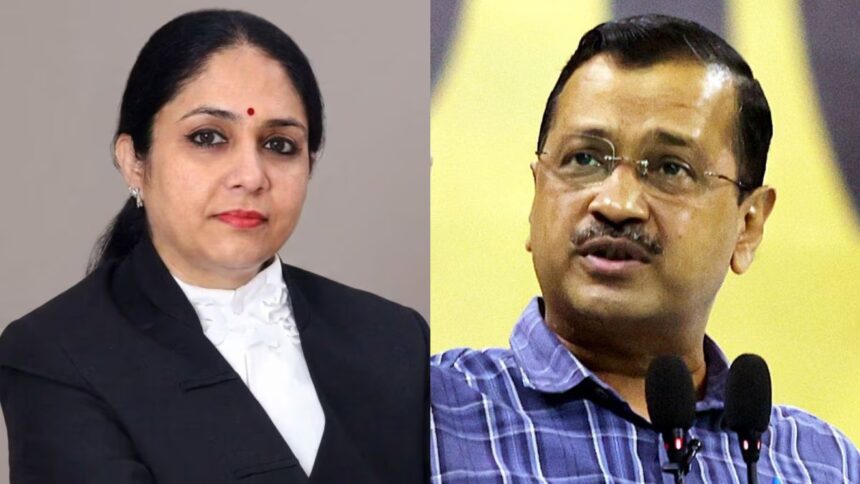
The Delhi High Court dismissed a plea by Arvind Kejriwal seeking recusal of Justice Swarana Kanta Sharma, calling allegations of bias baseless and harmful to judicial integrity.
The Delhi High Court has delivered a significant ruling in the ongoing excise policy case by rejecting the recusal plea filed by Arvind Kejriwal, Manish Sisodia, and other accused. The court held that the allegations of bias against Justice Swarana Kanta Sharma lacked substance and amounted to an attempt to undermine the credibility of the judiciary. The decision comes amid heightened political and legal scrutiny surrounding the case, which has remained a focal point in national discourse.
Court Observations on Judicial Integrity
Justice Swarana Kanta Sharma, while pronouncing the order, emphasized the importance of preserving institutional integrity. The court noted that the plea did not present any concrete evidence of bias and was instead based on apprehensions. It underlined that such claims, without substantiation, risk damaging public trust in the judicial system.
The judge observed that stepping aside would have been the easier course, but addressing the plea was necessary due to the broader implications it carried for the judiciary. The court stressed that the matter was not merely about individual fairness but about safeguarding the credibility of judicial institutions. It also pointed out contradictions in the arguments, noting that while the applicants expressed confidence in the judge’s integrity, they simultaneously sought her removal from the case.
Grounds for Recusal Request and Court’s Response
The recusal plea was based on multiple grounds raised by Arvind Kejriwal during hearings. These included claims that the judge’s family members were professionally associated with Solicitor General Tushar Mehta and that she had attended events linked to organizations perceived to have ideological affiliations. Additionally, concerns were raised about the speed of certain judicial decisions in the case, which the applicants argued created an impression of bias.
However, the court rejected these arguments, stating that apprehensions without factual backing cannot justify recusal. It clarified that judicial decisions must be evaluated on legal merit rather than perceptions or assumptions. The court also highlighted that allowing such pleas without solid evidence could set a precedent that undermines the independence of judges and opens the door to misuse of recusal applications.
Case Background and Legal Developments
The excise policy case stems from the Delhi government’s 2021 liquor policy, which aimed to reform the sector and boost revenue but was later withdrawn following allegations of irregularities. Investigations by the Central Bureau of Investigation and the Enforcement Directorate have focused on alleged corruption and favoritism toward private entities.
On February 27, a trial court granted relief to Kejriwal and several other accused, while also criticizing the investigation process. This order was subsequently challenged by the Central Bureau of Investigation in the Delhi High Court. During a hearing on March 9, the High Court made preliminary observations indicating that certain findings of the trial court required further examination and stayed parts of its order, including directions for action against investigating officials.
Following these developments, Kejriwal, Manish Sisodia, and others filed the recusal plea, seeking the removal of Justice Sharma from the case. The High Court’s rejection of this plea now clears the way for continued proceedings under her bench.
Broader Implications for Judiciary and Legal Process
The ruling is being viewed as a strong reaffirmation of judicial independence and the principle that judges cannot be recused based on unfounded allegations. Legal experts suggest that the judgment reinforces the need for maintaining a balance between litigants’ rights and the integrity of judicial institutions.
The court’s remarks highlight the challenges faced by the judiciary in high-profile cases, where public perception and political narratives often intersect with legal proceedings. By addressing the plea directly, the court has set a precedent emphasizing that institutional credibility must take precedence over unverified claims.
The case continues to hold significant political and legal importance, with further hearings expected to shape its trajectory. The High Court’s decision marks a key moment in the ongoing legal battle, reaffirming the judiciary’s commitment to fairness, transparency, and due process.