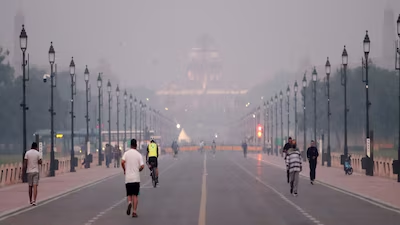
A recent viral video capturing the stark difference in air quality between Delhi and Vienna has reignited global concern over India’s worsening pollution crisis. The clip, filmed from an airplane window, shows Vienna’s crystal-clear, green landscape transitioning into Delhi’s thick, yellow smog, laying bare the dangerous extent of toxic air hovering over the Indian capital. The video has not only triggered millions of reactions online but has also reopened conversations around the urgent need for sustainable air quality management and public awareness in India.
Viral Video Sparks Concern Over Delhi’s Toxic Air
A dramatic video circulating on social media has laid bare the shocking visual difference in air quality between Austria’s capital Vienna and India’s national capital, Delhi. Captured from the window of an airplane traveling from Vienna to Delhi, the footage vividly portrays how the lush, pollution-free scenery of Vienna fades into the blurred, smoke-laden skyline of Delhi.
The Instagram user who shared the video titled it *“Difference in air quality captured from plane”*, expressing disbelief at the visible transformation mid-flight. The caption read, *“It felt like travelling from 8K resolution to blurred 90’s camera quality due to high pollution during the winter months!”* The post immediately went viral, garnering over 4.3 million views and sparking hundreds of emotional reactions from users across the globe.
Viewers described the visuals as “scary and alarming,” echoing fears about the deteriorating environmental health of Delhi. One comment read, *“From 4K resolution to a Mexican cowboy movie filter — that’s how Delhi looks now.”* Another user lamented, *“Instead of acknowledging the problem, we get defensive as Indians. This attitude won’t solve the issue.”*
Many others pointed out the irony of people getting offended rather than alarmed by the visible evidence of pollution. A user noted, *“Why are people triggered at facts? Delhi is literally the most polluted city in the world right now. We should be glad it’s being highlighted.”*
The clip, though simple in nature, has stirred deep reflection among citizens and policymakers alike. It represents not just an aesthetic difference between two cities, but the growing public frustration over how India’s pollution crisis continues to worsen each winter despite repeated warnings and multiple governmental interventions.
Data Shows Pollution is a Year-Round Health Crisis
While Delhi’s smog is most noticeable during the winter months, experts argue that the city’s air pollution problem persists throughout the year. According to the Centre for Research on Energy and Clean Air (CREA), Delhi recorded an average PM2.5 concentration of 107 micrograms per cubic meter in October 2025 — nearly three times higher than in September. This figure placed the capital sixth among India’s most polluted cities during that period.
The dangerous concentration of PM2.5 — fine particulate matter that penetrates deep into the lungs and bloodstream — makes Delhi’s air one of the most toxic in the world. Even short-term exposure can cause respiratory illnesses, asthma attacks, and cardiovascular complications. For children, the elderly, and those with pre-existing conditions, it poses life-threatening risks.
Recent data from the Global Burden of Disease (GBD) study paints a grim picture of the human cost. Air pollution accounted for nearly 15 percent of all deaths in Delhi in 2023, making it the city’s single largest health hazard. Mortality linked to pollution rose from 15,786 deaths in 2018 to 17,188 in 2023, reflecting a steady and alarming upward trend despite the implementation of various air quality management plans.
Interestingly, deaths related to other chronic diseases such as hypertension and diabetes also increased over the same period but remained significantly lower than those caused by prolonged exposure to polluted air. This data underlines the scale of the crisis — one that is silently claiming more lives each year than many other recognized health emergencies.
Environmental experts attribute the persistent pollution to a combination of vehicular emissions, industrial activities, construction dust, and the seasonal practice of stubble burning in nearby states. The onset of winter further traps these pollutants due to low wind speeds and temperature inversion, creating a dense blanket of smog that envelops the city.
Despite multiple government efforts, including the introduction of graded response plans, smog towers, and temporary restrictions on construction, the results remain far from satisfactory. The cyclical nature of Delhi’s air quality problem — peaking each winter and easing temporarily before returning — points to deeper systemic issues in urban planning, enforcement, and behavioral change.
*Public Outrage and the Need for Sustainable Action*
The viral video has become more than just a social media trend; it symbolizes collective frustration and helplessness over a problem that affects millions of lives daily. The phrase *“Scary and alarming”* perfectly encapsulates the reaction of citizens who feel that the issue is no longer being taken seriously enough.
Many online users called for a complete shift in public mentality, emphasizing the need to stop normalizing smog-filled skies as a seasonal occurrence. Environmental activists argue that the fight against air pollution cannot be seasonal; it must be continuous, data-driven, and community-oriented.
Educational campaigns, stricter emission standards, and the promotion of clean energy alternatives are being increasingly demanded by both experts and the public. There is also growing pressure on industries and local authorities to adopt cleaner technologies and to improve accountability.
Urban design and transportation planning are also key areas under scrutiny. Delhi’s vehicular emissions remain a dominant contributor to its poor air quality, and the lack of effective public transport infrastructure worsens the issue. Encouraging the use of electric vehicles, expanding green spaces, and controlling construction dust are among the key strategies proposed by environmental policy experts.
Furthermore, the role of social media in bringing such issues to light has become more powerful than ever. Viral videos like the Vienna-Delhi clip serve as visual wake-up calls that statistics alone often fail to convey. When citizens see the difference with their own eyes — from the clarity of Vienna’s skies to Delhi’s suffocating haze — the urgency becomes tangible and deeply personal.
However, environmental experts caution that awareness alone is not enough. Without consistent enforcement of air quality regulations and serious political will, India risks continuing this cycle of pollution and public health emergencies year after year.
The visual evidence captured in that now-viral video from the airplane window is more than a passing moment on social media; it is a reminder of what is at stake. It reflects the widening gap between nations that have successfully implemented sustainable urban policies and those still battling to control environmental degradation.
Delhi’s skyline, shrouded in smog, stands as both a literal and symbolic warning — a call for immediate, united, and unwavering action before the air its citizens breathe becomes an irreversible tragedy.