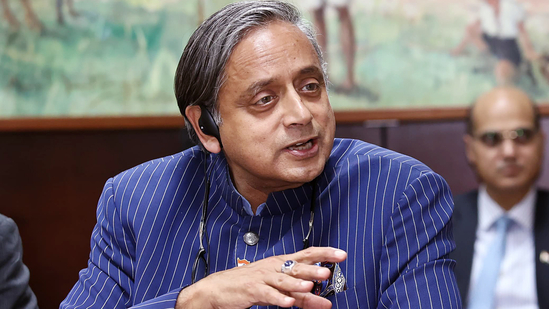
US-based Congress leader Shashi Tharoor firmly countered Pakistan’s assertion that it is also a victim of terrorism, emphasizing Pakistan’s responsibility in nurturing terror groups. Speaking during a diplomatic visit to Washington, Shashi Tharoor referenced Hillary Clinton’s warning about “breeding vipers” to highlight the dangers of Pakistan’s historic support for militant organizations. As both Indian and Pakistani delegations engage lawmakers in the US amid rising cross-border tensions, Shashi Tharoor stressed that India’s fight is against terrorism, not Pakistan as a nation, and highlighted India’s progress despite security challenges.
During the visit, Shashi Tharoor addressed the Pakistani delegation’s narrative, which claims Islamabad suffers greater losses from terrorism than India. He questioned, “Whose fault is that?” reminding listeners of Clinton’s famous quote from a decade ago: “You can’t breed vipers in your backyard and expect them to bite only your neighbours.” He also pointed out that Pakistan currently faces violence from the Tehrik-i-Taliban Pakistan (TTP), a splinter group from the Taliban, and challenged Pakistan to reflect on who originally created the Taliban, implying Pakistan’s role in fostering these groups.
India’s Stand on Terrorism and Development
Shashi Tharoor emphasized that India’s delegation is not presenting a message of India versus Pakistan but rather highlighting India’s status as a democracy combating terrorism while striving for economic growth. He noted Kashmir’s transformation from a conflict zone into a place of booming tourism, citing that tourist arrivals in Kashmir last year surpassed those in Aspen, Colorado, with a 100 percent increase in the first quarter of this year compared to last year.
He condemned the recent brutal Pahalgam terror attack, explaining how terrorists attempt to incite religious conflict by targeting people based on religion, provoking communal tensions. Shashi Tharoor clarified that India’s recent Operation Sindoor, a counter-terrorism effort launched after the Pahalgam attack, was not motivated by religion or communal politics, pointing out the diverse composition of the Indian delegation including women and Muslim members.
Addressing Terrorism Amid Cross-Border Tensions
Operation Sindoor targeted militant infrastructure in Pakistan and Pakistan-occupied Kashmir, resulting in the deaths of over 100 militants linked to groups such as Jaish-e-Mohammed and Lashkar-e-Taiba. The operation ended after both countries agreed to a ceasefire on May 10. The Indian delegation in Washington includes representatives from multiple political parties and former diplomats, reinforcing a united front in addressing terrorism and promoting India’s narrative on the international stage.