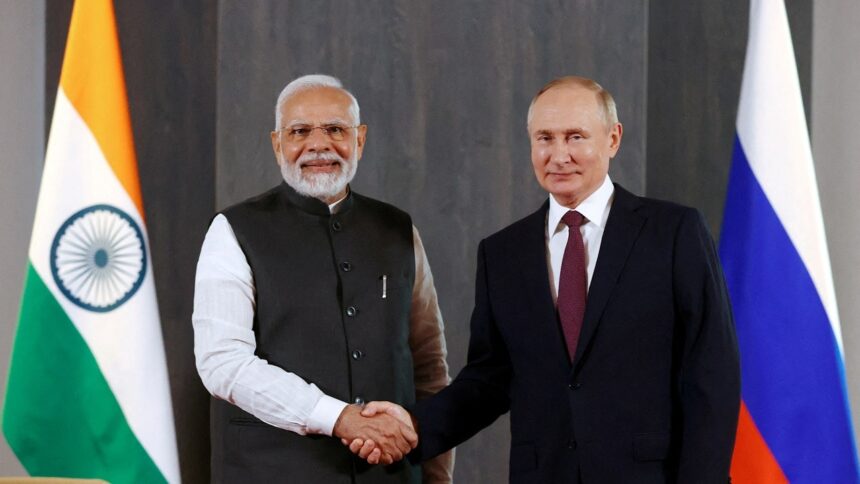
The increasing prominence of Hindi in Russian universities is not just a linguistic development but also a reflection of evolving diplomatic and educational priorities. Russian educational institutions are actively encouraging students to learn Hindi, signaling Moscow’s intent to align academic programs with the country’s strategic interests and India’s growing influence on the global stage. This initiative goes beyond mere language instruction; it represents a concerted effort to deepen cultural understanding, foster long-term collaboration, and prepare a generation of students capable of engaging with India across multiple domains. The move underscores how education can serve as a tool of diplomacy, blending academic growth with geopolitical considerations.
Growing Interest in Hindi Across Russian Universities
Russian universities have witnessed a significant surge in student interest in learning Hindi in recent years. Konstantin Mogilevsky, Deputy Minister of Science and Higher Education, has emphasized the importance of expanding Hindi courses to meet this rising demand. He noted that Hindi, spoken by more people in daily life in India than English, cannot be ignored when considering India’s global and regional importance. Major institutions such as the Moscow State Institute of International Relations (MGIMO), the Russian State University for the Humanities, the Institute of Asian and African Studies at Moscow State University, and the Moscow State Linguistic University are leading the effort by establishing multiple Hindi language groups. According to Mogilevsky, the number of such groups has increased two to three times compared to previous years.
Hindi courses are no longer limited to Moscow. St. Petersburg State University and Kazan Federal University have also introduced Hindi programs to cater to student demand. Officials report a steady increase in annual applications from students eager to pursue the language. This growing interest is fueled by the recognition of Hindi not only as a linguistic asset but also as a gateway to understanding Indian culture, politics, and trade relations. Russian students see Hindi as a strategic skill, offering opportunities in diplomacy, international business, and cross-cultural engagement. The academic focus on Hindi reflects Moscow’s intention to cultivate expertise in Indian affairs among its student population, enhancing Russia’s capability to engage with India in a more nuanced and effective manner.
Strategic and Cultural Context Driving Hindi Expansion
The push for Hindi in Russian universities coincides with a shifting international landscape and the strengthening of India-Russia ties. Amid escalating tensions with Washington and trade restrictions imposed by the United States, Moscow has sought closer alignment with New Delhi. For instance, on August 27, 2022, the Trump administration raised tariffs on Indian imports to 50 percent in response to India’s continued purchases of Russian crude oil. In contrast, Russia and India have deepened their strategic partnership since 2022, with India emerging as a major buyer of Russian oil despite international sanctions.
External Affairs Minister S. Jaishankar has described Russia as one of India’s most reliable partners, emphasizing the consistency and stability of bilateral relations over decades. The Kremlin has confirmed that President Vladimir Putin will visit India in December, highlighting the political and strategic significance of maintaining strong ties. Within this broader context, the expansion of Hindi education serves as a complementary measure to reinforce cultural and academic links, ensuring that the growing diplomatic and trade partnership is mirrored in educational and societal exchanges.
By integrating Hindi into university curricula, Russia seeks to build a foundation for long-term collaboration with India. Language proficiency is expected to enhance mutual understanding, promote cultural diplomacy, and equip students to participate in professional, academic, and policy-oriented interactions with Indian counterparts. Moreover, Hindi education helps position Moscow as a proactive partner in global geopolitics, reflecting a strategy that goes beyond conventional diplomacy and leverages education as a tool of international influence. Russian universities are recognizing that linguistic and cultural literacy is essential for fostering sustained engagement with India, not only in governmental or economic spheres but also in academic, technological, and cultural collaborations.
The Hindi initiative also signals a broader educational strategy in Russia. By offering Hindi courses, institutions aim to produce graduates who can bridge cultural divides and act as intermediaries in diplomacy, trade, and cultural exchange. The emphasis on Hindi demonstrates a nuanced understanding that language learning is not just academic but a strategic investment in human capital. As Hindi becomes more central to university programs, students are likely to gain access to internships, research opportunities, and professional networks connected to India, further enhancing bilateral ties.
Moscow’s emphasis on Hindi reflects the importance of cultural understanding in maintaining and strengthening long-term strategic relationships. By equipping students with the linguistic tools necessary to engage with India, Russian universities are fostering an environment conducive to sustained dialogue, cooperation, and knowledge sharing. The initiative goes beyond teaching vocabulary and grammar; it incorporates cultural studies, contemporary Indian politics, history, and social dynamics, ensuring that students develop a holistic understanding of India. In doing so, Russia is strategically preparing a generation of professionals capable of contributing to India-Russia relations across multiple sectors, including business, diplomacy, academia, and cultural engagement.
In conclusion, the growing focus on Hindi education in Russian universities illustrates how language can serve as a strategic asset in international relations. By investing in Hindi programs, Moscow is cultivating expertise among students that aligns with the country’s broader geopolitical priorities, strengthening cultural and academic ties with India, and preparing a workforce capable of navigating and enhancing the bilateral partnership in the years to come.
The expansion of Hindi education also highlights the evolving role of universities in global diplomacy. Academic institutions are no longer confined to teaching conventional subjects; they are active participants in shaping international engagement strategies. By promoting Hindi, Russian universities are aligning their educational objectives with national foreign policy goals, fostering cross-cultural competence, and ensuring that students are prepared to contribute meaningfully to India-Russia collaboration.
This educational initiative reflects a broader trend where countries increasingly leverage language and cultural studies as instruments of diplomacy and international cooperation. Moscow’s focus on Hindi demonstrates a strategic vision that integrates academic development with global political and economic objectives, creating a new paradigm for educational diplomacy. As Hindi continues to gain prominence in Russian classrooms, the initiative is likely to strengthen not only cultural understanding but also India-Russia ties in a rapidly shifting international order.