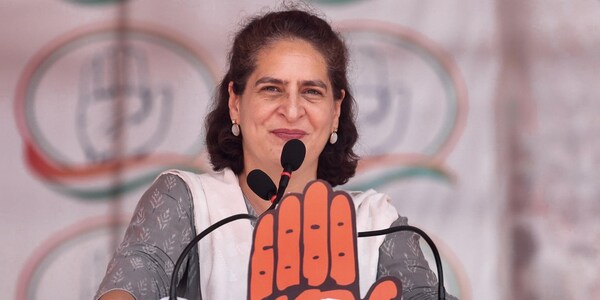
Congress leader and Wayanad MP Priyanka Gandhi Vadra has formally expressed dissent over a parliamentary panel report that recommends stringent regulation of OTT content in India, sparking renewed debate over freedom of expression and digital entertainment governance. The report, prepared by the department-related standing committee of the Ministry of Home Affairs and tabled in Parliament under the leadership of BJP Rajya Sabha MP Radha Mohan Das Agarwal, seeks to address cybercrimes and the exposure of minors to harmful online content. While the committee suggests extensive measures such as pre-release scrutiny, expert review panels, and stronger age-verification systems, Priyanka Gandhi cautions that implementing such controls could infringe upon the Fundamental Right to Freedom of Speech and Expression and hinder the growth of the burgeoning OTT sector. In her dissenting note, she emphasizes self-regulation, technological safeguards, and culturally sensitive guidelines as a more practical and balanced approach to digital content management.
Concerns Over Centralized OTT Regulation and Pre-Certification Proposals
The parliamentary committee’s report highlights the rapid growth of OTT platforms in India, noting that online streaming content now rivals traditional cinema in reach and popularity, particularly among minors. The panel expressed concerns about the absence of pre-release content verification for OTT offerings, contrasting this with films that undergo mandatory certification under the Cinematograph Act. According to the committee, weak age verification and reliance solely on post-release grievance redressal mechanisms leave minors exposed to potentially harmful content. To address this perceived risk, the report recommends establishing a dedicated panel of experts – including child development specialists, educators, legal professionals, social scientists, and community representatives – tasked with reviewing flagged OTT content after its release. Furthermore, it proposes mandatory regional-language advisories, stricter parental controls, and closer coordination among government agencies, regulators, platform operators, and civil society organizations to improve oversight and protect young viewers, especially in rural and semi-urban areas.
Priyanka Gandhi Vadra, however, strongly opposes the suggestion of pushing OTT platforms into a system resembling traditional film censorship. In her dissenting note, she argues that the sheer volume of content across films, series, videos, and reels makes centralized pre-certification impractical. She emphasizes that routing every OTT release through a regulatory board such as the CBFC would create significant backlogs, delay content distribution, and compromise the sector’s operational feasibility. According to Priyanka, such a centralized approach risks curtailing creative freedom and could inadvertently stifle the expansion of an industry that has become a vital source of employment for thousands of young professionals across India. Her concerns highlight the tension between regulatory oversight and the need to preserve freedom of expression in the rapidly evolving digital entertainment space.
She also warns that mandatory pre-certification could set a dangerous precedent, giving authorities the power to control content narratives and determine cultural acceptability. In a space that thrives on creativity and experimentation, Priyanka Gandhi notes, excessive regulation could limit storytelling diversity, curtail artistic expression, and reduce the ability of platforms to offer regionally relevant content to audiences across the country. Her dissent underscores the necessity of adopting a nuanced approach that balances the protection of minors with the industry’s need for operational flexibility and creative freedom.
Strengthening Self-Regulation, Parental Controls, and Technological Safeguards
Rather than endorsing centralized regulation, Priyanka Gandhi advocates for a robust self-regulatory framework that empowers OTT platforms to take greater responsibility for content management. She proposes enhancing parental control mechanisms to give guardians more effective tools to monitor what children watch online. Strengthening age-verification technologies is another key recommendation, ensuring that younger viewers are not inadvertently exposed to adult or harmful content. Priyanka also suggests the formation of a joint stakeholder forum that includes platform operators, regulators, educators, child psychologists, and civil society representatives to develop culturally sensitive content guidelines, supported by penalties for non-compliance.
Priyanka emphasizes that OTT platforms are already better regulated compared to other social media channels, where minors frequently encounter unrestricted adult content. By improving self-regulation and leveraging technological solutions, she argues, the industry can provide a safer digital environment without resorting to heavy-handed governmental intervention. Her approach highlights the importance of collaboration between platform operators, parents, regulators, and community stakeholders in maintaining ethical standards while preserving freedom of speech and creativity.
Her dissenting note also addresses the practical challenges of monitoring a rapidly expanding digital entertainment ecosystem. Unlike traditional films, OTT content is produced and released at a staggering pace, often across multiple languages and regions. Priyanka argues that relying solely on government pre-certification mechanisms would be impractical and could cause significant delays, negatively affecting content reach and user engagement. She contends that a self-regulatory approach, backed by strong parental controls and modern age-verification technologies, offers a more feasible and sustainable solution for safeguarding children without compromising industry growth.
Furthermore, Priyanka Gandhi underscores the necessity of integrating cultural sensitivity into content oversight. By engaging experts from diverse backgrounds, including education, law, and child development, platforms can develop guidelines that reflect India’s varied cultural and linguistic landscape. These measures, she asserts, are more likely to be respected and implemented effectively compared to rigid top-down mandates. In her view, fostering a responsible content ecosystem requires collaboration, innovation, and education rather than coercive enforcement measures.
The dissent also draws attention to the potential economic implications of overly restrictive regulation. The OTT industry has become a major employment generator, supporting actors, writers, producers, technical staff, and platform operators. Pre-certification and stringent oversight could slow content production, reduce investment, and limit opportunities for creative professionals. Priyanka Gandhi’s stance underscores the need for policies that protect viewers while supporting the growth of a sector that contributes significantly to the digital economy.
Additionally, Priyanka’s note highlights the importance of evidence-based policymaking. She argues that regulatory interventions should be guided by empirical studies assessing the actual risks posed to minors by OTT content. By relying on data-driven assessments rather than assumptions or anecdotal evidence, policymakers can design safeguards that are effective, targeted, and proportionate. Her dissent reflects a commitment to rational policymaking and balancing child protection with individual freedoms.
Priyanka Gandhi also underscores the evolving nature of digital consumption patterns. Modern audiences, particularly younger viewers, access content across multiple devices, platforms, and languages, often outside traditional regulatory frameworks. She argues that any effective regulation must account for these realities and focus on empowering users and guardians to make informed viewing choices. By equipping parents with tools and fostering industry-led self-regulation, the approach can be both adaptive and resilient in the face of a fast-changing digital environment.
Her note further stresses that any regulatory model must be technologically agile. Automated content flagging, AI-powered age verification, and enhanced parental monitoring systems can provide dynamic safeguards without restricting content diversity. Such measures, Priyanka contends, are more sustainable in the long term than rigid government-imposed censorship, allowing platforms to respond quickly to emerging risks while maintaining creative freedom.
Through her dissenting perspective, Priyanka Gandhi Vadra positions herself at the center of an ongoing national conversation about balancing freedom of expression with digital safety. She articulates a vision where regulatory frameworks are collaborative, technology-driven, and sensitive to India’s cultural diversity, rather than punitive or overly prescriptive. Her approach seeks to empower platforms, users, and guardians alike, providing layered safeguards that protect minors while fostering innovation and creative expression in the digital entertainment sector.
Priyanka’s critique also invites broader discussion on governance in the age of digital media. By emphasizing self-regulation and stakeholder collaboration, she challenges policymakers to rethink traditional regulatory models, suggesting that participatory oversight may be more effective than centralized control. Her dissent encourages the integration of technological innovation, cultural awareness, and legal compliance into a holistic regulatory approach, balancing safety, growth, and freedom.
Overall, Priyanka Gandhi Vadra’s dissenting note reflects a thoughtful and measured approach to OTT content regulation, highlighting the importance of technological safeguards, parental controls, stakeholder collaboration, and cultural sensitivity. Her recommendations underscore the complexity of digital content governance in a diverse, rapidly evolving society, offering a framework that seeks to protect vulnerable audiences without stifling creativity or infringing upon fundamental rights.