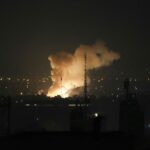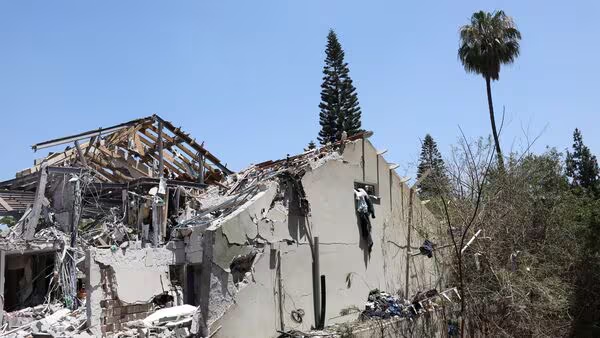
In a recent US–Israel military operation targeting Iran’s heavily fortified nuclear facilities—Fordow, Natanz, and Isfahan—experts warn of growing environmental and health dangers. While the aim was to destabilize Iran’s nuclear capabilities, the strikes have prompted concerns about radioactive and chemical contamination. Specialists caution that the legacy of these strikes could have wide-reaching effects across borders and erode international nuclear safety norms.
Chemical Hazards at Enrichment Sites
Leading analysts point out that uranium enrichment plants, unlike nuclear reactors, primarily carry chemical contamination risks. When destruction releases uranium hexafluoride—a corrosive gas used in centrifuge processes—it can form hydrofluoric acid upon chemical interaction with moisture, posing localized health threats. The International Atomic Energy Agency (IAEA) and specialists emphasize that, so far, there’s no indication of radiological leakages outside the targeted complex, although contamination within affected zones cannot be ruled out .
Peter Bryant, a nuclear safety expert, explains that uranium only becomes significantly dangerous through inhalation or ingestion—not simply by being present in large facilities—and that facilities are typically designed to contain radioactive elements . Nonetheless, disruption of underground enrichment processes could compromise structural containment.
Fallout Threat and Geopolitical Fallout
Meteorological patterns could allow airborne radioactive or chemical contaminants to drift toward neighboring countries, including India, heightening cross-border environmental concerns . While contamination risks are lower compared to reactor incidents like Chernobyl, any leakage could impact food, water, and air safety across the region.
Strategically, these strikes amplify Middle East tensions. Iran’s leadership has threatened retaliation and is reportedly stepping back from the Non‑Proliferation Treaty, raising the stakes for regional escalation. Global powers such as Russia, China, and Saudi Arabia have criticized the airstrikes, warning of broader conflict consequences, while calls are increasing for renewed de-escalation efforts
.
As the world watches closely, experts urge transparent environmental assessments, long-term monitoring, and a renewed emphasis on international protocols governing military confrontations involving nuclear infrastructure.