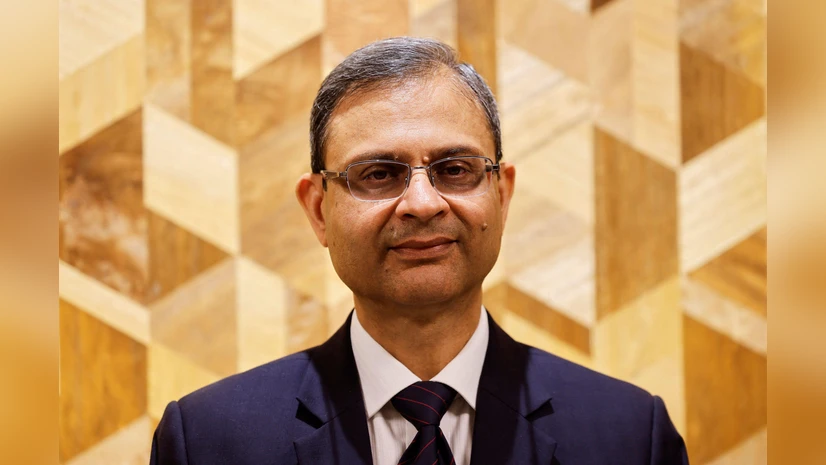
Addressing the International Monetary Fund’s annual meeting, RBI Governor Sanjay Malhotra underscored India’s resilient economic performance, noting that despite global uncertainties, tariff pressures and geopolitical tensions, India remains largely insulated due to its domestic-driven growth model, robust fiscal management, and strong macroeconomic fundamentals. He emphasized that while external factors like US tariffs do have an impact, they are not a significant concern for India’s overall growth trajectory.
India’s Resilient Economic Growth Amid Global Challenges
Governor Malhotra began by contextualizing India’s growth story within the broader framework of global economic challenges. He highlighted that over the past year, India has recorded phenomenal growth, with projections exceeding eight percent, despite unprecedented uncertainties in international markets. These uncertainties include geopolitical tensions, trade wars, and volatile energy prices, which have disrupted global supply chains and slowed growth in several economies.
According to Malhotra, India’s resilience stems from its domestic-driven economic structure. Unlike other countries heavily dependent on exports and vulnerable to global trade shocks, India’s growth is largely fueled by domestic consumption, investment, and robust service and industrial sectors. This insulation from external shocks ensures that while global tariffs, such as those imposed by the United States, can create friction in trade, they are unlikely to derail India’s growth trajectory. The RBI Governor noted that tariffs do exert some adverse impact, but in the broader context of India’s economic fundamentals, this remains a manageable challenge.
Malhotra also emphasized that India has successfully navigated post-Covid economic recovery and mitigated the impacts of major global disruptions, including the Russia-Ukraine conflict. He pointed out that India’s inflation management has been commendable, with headline inflation declining from a peak of eight percent to 1.5 percent, marking the lowest level in eight years. This moderation in inflation is particularly significant given the elevated global commodity prices in 2022 and early 2023. By maintaining price stability, India has been able to sustain household consumption, investment, and industrial production, thereby ensuring a steady growth trajectory.
The governor highlighted several other factors underpinning India’s macroeconomic stability. Oil prices, a critical component influencing both fiscal and current account balances, have remained subdued relative to previous years, further supporting economic growth. Additionally, India’s fiscal deficit, projected at 4.4 percent of GDP for the central government, remains manageable, reflecting prudent fiscal discipline and coordinated policymaking between the government and the fiscal committee. Malhotra underscored that India’s total debt levels are among the lowest globally, providing ample fiscal space for investment in infrastructure, social welfare, and strategic sectors.
Capital Markets, Currency Stability, and Strategic Economic Management
Another key aspect highlighted by Governor Malhotra is the stability and depth of India’s capital markets. He noted that despite global volatility, India’s financial markets have demonstrated resilience, supported by robust regulatory frameworks and institutional participation. This depth allows for efficient capital allocation, enabling the government and private sector to finance growth initiatives and investments in infrastructure, technology, and other strategic sectors. The governor emphasized that capital market stability is crucial not only for sustaining economic growth but also for ensuring investor confidence, both domestic and foreign.
Currency stability has been another area of focus for the RBI. While the US dollar depreciated by nearly ten percent, many emerging market currencies experienced sharp declines. In contrast, the Indian rupee has remained relatively stable, reflecting India’s strong macroeconomic fundamentals, prudent capital account management, and proactive monetary policies. Malhotra attributed this stability to India’s careful management of capital flows and exchange rate interventions, ensuring orderly movement in the currency market. By prioritizing rupee stability, the RBI has helped protect import-dependent sectors, maintain inflationary discipline, and support export competitiveness.
Governor Malhotra also highlighted India’s strategic approach to navigating global trade uncertainties. While acknowledging the potential adverse impact of US tariffs and other trade frictions, he emphasized that India’s growth is primarily domestically driven, making external shocks less critical to the overall economic outlook. India’s strong internal demand, diversified industrial base, and expanding service sector contribute to resilience against global volatility. This approach ensures that policy interventions can be targeted and measured, minimizing disruptions to growth and safeguarding long-term economic objectives.
The RBI Governor further discussed the importance of coordinated policymaking between the government and the central bank in maintaining macroeconomic stability. He emphasized that effective communication and collaboration in fiscal and monetary domains have helped India achieve notable successes, including inflation management, sustainable fiscal deficits, and financial sector stability. This institutional coordination has been particularly vital in responding to external shocks, such as global commodity price fluctuations, geopolitical uncertainties, and capital flow volatility. By leveraging these coordinated frameworks, India has been able to navigate periods of uncertainty without compromising growth momentum or macroeconomic stability.
Malhotra also stressed that emerging market economies, including India, must remain vigilant in the face of global uncertainties. He highlighted that policy unpredictability, geopolitical tensions, and trade disruptions are inherent risks that require careful assessment and adaptive strategies. For India, the ability to sustain growth amid these challenges reflects both strong economic fundamentals and proactive policy management. The governor underscored that continued emphasis on domestic investment, innovation, and sectoral diversification will be crucial in mitigating future risks and enhancing India’s resilience in an increasingly complex global environment.
In his address, Malhotra further highlighted the importance of long-term structural reforms to strengthen India’s economic resilience. These reforms include initiatives to expand manufacturing capabilities, enhance infrastructure, improve labor market flexibility, and promote technological innovation. By investing in these areas, India aims to increase productivity, create employment, and sustain inclusive growth. Such reforms also provide a buffer against external shocks, ensuring that domestic consumption, investment, and industrial activity remain robust even in volatile global conditions.
The governor additionally discussed India’s approach to capital flows and foreign investment. He noted that while global financial conditions have been volatile, India’s regulatory frameworks and prudent policies have attracted stable long-term investment, supporting economic expansion. By maintaining transparency, predictable policies, and investor-friendly regulations, India has been able to balance capital inflows and outflows effectively, minimizing financial market disruptions. This approach enhances both macroeconomic stability and investor confidence, reinforcing India’s reputation as a resilient emerging market economy.
Governor Malhotra also addressed the global perception of India’s economy, emphasizing that strong fundamentals and prudent policy management have positioned India as a reliable growth engine in a turbulent international environment. Despite external pressures, including trade frictions, geopolitical uncertainties, and global market volatility, India continues to attract investment, sustain high growth rates, and maintain low inflation. This positioning is critical for India’s strategic objectives, ensuring that the country remains competitive in global trade and investment flows while safeguarding domestic economic stability.
Throughout his address, Malhotra underscored the importance of proactive monitoring, adaptive policy frameworks, and strategic planning. He highlighted that India’s focus on domestic-driven growth, prudent fiscal management, and strong financial markets has allowed the economy to navigate external shocks without compromising growth or stability. This approach provides a roadmap for other emerging markets seeking to balance global integration with domestic economic resilience.
The RBI Governor’s remarks at the IMF meeting also highlighted India’s achievements in managing post-pandemic recovery, stabilizing inflation, and ensuring sustainable fiscal management. By leveraging structural reforms, technological advancements, and coordinated policy frameworks, India has positioned itself for continued growth, even amid global uncertainties. Malhotra’s address emphasized that while external factors, including US tariffs, present challenges, India’s strong internal fundamentals, fiscal prudence, and strategic management mitigate the risks, ensuring that the economy remains on a robust growth path.
Governor Malhotra’s address provided a comprehensive assessment of India’s economic resilience, highlighting the interplay between domestic-driven growth, fiscal prudence, currency and capital market stability, and strategic policymaking. His observations underscored that while global uncertainties, trade disruptions, and tariffs pose challenges, India’s strong economic foundations, coordinated institutional frameworks, and proactive policy interventions ensure sustained growth and stability in a complex and dynamic global environment.