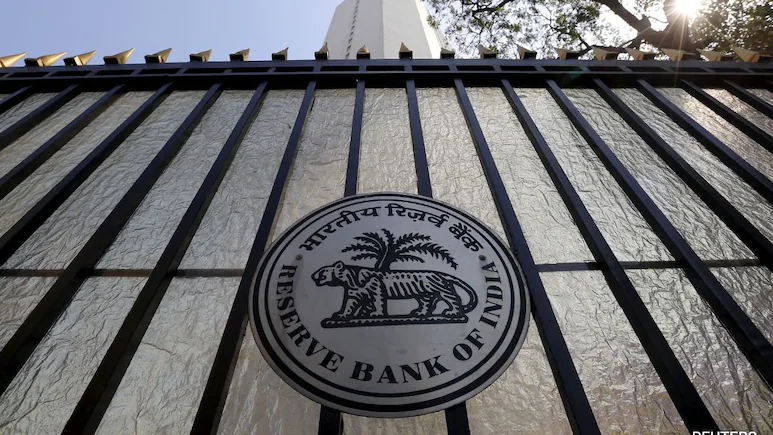
The Reserve Bank of India has announced a major breakthrough in the global payments ecosystem by initiating the interlinking of India’s Unified Payments Interface with the Target Instant Payment Settlement system of the Eurosystem, paving the way for faster, seamless and more affordable cross-border transactions between India and the Euro Area. This move marks a significant step in India’s ongoing efforts to expand the global adoption of its digital payment architecture and strengthen financial connectivity between international jurisdictions.
India–Europe cross-border payment transformation and the strategic role of UPI-TIPS integration
The RBI stated that the proposed linkage between UPI and TIPS is designed to facilitate instant cross-border remittances between India and the Euro Area. This integration is expected to benefit users in both regions by making international payments faster, more efficient and more affordable. The initiative builds on India’s long-term strategy to promote global interoperability using its indigenous financial technology platforms.
UPI, which has already revolutionized domestic digital payments in India, has become a model for fast, secure and low-cost transactions. With this new collaboration, it will now be connected to the Target Instant Payment Settlement system, which is operated by the Eurosystem and is widely used across Europe for real-time financial transfers. According to the RBI, the linkage reflects a shared commitment to expanding digital financial access and ensuring that cross-border payments are aligned with the principles of speed, transparency and cost-effectiveness.
The Reserve Bank of India and NPCI International Payments Limited have been in discussions with the European Central Bank to advance the integration. The cooperation involves not only technological alignment but also risk management, security protocols and settlement arrangements that must be standardized between both financial ecosystems.
The RBI emphasized that this initiative is aligned with the G20 roadmap for improving cross-border payments. Under the roadmap, participating countries aim to make global remittances cheaper, more accessible, more transparent and significantly more efficient by adopting modern digital payment solutions. The UPI-TIPS interlinking addresses all major components of this roadmap and represents one of India’s most significant contributions to strengthening global financial connectivity.
India’s drive to link UPI with international fast payment systems has grown steadily in recent years. Similar collaborations have been initiated with jurisdictions in Asia, the Middle East and parts of Europe. Each of these partnerships aims to simplify the complex process of international remittances by reducing intermediary costs, improving transaction speed and enhancing user convenience.
The RBI noted that as global migration rises and the demand for efficient remittance channels grows, such cross-border digital linkages are becoming increasingly essential. For millions of individuals who depend on international transfers for family support, business operations or educational expenses, the linkage promises substantial improvements in speed and affordability.
Global expansion of India’s digital payments framework and UPI’s growing international influence
In recent years, UPI has emerged as a benchmark for real-time payments across the world. Countries have shown interest in adopting India’s model because of its scalability, reliability and cost-effective design. The linking of UPI with TIPS is viewed not only as a technological achievement but also as a reflection of India’s rising influence in shaping global fintech solutions.
The statement from the RBI mentioned that technical work, integration frameworks and security protocols will continue to be discussed with the European Central Bank. Once operational, the UPI-TIPS linkage will serve as a major financial bridge between India and Europe and may eventually extend to additional regions in the continent.
The international expansion of UPI is also supported by NPCI International Payments Limited, which has been actively engaged in forging partnerships with various countries. An important recent development was the collaboration with the Central Reserve Bank of Peru, announced in 2024. As confirmed by Peruvian Ambassador Javier Manuel Paulinich Velarde, Peru plans to implement a real-time digital payments system similar to UPI by next year. Once completed, Peru will become the first South American nation to adopt the UPI-based model, marking a significant step in UPI’s global footprint.
This expansion reflects India’s growing recognition as a leader in digital public infrastructure. The architecture that underpins UPI has been praised for combining simplicity with sophisticated security features. It enables instant peer-to-peer transactions, merchant payments and interbank transfers at minimal cost. By exporting this model abroad, India is contributing to global financial inclusion and advancing the digital capabilities of partner countries.
The RBI’s active pursuit of cross-border linkages is supported by international bodies that see interoperable digital payment systems as key to the future of financial globalization. The G20 roadmap has identified inefficiencies in global remittances, such as delays, high transfer costs and lack of transparency. India’s UPI is seen as a promising solution to many of these longstanding challenges.
As more countries integrate with UPI or adopt similar systems, the global payments landscape may shift toward more standardized, user-friendly platforms. The UPI-TIPS integration, once live, will allow individuals and businesses in India and the Euro Area to transfer money instantly without relying on traditional slow and expensive remittance channels. It is expected to strengthen economic ties, enhance people-to-people exchange and support trade, tourism and investment flows between the two regions.
The RBI and NPCI International Payments Limited will continue working with European authorities on technical readiness. This includes ensuring that data security, regulatory compliance and operational safeguards meet international standards. Industry observers expect that the implementation could influence other European regions to consider similar collaborations with India’s payment systems.
UPI’s global journey is also being closely watched by fintech leaders and financial institutions. Its ability to process billions of transactions monthly within India makes it one of the world’s most resilient and scalable payment networks. As international integrations expand, UPI may emerge as a global standard for fast payments, bringing transformative impact to both developed and developing economies.