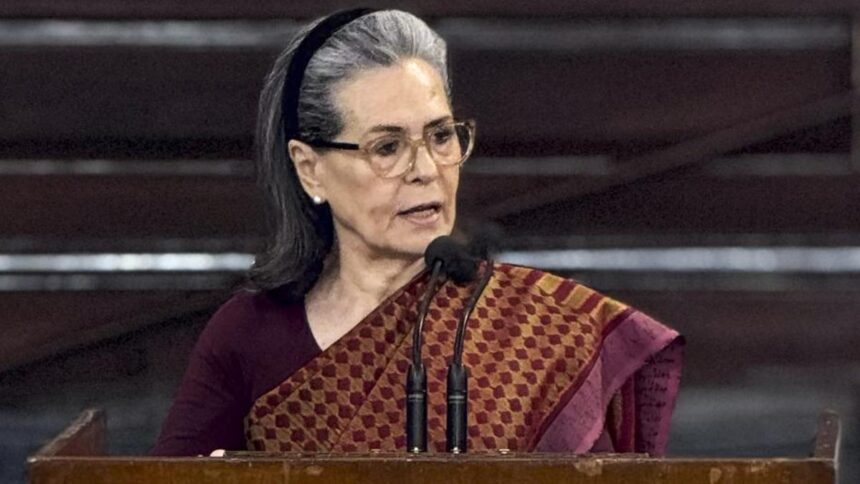
A fresh legal petition has surfaced in Delhi, alleging that Congress Parliamentary Party (CPP) Chairperson Sonia Gandhi was improperly included in the electoral rolls of New Delhi in 1980, three years prior to acquiring Indian citizenship in 1983. The plea, filed before Additional Chief Judicial Magistrate Vaibhav Chaurasia of Rouse Avenue Court, seeks directions for the police to investigate potential irregularities and forgery related to her voter registration. The court heard the matter briefly and subsequently adjourned the hearing to September 10. The petition raises questions regarding the validity of Sonia Gandhi’s electoral enrollment during a period when only Indian citizens are legally eligible to vote, and the petitioner has requested that an FIR be registered to examine the circumstances surrounding her earlier inclusion and subsequent deletion from the rolls.
Petition Alleges Irregularities in Sonia Gandhi’s Electoral Enrollment
The petition, submitted by Vikas Tripathi, contends that Sonia Gandhi’s name appeared in the New Delhi constituency electoral rolls in 1980, although she obtained Indian citizenship three years later, in 1983. According to the plea, Sonia Gandhi’s name, along with that of her late brother-in-law Sanjay Gandhi, was later removed from the electoral rolls in 1982. The petitioner argues that this deletion points to a potentially irregular entry, as only Indian citizens are legally allowed to be enrolled as voters. Senior advocate Pavan Narang, representing the complainant, emphasized that the reasons for the deletion have not been clarified and suggested two possibilities: either Sonia Gandhi held citizenship in another country at the time, or she filed Form 8, an application for correcting voter particulars, with citizenship being a prerequisite for enrollment.
The petition highlights that documentation provided to the Election Commission (EC) in 1980 for her enrollment remains unclear. Narang argued in court that there may have been forgery involved and that a public authority could have been misled or deceived during the enrollment process. The complainant has requested that the police be directed to register an FIR under relevant legal provisions to investigate these potential discrepancies. He further suggested that a notice be issued to the police to submit a status report on the investigation as part of interim proceedings. The plea references the legal framework under Section 175(4) of BNSS, which grants a magistrate the power to order an investigation, underscoring the judicial avenues available for examining such electoral anomalies.
Legal Context and Historical Citations Referenced in the Plea
The complaint also cites a 1985 Allahabad High Court judgment in Rakesh Singh vs Sonia Gandhi, which previously addressed questions of her citizenship in the context of an election petition. That judgment concluded that Sonia Gandhi officially became an Indian citizen on April 30, 1983, through the process of registration. However, the current plea argues that any electoral enrollment prior to this date would be unlawful, as she had not yet obtained the necessary citizenship status. This historical context is being invoked to support the claim that her earlier voter registration may have been inconsistent with legal requirements.
The petition raises broader questions about the integrity of voter registration procedures during that period, particularly for high-profile political figures. It emphasizes that electoral laws stipulate that only Indian citizens can participate in voter rolls and elections, and any deviation from this requirement warrants scrutiny. By referencing past judgments and the procedures under BNSS, the plea attempts to establish a legal basis for a police investigation to determine whether any forgery, misrepresentation, or administrative oversight occurred during Sonia Gandhi’s enrollment.
The petition also explores the implications of her name’s deletion from the electoral rolls in 1982. The removal of her name, according to the complainant, highlights that her prior enrollment may not have been fully compliant with the legal requirements for voter registration. The plea contends that if the initial enrollment was improper, it could constitute a violation of electoral laws, necessitating an FIR to investigate potential misconduct by public officials responsible for maintaining the rolls. The case underscores the importance of verifying the eligibility of individuals, particularly when they hold or later acquire significant political positions, and reflects ongoing concerns about electoral transparency and accountability.
During the court proceedings, Narang raised questions about the documentation submitted to the Election Commission in 1980, asking what papers were provided to substantiate Sonia Gandhi’s voter registration. He suggested that if there was any form of forgery or intentional misrepresentation, it would constitute a violation of law and necessitate formal investigation. The petition frames the issue as one involving both procedural oversight and potential intentional misconduct, asserting that such matters are within the jurisdiction of law enforcement authorities to probe. The interim hearing, while brief, has set the stage for a detailed examination of the documents, procedures, and administrative actions that led to Sonia Gandhi’s inclusion and subsequent deletion from the electoral rolls.
The plea also emphasizes the need to distinguish between personal opinions, political narratives, and the legal requirements surrounding voter eligibility. By invoking judicial authority and citing past rulings, the petitioner seeks to ensure that the investigation remains grounded in law and evidence, rather than speculation or political bias. The request for an FIR is framed as a procedural necessity to enable the police to conduct a thorough inquiry into the facts and determine whether any legal violations occurred. The matter has drawn attention due to Sonia Gandhi’s prominent position within Indian politics and the potential implications of her pre-citizenship voter registration on the credibility of electoral processes.
The petition highlights the role of the Additional Chief Judicial Magistrate in exercising powers under Section 175(4) of BNSS, which allows a magistrate to direct police investigations when necessary to clarify potential legal violations. The plea emphasizes that the magistrate’s intervention is critical to ensure that the allegations are examined impartially, and that law enforcement authorities are empowered to gather evidence, question relevant individuals, and report on their findings. The requested FIR would initiate a formal investigation, creating a legal record and establishing accountability for any discrepancies uncovered during the review of electoral documentation and procedures.
In addition to procedural considerations, the petition also raises questions about broader electoral governance and the mechanisms for ensuring compliance with citizenship and voter eligibility requirements. The complainant argues that high-profile cases such as this highlight the need for rigorous verification processes within the Election Commission and related authorities to prevent irregular entries and maintain public confidence in the integrity of elections. By seeking a police investigation, the plea underscores the importance of upholding electoral laws uniformly, regardless of the political stature of the individual involved.
The plea’s reliance on historical judgments and documentation further reinforces the legal arguments underpinning the request for an FIR. By connecting past court findings to current allegations, the petition frames the issue within a continuum of judicial scrutiny, asserting that any voter registration prior to April 30, 1983, could be considered invalid and potentially actionable under existing laws. The case emphasizes the intersection of electoral law, citizenship requirements, and accountability, demonstrating how administrative oversights or deliberate actions can have long-lasting legal and political consequences.
While the hearing was adjourned to September 10, the petition’s filing signals an ongoing judicial process that may involve detailed examination of archival electoral records, verification of citizenship documents, and interviews with officials involved in voter registration during the late 1970s and early 1980s. The petitioner’s legal team will likely present evidence and arguments highlighting discrepancies or gaps in the documentation supporting Sonia Gandhi’s enrollment, aiming to establish whether procedural violations or misrepresentations occurred. The adjournment provides time for the parties to prepare submissions, gather supporting documents, and ensure that the court receives a comprehensive record for consideration.
The legal challenge raises awareness about the procedural rigor required in maintaining electoral rolls and the responsibilities of public authorities in verifying the eligibility of voters. It also highlights the potential consequences when these processes are not followed meticulously, especially for individuals who later occupy positions of significant political influence. The petition reinforces the principle that no individual, regardless of political standing, is exempt from compliance with electoral and citizenship laws, and that allegations of irregularities merit thorough investigation.
Overall, the plea seeks to ensure accountability, transparency, and adherence to electoral law by requesting the registration of an FIR to probe potential misconduct or irregularities in Sonia Gandhi’s electoral enrollment. By situating the case within both historical and legal contexts, the petition underscores the importance of judicial oversight in upholding the rule of law, safeguarding the integrity of electoral processes, and maintaining public trust in democratic institutions. The forthcoming hearing on September 10 will provide an opportunity for further arguments, examination of evidence, and clarification of the legal issues raised in the petition, potentially setting a precedent for similar cases involving pre-citizenship voter enrollment and administrative oversight.