New Delhi, January 9, 2026:
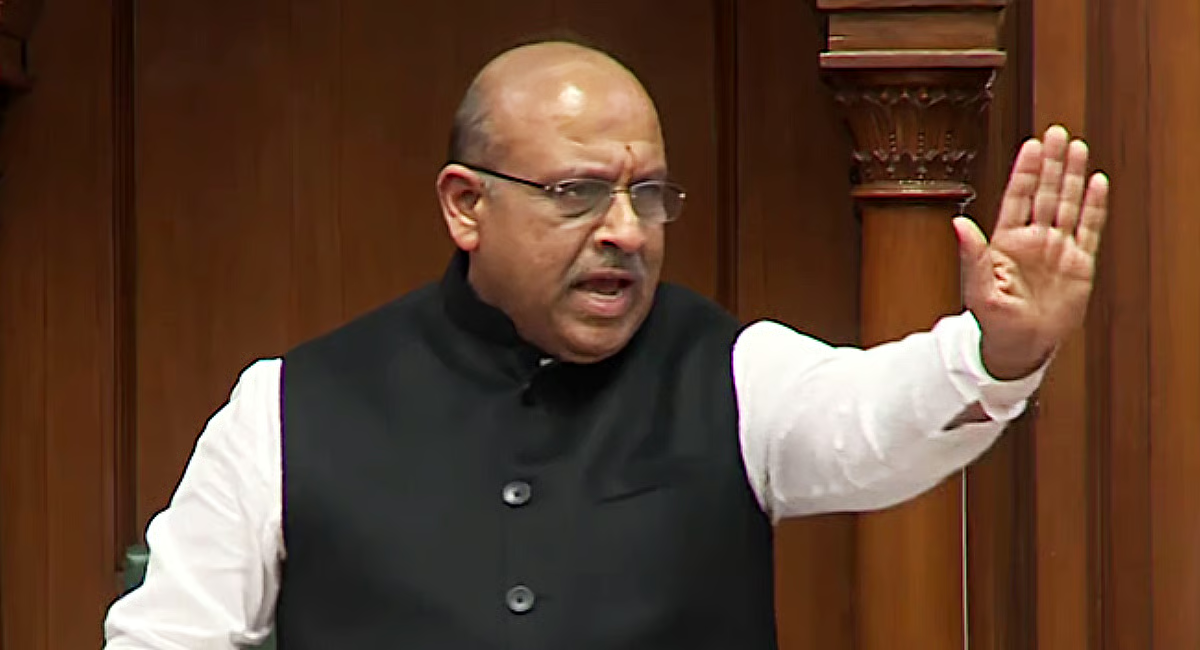
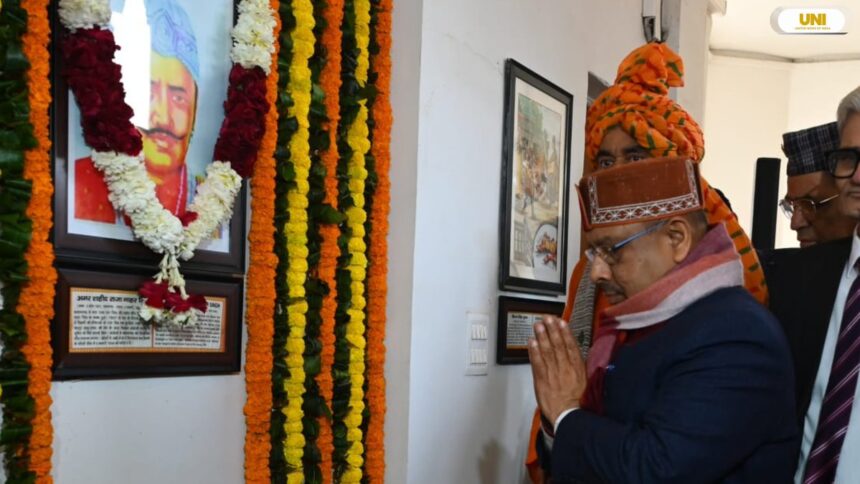
Delhi Legislative Assembly Speaker Vijender Gupta on Thursday paid floral tributes to freedom fighter Raja Nahar Singh at the Assembly premises on the occasion of his martyrdom day, observed as Balidan Diwas. Remembering Raja Nahar Singh’s role in India’s First War of Independence in 1857, the Speaker said his sacrifice continues to stand as a lasting symbol of courage, resistance, and unwavering commitment to the nation.
Speaking at the tribute ceremony held at the Delhi Legislative Assembly, Vijender Gupta said Raja Nahar Singh played a courageous and decisive role in the uprising against British colonial rule. He noted that the freedom fighter offered resolute resistance to the British at a time when the colonial power was at its strongest and ultimately laid down his life for the cause of the nation. The Speaker described Raja Nahar Singh’s martyrdom as a defining moment in the long and arduous struggle for India’s independence.
The Speaker observed that the sacrifice of Raja Nahar Singh has remained deeply embedded in the collective national memory and continues to inspire people across generations. He pointed out that people from Haryana, Uttar Pradesh, Delhi, and several other regions gather every year to pay homage to the martyr and honour his legacy. Referring to the enduring tradition of remembrance, Vijender Gupta said it has often been said that fairs are held at the pyres of martyrs, and this continued public participation is the true testament to the respect and gratitude accorded to those who give their lives for the nation.
Recalling the life and struggle of the last ruler of Ballabhgarh, the Speaker highlighted that Raja Nahar Singh was only 32 years old when he took up arms against British authority during the revolt of 1857. Despite his young age, he displayed remarkable leadership and resolve, mobilising his forces and refusing to submit to colonial domination. His resistance, the Speaker said, reflected the widespread discontent and determination among Indian rulers and citizens alike to challenge foreign rule.
Vijender Gupta noted that Raja Nahar Singh’s defiance came at a great personal cost. After being captured by the British, he was hanged at Chandni Chowk on January 9, 1858. Following his execution, his kingdom was annexed and his properties were confiscated by the colonial administration. These actions, the Speaker said, were aimed at crushing resistance and setting an example for others, but instead they strengthened the spirit of opposition and sacrifice that eventually led to India’s independence.
The Speaker emphasised that Raja Nahar Singh’s martyrdom represents a significant chapter in the broader history of India’s freedom struggle. His actions during the revolt of 1857 demonstrated that resistance to colonial rule was not confined to a single region or community, but was a collective national effort involving rulers, soldiers, and ordinary citizens. Vijender Gupta said remembering such sacrifices is essential to understanding the values of courage, self-respect, and patriotism that form the foundation of the nation.
Raja Nahar Singh’s martyrdom day is observed as Balidan Diwas every year to commemorate his supreme sacrifice for the country. The floral tributes offered at the Delhi Legislative Assembly on Thursday served as a solemn reaffirmation of respect for his bravery and dedication to the cause of freedom. The ceremony underscored the responsibility of present and future generations to preserve and honour the legacy of those who laid down their lives for the nation.
Concluding his remarks, Vijender Gupta said that remembering freedom fighters like Raja Nahar Singh is not merely an act of homage, but a reminder of the ideals and sacrifices that shaped modern India. He said the nation must continue to draw inspiration from such figures and ensure that their contributions are remembered with dignity and pride, reinforcing a collective commitment to the values for which they stood.