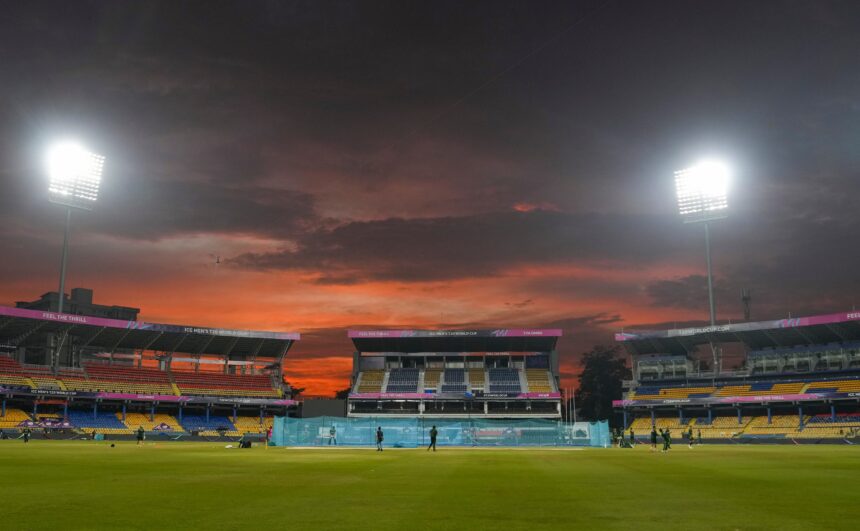
The eagerly awaited India-Pakistan T20 World Cup clash, scheduled to be held at the iconic R Premadasa Stadium in Colombo, has now taken on a weather-related dimension, as meteorologists warn of a high likelihood of rain on Sunday evening. Fans, teams, and analysts who have been eagerly following the build-up to one of cricket’s most high-profile contests are now keeping a keen eye on the skies above the Sri Lankan capital. The prospect of rain introduces a new element of uncertainty into a match already charged with intense anticipation and rivalry, with both teams having started the tournament strongly and a significant impact on tournament standings possible if the game faces interruptions. Weather forecasters are closely monitoring the development of a low-pressure system in the Bay of Bengal, which could influence conditions across Colombo and trigger showers during the crucial evening window when the match is scheduled to take place.
Forecasts Signal Rain and Its Potential Impact on Match Dynamics
The Sri Lanka Department of Meteorology has issued alerts regarding the formation of a low-pressure area in the Bay of Bengal, a development that raises the possibility of rainfall affecting several parts of the country, including Colombo. Although the city has experienced predominantly dry weather in recent days, the updated forecast now suggests a 50-70 percent probability of scattered thunderstorms emerging from the afternoon, continuing into the evening. The implications of such weather are significant, particularly because the T20 World Cup group-stage fixtures do not include reserve days, meaning that a complete washout would force the tournament to award points to both teams, potentially altering the course of Group A standings. With India and Pakistan both having won their initial two matches and currently sitting at four points each, any shared point from a rain-affected match could influence net run rates and qualification scenarios. Analysts note that in high-stakes matches such as this, even brief interruptions can have substantial tactical and psychological consequences for players and team management.
Temperatures on the day of the match are expected to hover around 30-31 degrees Celsius, with warm and humid conditions likely through the afternoon. While the intensity of the rainfall remains uncertain, the probability of scattered thunderstorms could disrupt both the rhythm of play and the final training session for teams. India, in particular, had scheduled practice at the venue on Saturday, and even moderate rainfall could affect the team’s preparations ahead of the high-pressure encounter. Coaches and support staff are considering adjustments to ensure that players can practice effectively despite potential weather interruptions, including indoor simulations and focused skill sessions on non-wet surfaces. The unpredictability of weather at this stage of the tournament underscores the need for flexible planning by both coaching teams, with the emphasis on preserving players’ physical and mental readiness in the face of potentially disrupted match-day conditions.
Premadasa Stadium’s Infrastructure and Rain Management Capabilities
While meteorologists point to a strong chance of rain, the infrastructure at R Premadasa Stadium provides some reassurance that play could resume quickly even if showers occur. Known for its robust drainage network, the stadium has a track record of handling sudden tropical bursts efficiently. Unlike many cricket venues that protect only the central pitch, Premadasa’s covers extend across the entire playing area, reducing water absorption in the outfield and limiting delays once rainfall stops. Ground staff employ both automated and manual drainage techniques to manage accumulated water, channeling it towards boundary drains, which often allows the field to be made playable within 45 to 60 minutes under standard conditions. The stadium’s design and maintenance protocols mean that even if brief showers interrupt the match, there remains a reasonable expectation of resumption, minimizing disruption to what is expected to be a tightly contested and closely watched encounter.
The operational readiness of ground staff and the effectiveness of the drainage system have previously allowed matches at Premadasa to proceed with minimal delay, despite sudden tropical downpours. This capability will be critical for both teams, given the importance of uninterrupted gameplay in T20 cricket, where momentum swings can determine outcomes in a matter of overs. Teams are also mindful that weather interruptions can create tactical dilemmas, including whether to accelerate scoring before rain delays, adjust bowling plans, or recalibrate field placements based on changing conditions. The stadium’s drainage efficiency, combined with real-time weather monitoring, will likely influence decision-making on the field, with captains, coaches, and analysts all paying close attention to updates from meteorological authorities.
Even the scheduled training sessions for teams are being influenced by weather forecasts. India’s preparation ahead of the match is now under cloud, with the potential for rain requiring adaptive planning to maintain players’ focus and performance readiness. Ground staff and team management may need to prioritize drills that are less dependent on dry outfield conditions, ensuring that key skills such as batting timing, fielding agility, and bowling accuracy are practiced effectively despite environmental challenges. The unpredictability of tropical weather in Colombo, combined with the pressures of a marquee encounter like India versus Pakistan, underscores the complexity of managing high-stakes sporting events under variable conditions.
Implications for Tournament Standings and Strategy
The India-Pakistan match carries significance beyond national pride, influencing the broader Group A standings of the T20 World Cup. Both teams currently hold four points from their first two matches, with India sitting above Pakistan due to a stronger net run rate of 3.050 compared with Pakistan’s 0.932. With qualification scenarios finely balanced, the potential sharing of points in the event of a rain-interrupted match could have consequences for the tournament’s progression. Analysts note that even a partial loss of overs or an interruption mid-innings could alter the dynamics of net run rates, individual player statistics, and subsequent strategy for remaining group-stage games. For players and support staff, awareness of these variables is essential in shaping pre-match tactics and contingency planning.
Strategically, teams may need to adjust their approach based on evolving weather conditions. Captains could consider aggressive batting during dry spells, prioritize bowlers who can exploit overcast conditions, or revise field placements to account for wet outfield conditions that may affect ball movement and player mobility. Additionally, the mental preparation of players becomes crucial when the game faces potential interruptions, as maintaining focus during delays and quickly adapting to resuming conditions is a key determinant of performance. Sports psychologists and coaching staff often work to simulate such scenarios during practice, reinforcing the need for composure and tactical flexibility in rain-affected environments.
The historical context also provides guidance for both teams. Matches in Colombo, particularly at Premadasa Stadium, have in previous tournaments experienced intermittent rainfall but have rarely been fully washed out, suggesting that even if rain occurs, a significant portion of play may still be possible. Past experiences highlight the importance of rapid adaptation to conditions, with ground staff, players, and officials all needing to coordinate closely to ensure the smooth resumption of play. This coordination extends to communication between match referees, umpires, and meteorological authorities, ensuring that decisions regarding play, delays, or potential shortening of matches are implemented efficiently and fairly.
The high-profile nature of an India-Pakistan encounter ensures that weather-related developments will attract global attention. Broadcasters, fans, and analysts are monitoring updates closely, recognizing that even a brief shower could trigger live coverage changes, commentary adjustments, and real-time analysis of on-field implications. The impact of weather interruptions extends beyond the immediate players, affecting logistical planning, fan engagement, and the broader narrative of the World Cup. Both teams and officials are aware that preparedness, flexibility, and rapid response to changing weather will be essential to safeguard the competitive integrity and spectator experience of this marquee event.
In addition to the tactical and operational aspects, the psychological pressure of anticipating rain adds another layer of complexity for players. Managing focus, pacing energy levels, and maintaining concentration during periods of uncertainty are critical components for achieving optimal performance. Team management may emphasize mindfulness exercises, brief indoor simulations, and scenario-based discussions to prepare athletes for potentially disrupted conditions. Such strategies are integral to mitigating the impact of environmental unpredictability on player confidence, decision-making, and execution during high-stakes moments.
With both India and Pakistan enjoying identical starts to the tournament, maintaining momentum is critical. Even minor weather-related disruptions can shift momentum and influence individual and team performance. Players are being advised to treat any rain delays as opportunities to reassess strategies, recover physically, and recalibrate their approach for the resumption of play. Coaches and analysts are likely reviewing historical performance in similar conditions, preparing contingency plans for batting, bowling, and fielding to ensure that teams are positioned to capitalize on any opportunity or mitigate potential setbacks caused by weather interruptions.
As the match day approaches, the focus remains on balancing preparation, adaptability, and strategy under uncertain weather conditions. Teams, stadium officials, and tournament organizers are all engaged in meticulous planning to ensure that any rain-affected scenarios are managed efficiently, with minimal disruption to players, officials, and spectators alike. The combination of Premadasa Stadium’s advanced drainage infrastructure, vigilant ground staff, and proactive coaching measures provides a framework to mitigate potential rain impact, while maintaining the competitive integrity of this high-stakes encounter.
The anticipation surrounding the India-Pakistan T20 World Cup clash extends far beyond the cricketing realm, capturing global attention. Weather now emerges as the dominant variable in determining how this match unfolds, influencing strategy, preparation, and overall tournament implications. The combination of meteorological monitoring, ground management, and tactical planning illustrates the multifaceted considerations required to navigate such a high-profile contest. In an environment where even brief interruptions can shift outcomes, the focus on preparation, infrastructure readiness, and adaptive strategies is paramount for ensuring the match proceeds as smoothly as possible.
The evolving situation in Colombo serves as a reminder that while player form, team tactics, and fan anticipation are critical, uncontrollable variables such as weather can exert equal influence over high-stakes sporting events. Both India and Pakistan, along with the organizers, broadcasters, and ground staff, are preparing for a scenario where adaptability, rapid decision-making, and strategic contingency planning will define the outcome. The emphasis on infrastructure readiness, particularly the Premadasa Stadium’s drainage and water-management systems, underscores the critical intersection of environmental factors and elite sporting performance in modern international cricket.