Rahul Gandhi intensifies grassroots campaign in Raebareli, criticises MGNREGA changes and pushes Congress agenda amid political challenges.
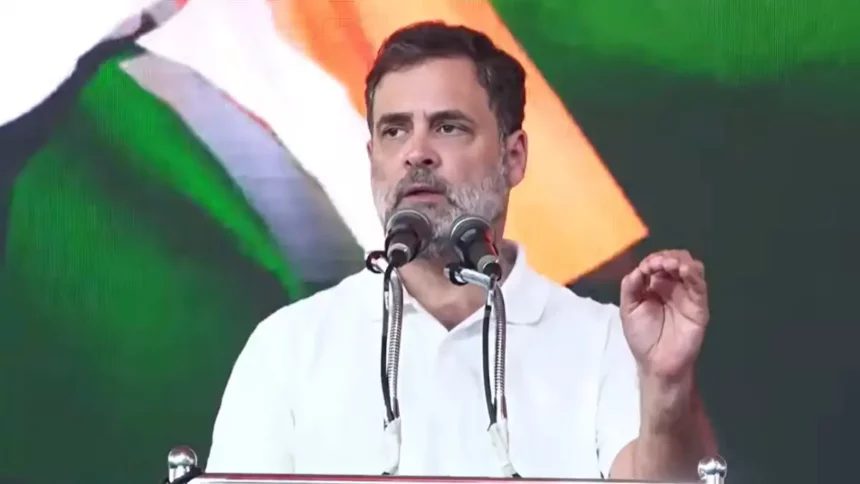
Congress leader Rahul Gandhi has embarked on a vigorous political campaign in Raebareli, his traditional parliamentary constituency in Uttar Pradesh, that underscores the deepening contest between his party and the current government over rural welfare, employment guarantees and grassroots outreach. Addressing villagers, rural workers and party supporters, Gandhi has fiercely criticised the new framework replacing the Mahatma Gandhi National Rural Employment Guarantee Act — arguing that it dilutes livelihood protections and undermines the original spirit of the programme. At the same time, his speeches and public interactions reflect a broader attempt to consolidate Congress’s presence in key regions, rebuild internal organisational strength and respond to setbacks experienced by the party in recent state elections. Gandhi’s efforts in Raebareli have also been linked to long-term political planning as the opposition prepares for future contests at both state and national levels.
The MGNREGA Debate and Rural Outreach in Raebareli
During his two-day visit to Raebareli, Rahul Gandhi placed significant emphasis on the issue of rural employment and the recent changes to the Mahatma Gandhi National Rural Employment Guarantee Act, known as MGNREGA. The law, which has provided a basic right to wage-employment for rural households, was recently replaced by the VB–G RAM G framework. Gandhi and his party argue that the new legislation weakens the original act by shifting financial burdens to state governments, reducing protection guarantees and undermining the panchayat-level decision making that was fundamental to its design. He described the changes as not just administrative but as a fundamental affront to the intent of the programme, asserting that the original act was designed to provide meaningful work opportunities and preserve rural dignity.
In Raebareli, Gandhi did not merely address large crowds; he engaged directly with rural workers and village leaders at events such as the “MGNREGA Bachao Chaupal,” which symbolised his drive to defend the scheme. At these gatherings, he listened to frontline concerns, including those of daily wage earners and local panchayat officials who have seen firsthand how employment guarantee work affects livelihoods. Gandhi stressed that the dilution of the scheme could erode rural security and push migrant labour back towards distress migration, reversing hard-won gains for millions of households.
Through his speeches, Gandhi framed the battle over MGNREGA not just as a policy dispute but as a moral and constitutional issue. He argued that robust employment guarantees are essential to the social contract and that any attempt to weaken them is tantamount to marginalising millions of vulnerable citizens. This narrative resonated in Raebareli, where rural economies depend heavily on seasonal work and where households have historically relied on guaranteed days of employment to stabilise income and avoid debt cycles.
Beyond policy critique, Gandhi’s approach in Raebareli has included a mix of grassroots mobilisation and symbolic gestures. He inaugurated local cricket tournaments, an effort aimed at strengthening ties with youth and community groups, and met with Congress workers to energise local organisational structures. Posters and campaign materials circulated throughout the city portrayed Gandhi alongside opposition leaders as captains of a united political front, signalling an attempt to project cohesion within the wider opposition alliance in the lead-up to future elections. These visual narratives are part of a broader attempt to counter perceptions of stagnation after electoral setbacks in some states and to reinforce Gandhi’s identity as both a national leader and a representative deeply rooted in his constituency.
Gandhi’s campaign in Raebareli also touched on issues beyond employment guarantees. He criticised policies that he claims have diverted resources away from rural welfare and towards a small segment of corporate interests, arguing that economic priorities must centre on the poor and marginalised rather than on major industrial houses. In doing so, he touched on a recurring theme of his political rhetoric that seeks to juxtapose the interests of ordinary citizens against those of powerful economic groups, positioning Congress as the voice of social equity and rural empowerment.
The focus on MGNREGA and its implications allowed Gandhi to connect with a wide spectrum of rural stakeholders, including those who might otherwise feel politically disengaged. By highlighting how changes to the programme could reduce access to guaranteed work and erode local governance, he tapped into deep concerns about livelihood security, democratic participation and community agency. This approach is not merely tactical; it reflects long-standing debates within Indian politics about how best to balance economic development with social safeguards.
Organisational Challenges and Political Strategy After Recent Setbacks
While Raebareli remains a stronghold for Gandhi, Congress as a party has faced challenges in other regions, including internal dissension and recent electoral defeats. For example, in neighbouring states such as Bihar, the party has been grappling with reports of lawmakers expressing frustration or withdrawing support due to various organisational and strategic disagreements. In response, Rahul Gandhi and senior party leaders have called for meetings aimed at reaffirming unity, strengthening local leadership and addressing grievances among legislators and grass-roots cadres.
These organisational efforts are part of a broader recalibration within the party after setbacks that have prompted introspection about strategy, messaging and alliance management. Gandhi’s direct engagement with workers, farmers and local office-bearers in Raebareli is designed to bridge gaps between party leadership and grassroots activists, empowering local units to play a more active role in political mobilisation. His interactions with local leaders aim to reassure them that the party leadership recognises their concerns and is willing to invest time and resources into building a responsive and accountable organisational structure.
The political landscape in key states like Bihar, where the 2025 legislative assembly elections brought attention to issues like unemployment, development deficits and governance challenges, has influenced the opposition’s strategic discourse. In these contexts, Congress leaders, including Gandhi, have emphasised the importance of cohesive alliance politics and targeted campaigning that speaks to local aspirations. Gandhi’s efforts to bring dissident lawmakers into constructive dialogue reflect a recognition that internal unity is crucial for any broad challenge to the ruling political formations.
While campaigning in Raebareli, Gandhi also utilised symbolic imagery and narratives crafted to resonate beyond his constituency. Posters and slogans portraying opposition unity and collective leadership underscore attempts to position Gandhi not merely as a constituency figurehead but as a central figure in a broader national opposition movement. These efforts are part of an overarching strategy that seeks to build a narrative of inclusive development, rural empowerment and democratic resilience in the face of what the party characterises as centralising tendencies by the government.
The Raebareli visit is therefore multifaceted in its aims. On one level, it reaffirms Gandhi’s personal electoral base by addressing enduring local issues and demonstrating commitment to constituents. On another level, it feeds into larger political campaigns around national schemes like MGNREGA, which serve as proxies for debates about social welfare, economic equity and the role of government in protecting vulnerable populations. Simultaneously, Gandhi’s organisational outreach work seeks to bolster Congress’s institutional capacity, preparing the party to face future electoral challenges by strengthening cadre confidence and local leadership structures.
Gandhi’s Raebareli campaign also reflects broader political dynamics in India, where employment, rural empowerment and governance debates increasingly shape public discourse. By concentrating on issues that affect millions of voters, particularly in rural India, he aims to reposition Congress as the party of rural interest and social protection, contrasting with narratives that emphasise market-led growth or urban prioritisation. This strategy highlights the enduring importance of rural issues in Indian politics and the effort by opposition leaders to harness these concerns into a cohesive political message.
As Gandhi continues to travel, speak, and organise locally and nationally, his Raebareli visit stands as a significant chapter in his ongoing political efforts. Whether such campaigns will translate into broader electoral gains remains to be seen, but the sustained focus on rural employment guarantees and grassroots outreach signals the contours of Congress’s evolving political strategy.