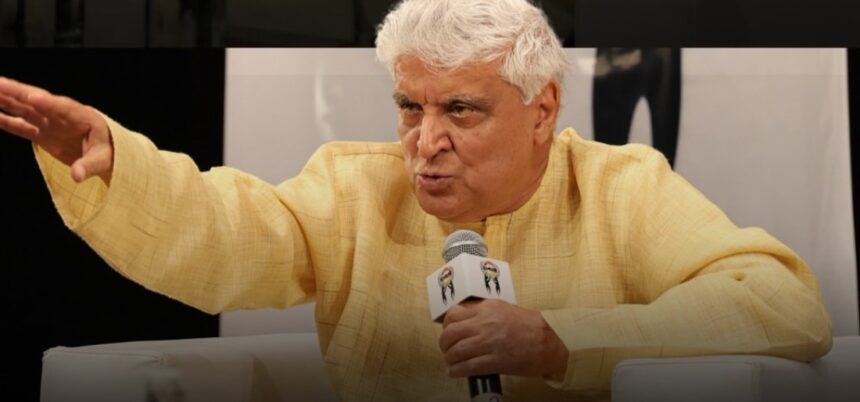
Javed Akhtar refuses to write songs for Border 2, calling repeated recreations a symptom of creative exhaustion in cinema.
Veteran lyricist Javed Akhtar has once again ignited debate within the Hindi film industry after revealing that he declined an offer to write songs for Border 2. Akhtar, who wrote some of the most iconic songs for the original Border, explained that his refusal stemmed from deep creative discomfort rather than professional disagreements or financial considerations. His remarks have reopened a larger conversation about originality, nostalgia and artistic responsibility in contemporary Bollywood, particularly at a time when sequels and remakes dominate release calendars and familiar melodies are increasingly repackaged for new audiences.
Why Javed Akhtar Rejected Border 2 and His Stand on Creative Integrity
Javed Akhtar’s decision to step away from Border 2 was rooted in principle. According to him, the filmmakers approached him to contribute lyrics for the sequel, but the creative framework of the project made him uneasy. He observed that the film’s music relied heavily on recreated or reworked versions of songs from the original Border, a practice he believes reflects a deeper creative malaise within the industry. For Akhtar, revisiting past successes without offering genuinely new musical ideas undermines the artistic spirit that originally gave those songs their power.
The original Border, released in 1997, remains etched in public memory largely because of its emotionally resonant soundtrack. Songs like Sandese Aate Hain became cultural touchstones, connecting audiences to themes of sacrifice, patriotism and longing. Akhtar has emphasised that such songs were born out of a specific historical moment and emotional context. Attempting to recreate or modernise them, he argues, risks diluting their meaning rather than enhancing it.
Akhtar has described the trend of recreating old songs as a form of “intellectual and creative bankruptcy,” a phrase that has resonated widely across artistic circles. In his view, creativity demands the courage to fail while attempting something new, rather than the safety of recycling what has already proven successful. He has questioned why filmmakers hesitate to trust new compositions, especially when working on big-budget projects that have the resources to support experimentation.
He also pointed out that in earlier decades, war films and socially significant cinema were accompanied by entirely original music that stood the test of time. Those songs were not revived repeatedly in later films but were allowed to exist as complete artistic expressions. For Akhtar, this respect for originality is what distinguished earlier eras of filmmaking, and he believes contemporary cinema risks losing that distinction if it continues to prioritise familiarity over invention.
Akhtar’s refusal was not framed as criticism of any individual composer or filmmaker involved in Border 2. Instead, he positioned his decision as part of a broader ethical stance. He has consistently stated that he prefers to work on projects where new narratives are matched with new musical ideas, allowing lyricists and composers to engage fully with the story rather than retrofit emotions onto pre-existing melodies. His comments suggest that he sees originality not as a luxury, but as a responsibility owed to both audiences and the art form itself.
Border 2, Nostalgia-Driven Cinema and the Industry-Wide Debate
The controversy surrounding Border 2 arrives at a time when Bollywood is increasingly dependent on sequels, remakes and musical recreations. For many producers, revisiting established intellectual property is seen as a way to mitigate financial risk in a highly competitive and unpredictable market. Familiar titles and melodies offer built-in recognition, making them attractive in an era of fragmented audiences and rising production costs.
However, the reception to recreated songs has been mixed. While some listeners enjoy hearing familiar tunes with updated arrangements, others feel that newer versions often lack the emotional depth and authenticity of the originals. In the case of Border 2, early reactions to the reimagined tracks revealed a clear divide between audiences who welcomed nostalgia and those who felt the soul of the original music was missing.
Akhtar’s comments have amplified this debate, particularly because of his association with the original film. His refusal has been interpreted by many as a symbolic stand against the growing normalisation of musical recycling. Industry observers note that when a lyricist of his stature speaks out, it reflects concerns shared quietly by many writers and composers who feel pressured to adapt old material rather than create new work.
The discussion has also extended to the question of how legacy films should be handled. Supporters of recreated music argue that sequels must maintain continuity with their predecessors, especially when original songs hold emotional significance for audiences. Critics counter that continuity should come from storytelling and thematic depth, not from repeated musical motifs that risk becoming formulaic.
Within creative circles, Akhtar’s stance has sparked renewed calls for stronger emphasis on original songwriting. Some filmmakers and musicians have echoed his concerns, suggesting that the industry’s reliance on nostalgia may be limiting opportunities for emerging talent. Others caution that while originality is essential, commercial realities cannot be ignored, particularly in an industry where box office performance determines long-term viability.
The debate surrounding Border 2 has therefore evolved into a broader reflection on Bollywood’s creative direction. It raises questions about whether the industry is confident enough to let new music stand on its own merits, or whether it will continue to anchor itself to past successes. Akhtar’s refusal serves as a reminder that artistic credibility often depends on resisting convenience, even when that resistance comes at the cost of high-profile projects.
Despite the controversy, interest in Border 2 remains high. The film’s themes, cast and association with a beloved classic ensure sustained public attention. Yet the absence of Akhtar’s lyrical voice has added a layer of scrutiny to the project, with audiences and critics alike paying closer attention to how the film balances homage with originality.
As discussions continue across social media, industry forums and creative communities, Akhtar’s decision has become more than a personal choice. It stands as a commentary on the values shaping contemporary Hindi cinema, challenging filmmakers to reconsider how they honour the past while building the future.