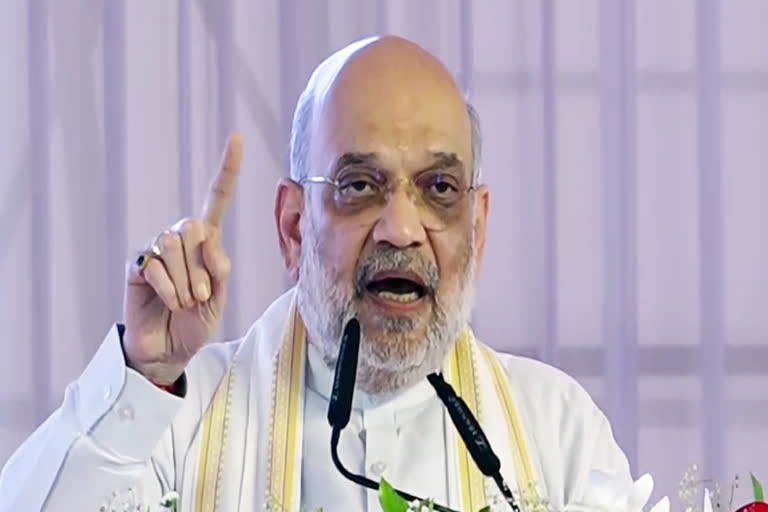
The upcoming visit of Union home minister Amit Shah and Rashtriya Swayamsevak Sangh chief Mohan Bhagwat to the Andaman and Nicobar Islands marks a significant moment in the ongoing efforts to commemorate Vinayak Damodar Savarkar’s ideological legacy. Their two-day programme, centred on the unveiling of Savarkar’s statue and cultural events dedicated to his contributions, has drawn considerable administrative and public attention across the islands. With heightened security arrangements, expected interactions with local workers and large public gatherings, the visit reflects both political messaging and historical remembrance. For the archipelago, which holds deep symbolic importance in Savarkar’s life, the events reinforce longstanding narratives around sacrifice, nationalism and memory.
Unveiling of Savarkar Statue Highlights Political Symbolism and Historical Context
A senior official confirmed that Shah and Bhagwat are scheduled to arrive in the Andamans from Thursday, beginning a tightly coordinated series of events that pay tribute to Savarkar’s life and legacy. The highlight will be the unveiling of a statue at Beodnabad in South Andaman on December 12 at 9.30 am, a moment that carries strong symbolic weight considering Savarkar’s imprisonment in the Cellular Jail during British rule. His incarceration in 1911 remains one of the most defining elements of his political and ideological journey, and placing a statue in the region underscores the deep association between Savarkar and the islands.
The preparations for the visit have led to a substantial increase in security measures. Local authorities have intensified surveillance and may impose temporary traffic restrictions in several pockets to ensure smooth movement during the high-profile ceremonies. Such measures highlight not only the significance of the visiting leaders but also the sensitivity of the locations linked to Savarkar, which attract both admiration and debate across political lines.
For Mohan Bhagwat, the visit holds personal significance as well. This will be his first trip to the Andaman and Nicobar Islands as the sarsanghchalak of the RSS. Nearly twenty years earlier, he had travelled there as a sarkaryavah, making this return a moment of continuity in his long association with the organisation’s cadre and its expansion into India’s farthest regions. He is likely to interact briefly with RSS workers at Dollygunj in Sri Vijaya Puram, a meeting that often serves as an opportunity for organisational guidance, ideological reaffirmation and strengthening volunteer networks.
Amit Shah’s visit also reinforces historical continuity, since he last travelled to the islands in January 2023 for a commemorative event marking the 126th birth anniversary of Netaji Subhas Chandra Bose. His return, now in the context of Savarkar’s remembrance, merges two strands of nationalist history often celebrated by the ruling establishment. The programme further includes an evening event at the Dr BR Ambedkar Institute of Technology where a new song on Savarkar will be released, adding a cultural dimension to the political homage.
The unveiling ceremony and associated events have been organised by a Maharashtra-based business group to mark the 116th anniversary of Savarkar’s poem “Sagara pran talamala,” written in 1909. This poem, considered one of his most evocative works, is being used as a symbolic anchor for the celebrations. The choice to commemorate the poem underscores the blending of literary devotion with political reverence, a common pattern in events centred around Savarkar’s legacy.
Public Outreach, Cultural Messaging and the Wider Narrative Surrounding Savarkar
The visit is not restricted to ceremonial unveilings alone. Bhagwat is expected to address a public gathering on December 13 at the ITF Ground in Sri Vijaya Puram. Such mass interactions often form an essential part of the RSS chief’s engagements, providing opportunities to communicate ideological positions, address organisational goals and speak to local sentiments. His departure from the islands is planned for December 14, completing a packed schedule of interactions, speeches and symbolic gestures.
Shah, on the other hand, may leave the archipelago either on the night of December 12 or early the next morning, depending on the security and logistical arrangements finalised closer to the date. His relatively shorter stay reflects the importance of the central unveiling ceremony while balancing his national-level responsibilities.
Across the islands, the anticipation surrounding the visit is evident. Savarkar’s imprint on the region is profound. The Cellular Jail in Port Blair, where he was imprisoned, remains a powerful memorial to the independence struggle, visited by thousands who seek to understand the hardships faced by political prisoners under colonial rule. Commemorative events involving national leaders reinforce this connection, shaping public memory through ceremony and public narratives.
The anniversary being marked—one hundred and sixteen years since the writing of “Sagara pran talamala”—adds literary and cultural depth to the proceedings. Savarkar’s writings, including his poetry and political essays, continue to shape modern debates on nationalism, identity and ideological roots. By organising the event around this poem, the hosts underscore how cultural expression is inseparable from Savarkar’s political persona.
There is also a broader political context. Visits by senior leaders to historically significant locations often contribute to shaping national discourse, especially when linked to figures as polarising and influential as Savarkar. His role in the freedom struggle, his ideological contributions to Hindu nationalism and the contested narratives surrounding his politics ensure that any commemoration of his legacy occupies a prominent place in public debate. For the government and the RSS, such events reaffirm their long-held admiration for Savarkar. For supporters, it is a reaffirmation of heritage; for critics, it sparks renewed discussion on historical interpretation.
The organisational involvement of a Maharashtra-based business group in hosting the events adds another layer to the ecosystem of remembrance. Private groups have often contributed to cultural commemorations of historical figures, and their participation highlights how Savarkar’s legacy continues to resonate deeply in Maharashtra—the state of his origin—and beyond.
The anticipation of large crowds, the symbolic selection of venues and the merging of cultural and political programmes reflect how contemporary India engages with historical figures. Rather than confining legacy to textbooks or museums, the events seek to cultivate living memory through ceremonies, performances and community presence. As the Andaman and Nicobar Islands prepare to host two of the country’s most influential leaders, the coming days are expected to blend reverence, politics and cultural celebration in equal measure.